Give your Thanksgiving table a thoughtful seasonal look with natural textures, soft linens, autumn fruit, and simple handmade details. These styling ideas are easy to adapt to the dishes and decor you already own, whether you’re setting a cozy family table or welcoming friends for a festive meal. Mix a few favorite elements, keep the arrangement comfortable for dining, and let warm colors and organic materials bring the whole tablescape together.
Layer a Soft Linen Table Runner
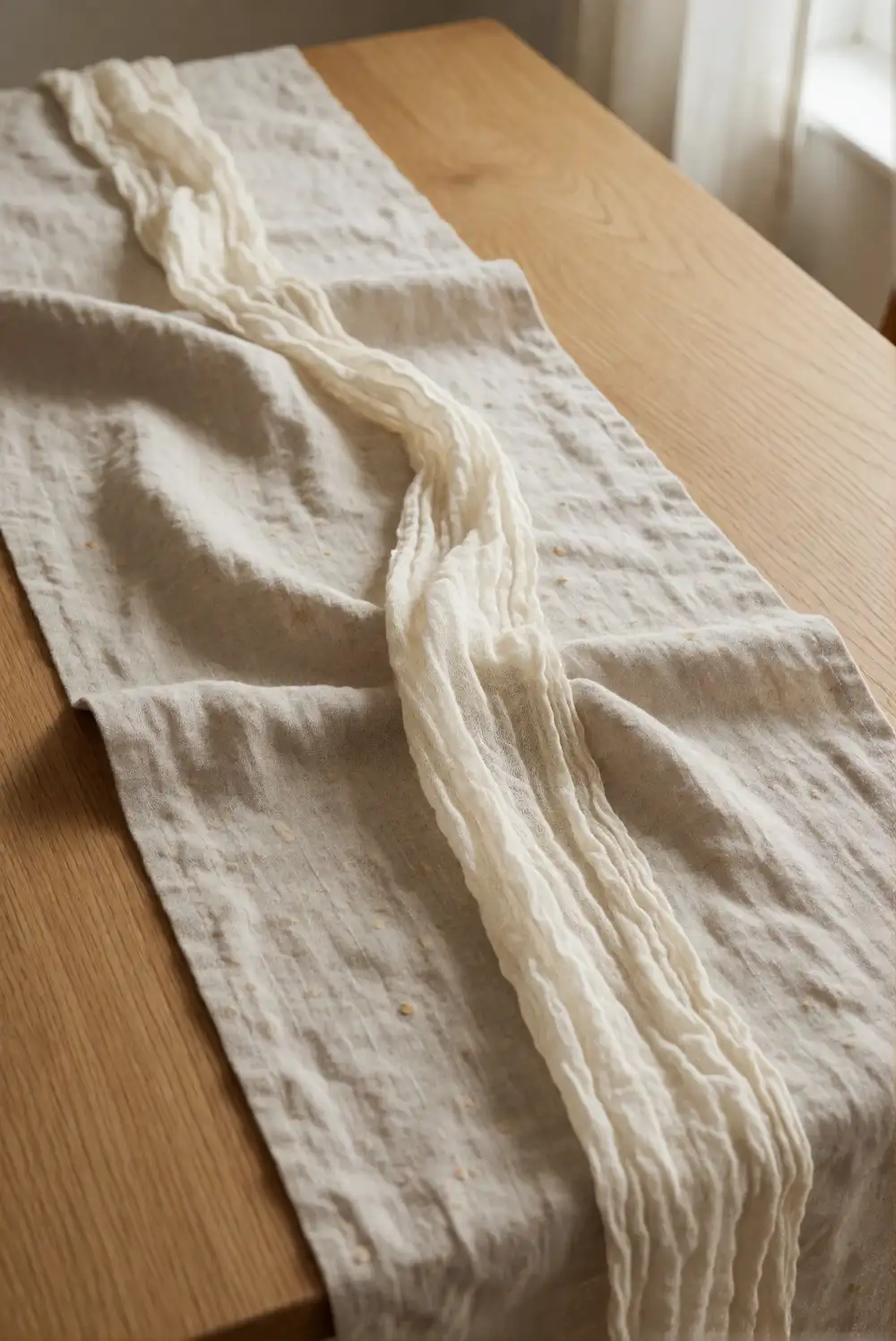
Start with a washed linen runner in oatmeal, cream, or muted rust, and let it fall naturally along the center of the table. If you have a narrower piece of fabric, fold the edges under to make a tidy shape without sewing. Add a second strip of gauzy fabric in a complementary shade, slightly offset, for gentle texture. Smooth the runner loosely rather than stretching it flat, and leave enough room at each end for serving dishes.
Keep the fabric low and relaxed so guests can see one another across the table. A few natural wrinkles make linen feel welcoming, while a quick press keeps the edges neat if you prefer a more polished look. Coordinate the runner with plain napkins or simple ceramic plates instead of matching every element exactly. After the meal, wash and store the runner for future gatherings, or reuse it as a soft base for a seasonal console display.
Arrange a Mini Pumpkin Centerpiece
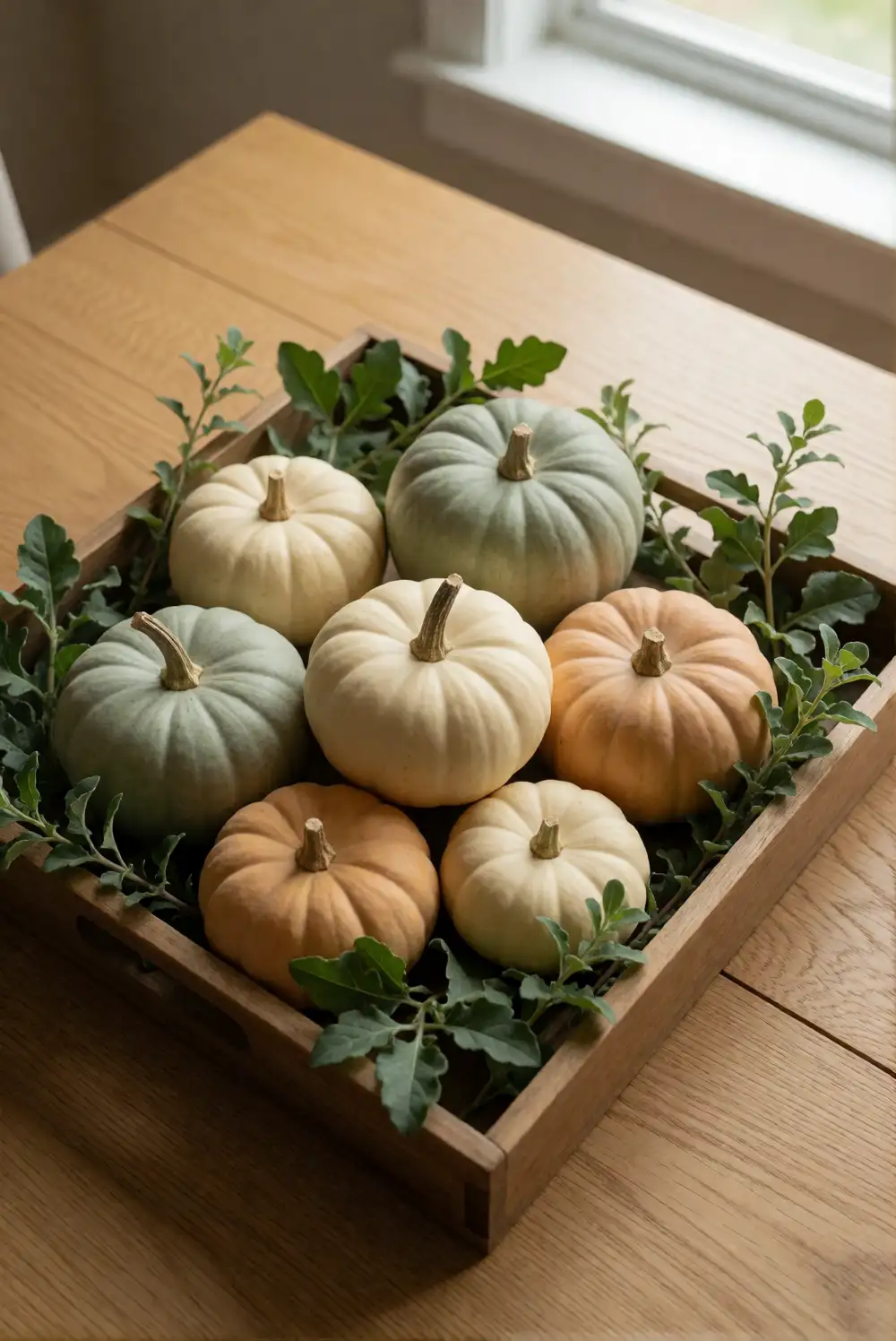
Gather a shallow wooden bowl or tray and fill it with small pumpkins in cream, muted orange, and soft green. Tuck a few sprigs of faux eucalyptus or sturdy fresh greenery between the pumpkins, turning the stems inward so the display looks full from every side. Vary the pumpkin shapes and sizes for a collected feel, but keep the arrangement low enough to leave an open line of sight across the table. Set the tray on the runner as a compact focal point.
Use an odd mix of colors already present in your room, or keep everything creamy for a quieter tablescape. A few pears or pinecones can fill gaps and add natural variety without making the centerpiece feel crowded. Choose a washable tray if you are using fresh produce, and remove anything that begins to soften after the gathering. When dinner is over, move the pumpkins to a mantel or entry table so the arrangement can keep working beyond the meal.
Build a Dried Foliage and Wheat Arrangement
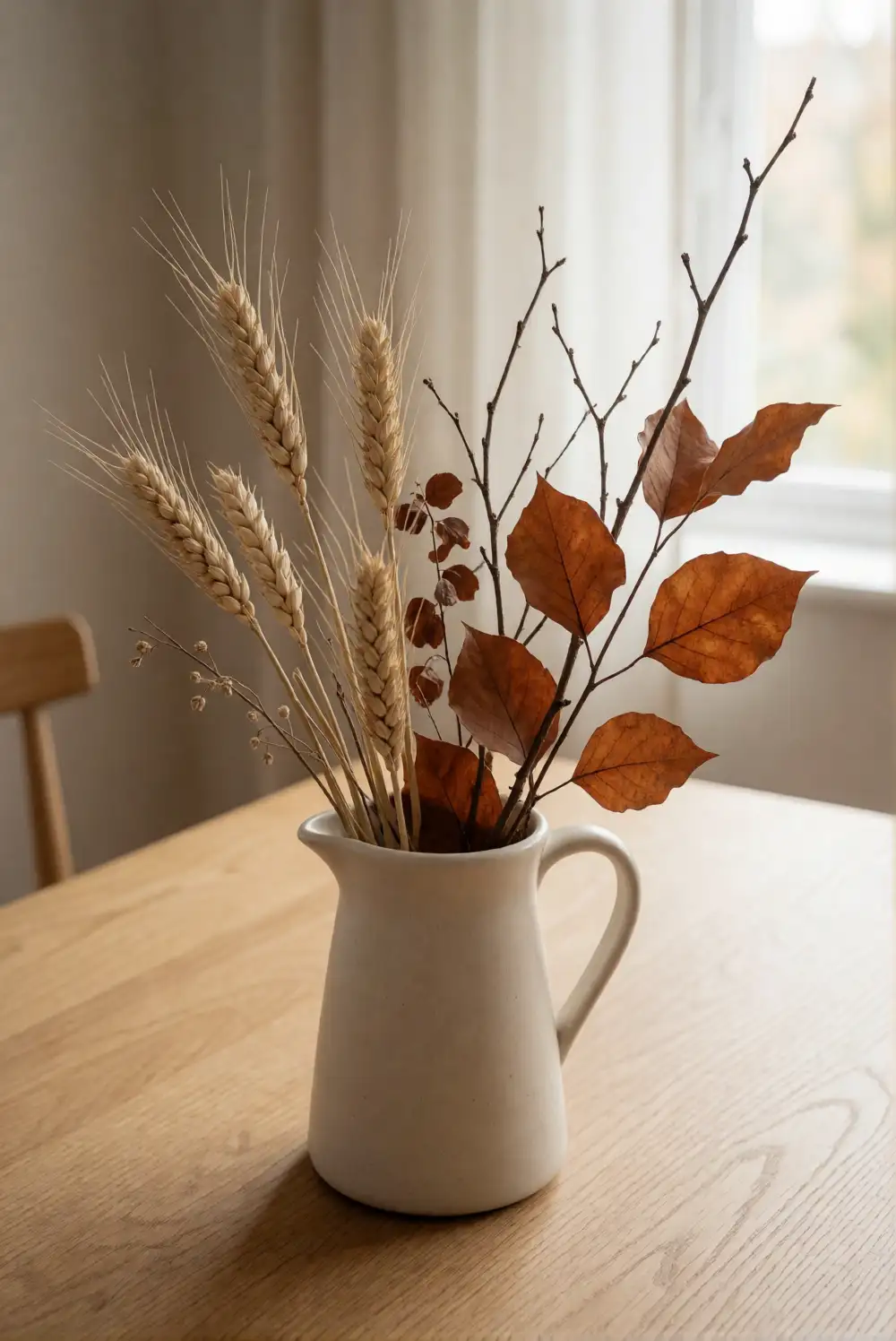
Place dried wheat stems, preserved leaves, and a few slender branches into a stable ceramic pitcher or wide-necked vase. Trim the stems at varied lengths so the arrangement has a softly rounded outline rather than a tall, tight bundle. Begin with the branches for shape, then add wheat and foliage in small groups, turning the vase as you work. Set the finished arrangement on the table runner, keeping its height modest so it does not block conversation or take over the serving space.
Choose leaves in warm brown, muted gold, or dusty rust to echo the season without relying on bright colors. If the arrangement feels sparse, add a few more stems rather than packing the vase too tightly. A heavy vessel helps keep dried branches steady, especially when the table is busy. For a long table, make a pair of smaller arrangements instead of one oversized bouquet, leaving a clear path between them for shared dishes.
Make a Pear and Greenery Table Garland

Lay a loose line of leafy branches down the middle of the table, using faux greenery or sturdy fresh stems that can rest safely on the fabric. Nestle whole pears along the branches, spacing them naturally rather than forming a rigid pattern. Add a few leaves around the fruit to soften the edges and connect the pieces visually. Keep the garland low and narrow, and avoid placing delicate stems where serving plates or hot dishes will need to sit.
Green pears create a calm, fresh look, while golden or red varieties bring a richer autumn note. For a smaller table, use only a short cluster in the center; for a longer setting, extend the greenery in loose sections with small gaps between them. Check that the fruit is clean and dry before arranging it on linen. Once the meal is finished, remove the pears for eating and reuse the branches in a vase or seasonal basket.
Fold Linen Napkins with Fresh Rosemary

Choose cloth napkins in cream, sage, or warm taupe and fold each into a simple rectangle or relaxed pocket shape. Lay a fresh rosemary sprig across the fold, with the leaves pointing toward one corner for a clean, natural finish. Place each napkin on a plate or beside it, depending on your serving arrangement. Give the rosemary a gentle rinse and dry it before styling, and use sprigs that are firm enough to hold their shape through the meal.
Keep the napkin fold uncomplicated so guests can unfold it easily, and repeat the same placement at every setting for a pulled-together table. Thyme or a small bay leaf branch can replace rosemary if that better suits the menu. A narrow strip of natural fabric may loosely hold the fold in place, though the sprig itself can simply rest on top. After dinner, shake out the napkins and wash them promptly to remove any herb oils or food marks.
Cluster Amber Glass Bud Vases
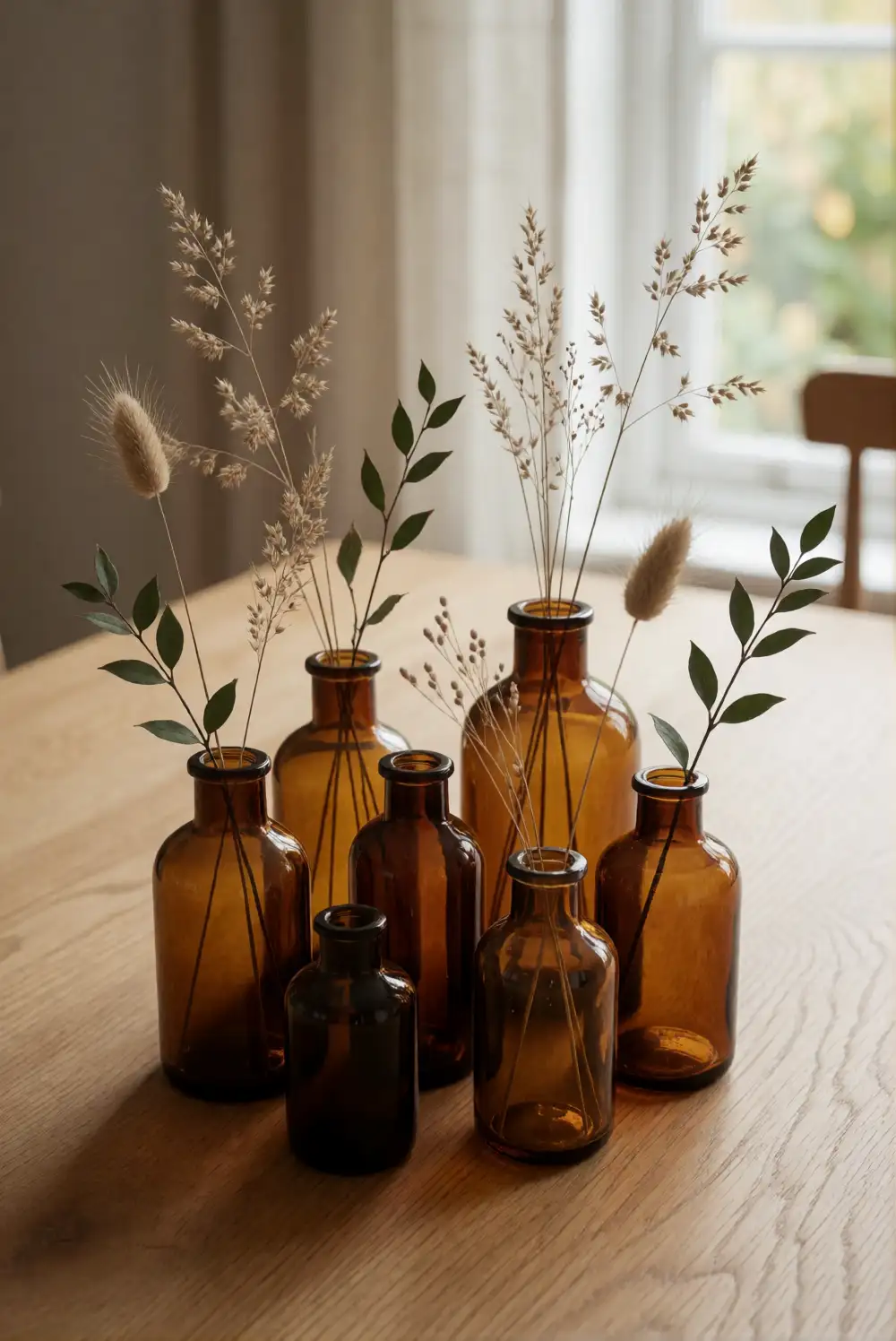
Collect a few amber glass bud vases in different heights and arrange them as a small group along the table’s center. Add one or two stems to each vase, choosing delicate seasonal flowers, dried grasses, or slim leafy branches. Keep the blooms airy so the glass remains visible and the display feels light. If the vases do not match, repeat a color or material nearby, such as a cream plate or warm wood serving board, to make the grouping feel intentional.
Place the tallest vase toward the middle and the shorter ones around it, leaving room for dishes and conversation. Amber glass catches soft daylight beautifully, while clear or smoky glass offers a quieter alternative. Use fresh stems with short, clean cuts, and replace the water as needed during the day. After the gathering, separate the vases around the home with simple flowers or greenery, giving each one a useful place beyond the table.
Style Woven Chargers with Simple Ceramic Plates

Set a woven charger at each place and center a plain ceramic dinner plate on top. Rattan, seagrass, and other natural weaves add warmth beneath white, cream, or muted green dishes without competing with the food. Keep the charger edges visible by choosing plates that leave a small border around them. Before setting the table, wipe the chargers with a dry cloth and make sure each piece lies flat, so plates remain steady and the overall arrangement feels comfortable to use.
Repeat the same charger and plate combination at every setting, then add variety through napkin color or a sprig of greenery. If your table is already full of patterned serving dishes, simple white ceramics help create visual breathing room. Chargers are decorative foundations, so use a washable placemat instead when the menu is especially messy. After the meal, brush crumbs from the weave and store the chargers stacked in a dry spot to protect their shape.
Shape Corn Husk Napkin Rings
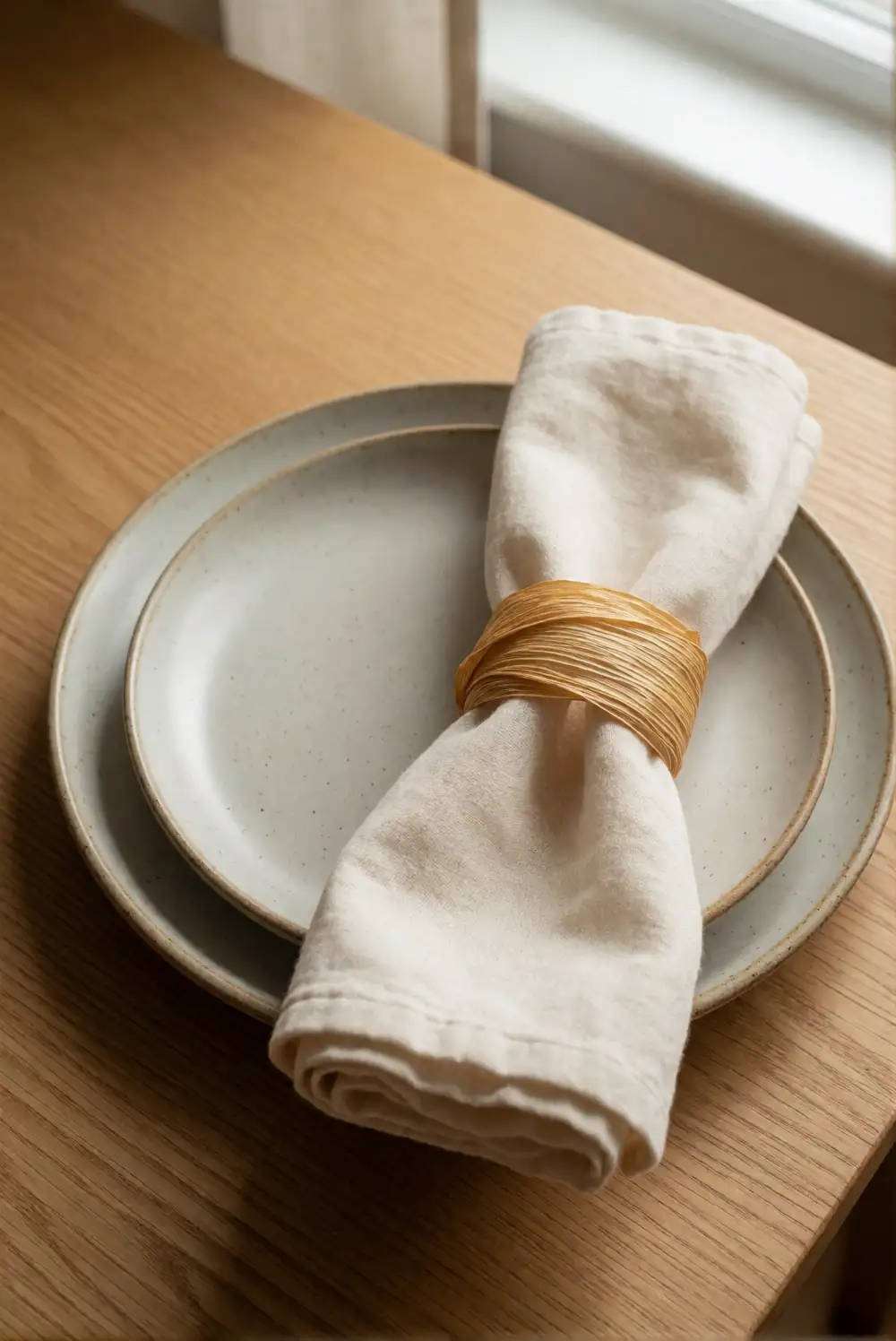
Soften clean dried corn husks briefly in warm water, then pat them dry until they are flexible but not dripping. Cut each husk into a broad strip, curl it into a ring around a rolled cloth napkin, and tuck the end securely beneath the outer layer. Let the rings dry fully before setting them at the table. For a finished look, leave a small fringe at one edge or layer two narrow strips, keeping the shape simple and comfortable to handle.
Natural husks bring a soft golden color that pairs well with cream linens, dark wood, and autumn-toned dishes. Make each ring a little different in texture while keeping the overall size consistent, so the table still feels cohesive. If a ring loosens, rewrap it while the husk is slightly damp and let it dry around the napkin. Store the finished rings flat in a dry container and reuse them for seasonal meals or a harvest-inspired centerpiece.
Fill a Bowl with Pomegranates and Persimmons

Choose a low ceramic or wooden bowl and arrange whole pomegranates and persimmons inside, turning their most colorful sides outward. Nestle a few leaves or short greenery stems between the fruit to soften the bowl’s outline. Begin with the larger pomegranates as a base, then fill open spaces with persimmons so the shapes feel balanced. Keep the bowl on the table runner or at one end of the dining surface, where it can add color without getting in the way of shared dishes.
For a subdued arrangement, use mostly persimmons with just one deep red pomegranate as an accent; for a richer look, mix both fruits evenly. Choose fruit with firm skins and wipe it clean before arranging. The bowl can stay as a centerpiece during the meal, then move to a counter where guests can help themselves. When the fruit is gone, reuse the bowl for nuts in their shells, seasonal vegetables, or a simple display of dried leaves.
Gather Pinecones and Citrus in a Serving Bowl
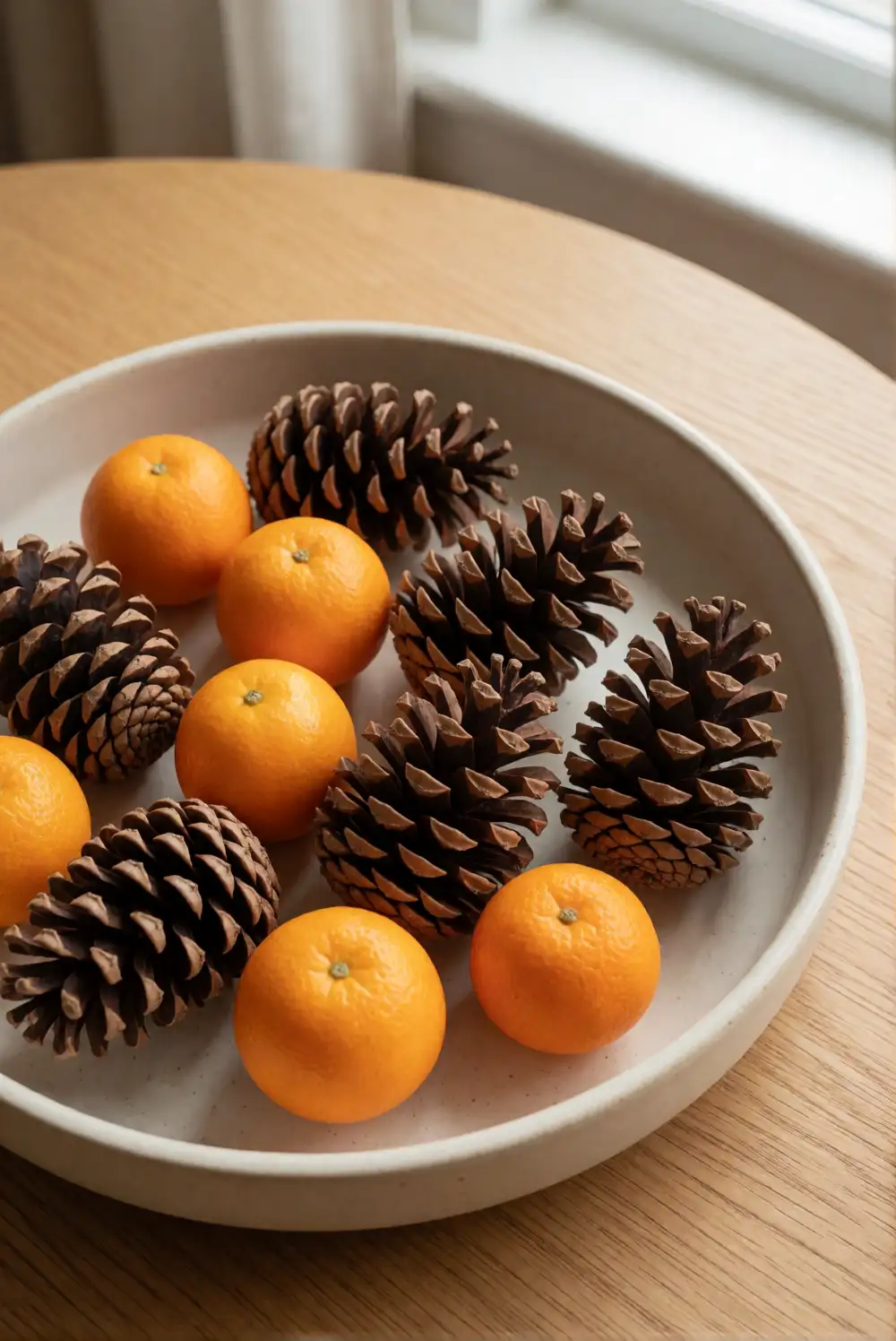
Place a handful of clean, dry pinecones in a shallow serving bowl, then tuck in whole mandarins or small oranges for a bright seasonal contrast. Turn the fruit so its warm color shows between the cones, and add a few sturdy green leaves if you want a softer edge. Use a bowl with enough room to keep the pieces loosely arranged rather than stacked. Set it on the table as a compact natural accent, away from serving platters and areas where sleeves may brush against it.
Choose smooth, unbroken citrus and pinecones that are free of loose debris, and keep the arrangement dry so it stays neat through the gathering. A wooden bowl gives the display a rustic feel, while white ceramic makes the orange color stand out. Swap in a few pears if you want a gentler palette, or move the bowl to an entry console after dinner. Remove the fruit for eating and store the pinecones for another seasonal display.
A welcoming Thanksgiving table comes together through a few thoughtful choices rather than a perfectly matched set. Combine soft linens with natural textures, choose a low centerpiece, and leave comfortable space for food and conversation. Use the colors and materials that feel at home in your space, then repeat small details such as greenery or warm ceramics to make the arrangement feel cohesive. With a simple seasonal focal point and useful place settings, the table is ready for a relaxed, memorable gathering.