
Bring the season’s rich colors indoors with these fall foliage decorating ideas. From pressed-leaf art to a simple branch arrangement, each project uses natural textures and warm tones to make a room feel inviting.
Pressed Fall Leaves in a Simple Frame
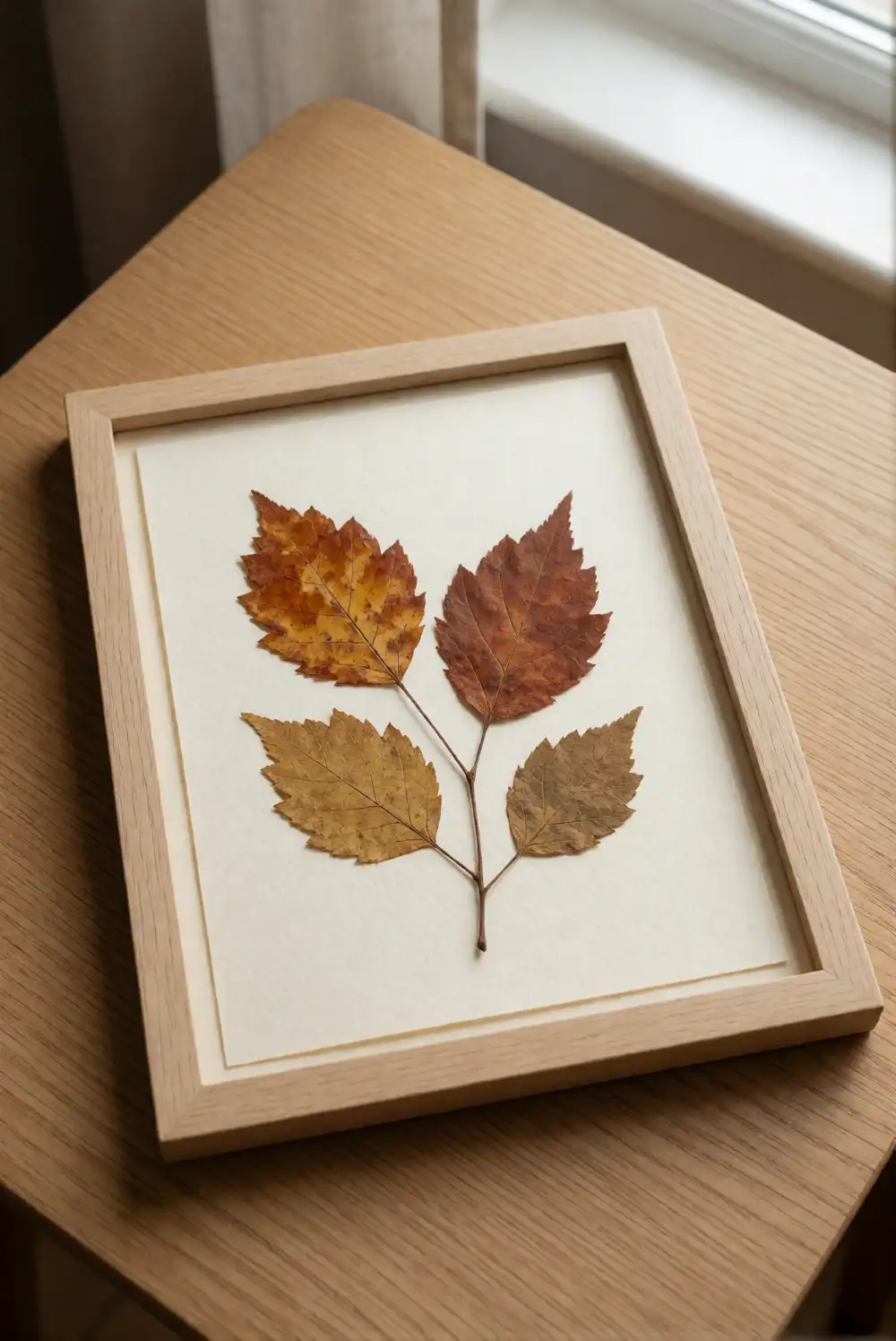
Gather dry, intact leaves in a mix of amber, rust, and muted gold, then press them between absorbent paper beneath a heavy book until flat. Arrange the leaves on a sheet of cream cardstock, leaving space around each shape, and place the backing inside a glass-front frame. A pale wood or natural finish keeps the foliage colors prominent. Choose leaves with sturdy stems and interesting silhouettes for a composition that feels collected rather than overly arranged.
Try a single large leaf for a quiet, minimal look, or overlap several smaller leaves in a loose cluster. Keep the frame away from direct sunlight and damp spots to help the colors last. Lean it on a mantel, style it on a bookshelf, or hang it beside other nature-inspired art. For a coordinated display, repeat the cream backing and warm frame finish elsewhere in the room without matching every leaf color.
A Dried Leaf Garland for the Mantel
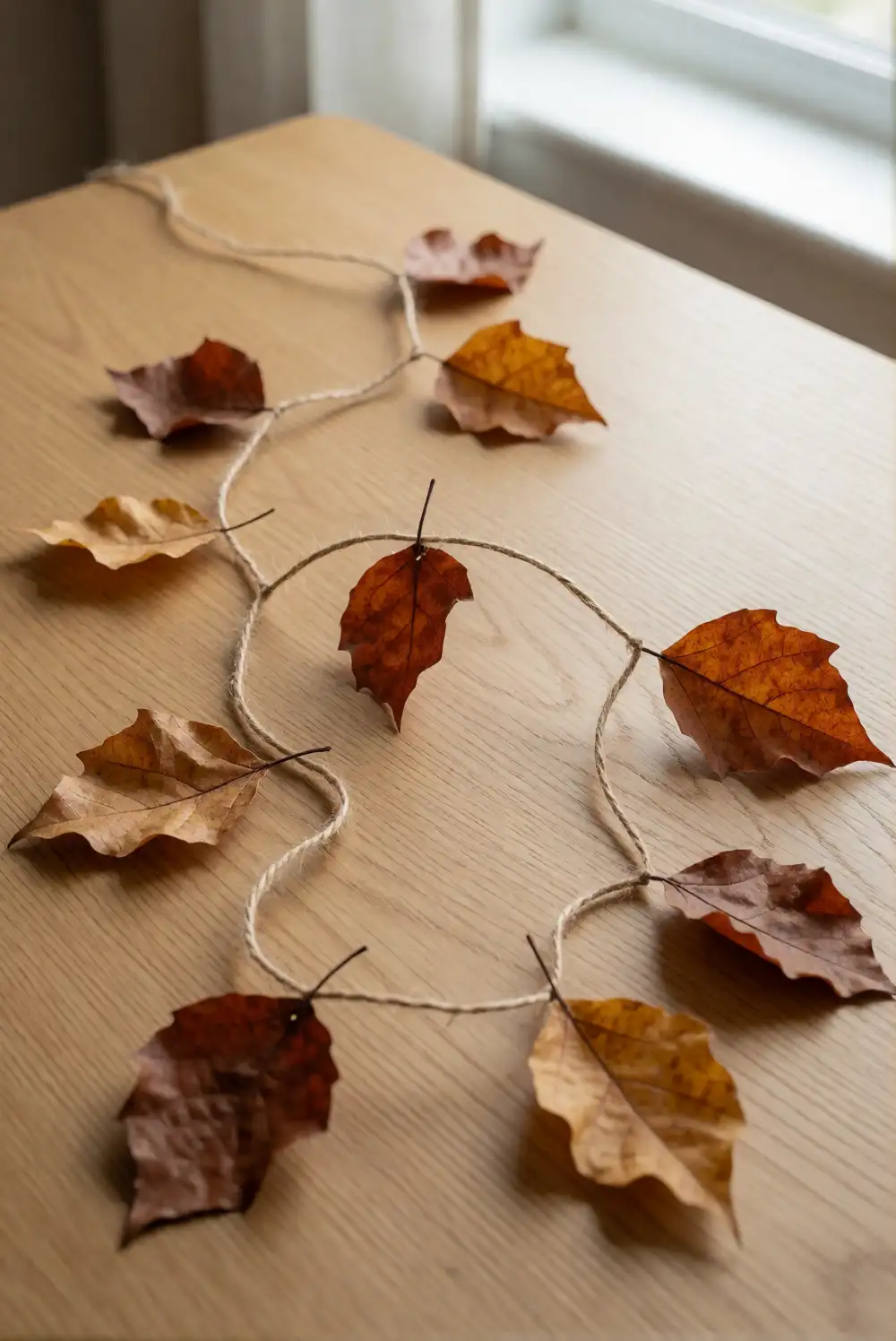
Make a simple mantel garland with flexible twine and a collection of dry leaves in autumn shades. Select leaves with intact stems, then tie each stem to the twine with a small loop, alternating colors and shapes as you work. Leave a little space between leaves so the garland hangs lightly instead of becoming bulky. Lay the finished strand across the mantel and adjust the ends until the center drapes in a relaxed curve.
For a fuller look, mix in a few dried sprigs with small leaves, keeping the materials light enough to hang neatly. If the leaves are brittle, attach them by their stems rather than piercing the blades. Pair the garland with plain ceramic vessels or a framed botanical print so its natural texture stands out. Store it flat in a dry box after the season to help protect the delicate foliage.
A Low Foliage Centerpiece for the Table
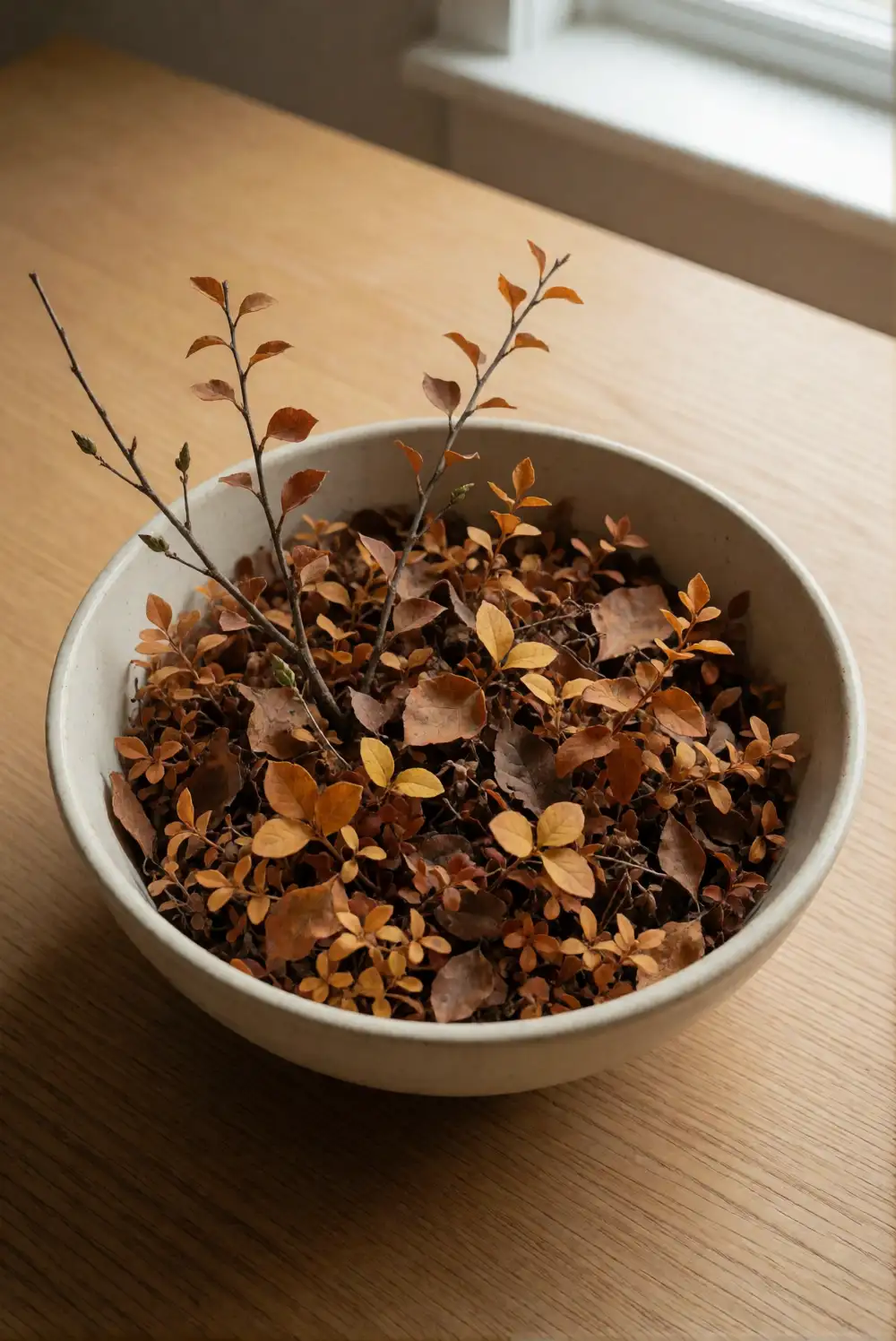
Arrange a low centerpiece by placing a shallow ceramic bowl or tray at the center of the table and layering in clean, dry leaves. Choose a restrained palette of rust, ochre, and brown, then add a few small branches or seed pods for varied shapes. Keep the arrangement below seated eye level and spread the pieces loosely so the vessel remains visible. A simple, earthy container helps the foliage feel intentional without competing with the table setting.
Refresh the display with newly gathered leaves when the original pieces begin to curl or fade. For a longer-lasting version, use preserved leaves and keep the arrangement away from moisture. Repeat one foliage color in napkins or a runner to tie the table together, but leave plenty of open space for serving dishes. The centerpiece also works on a coffee table or entry console when styled with a small stack of neutral-toned books.
A Twig Wreath with Layered Autumn Leaves
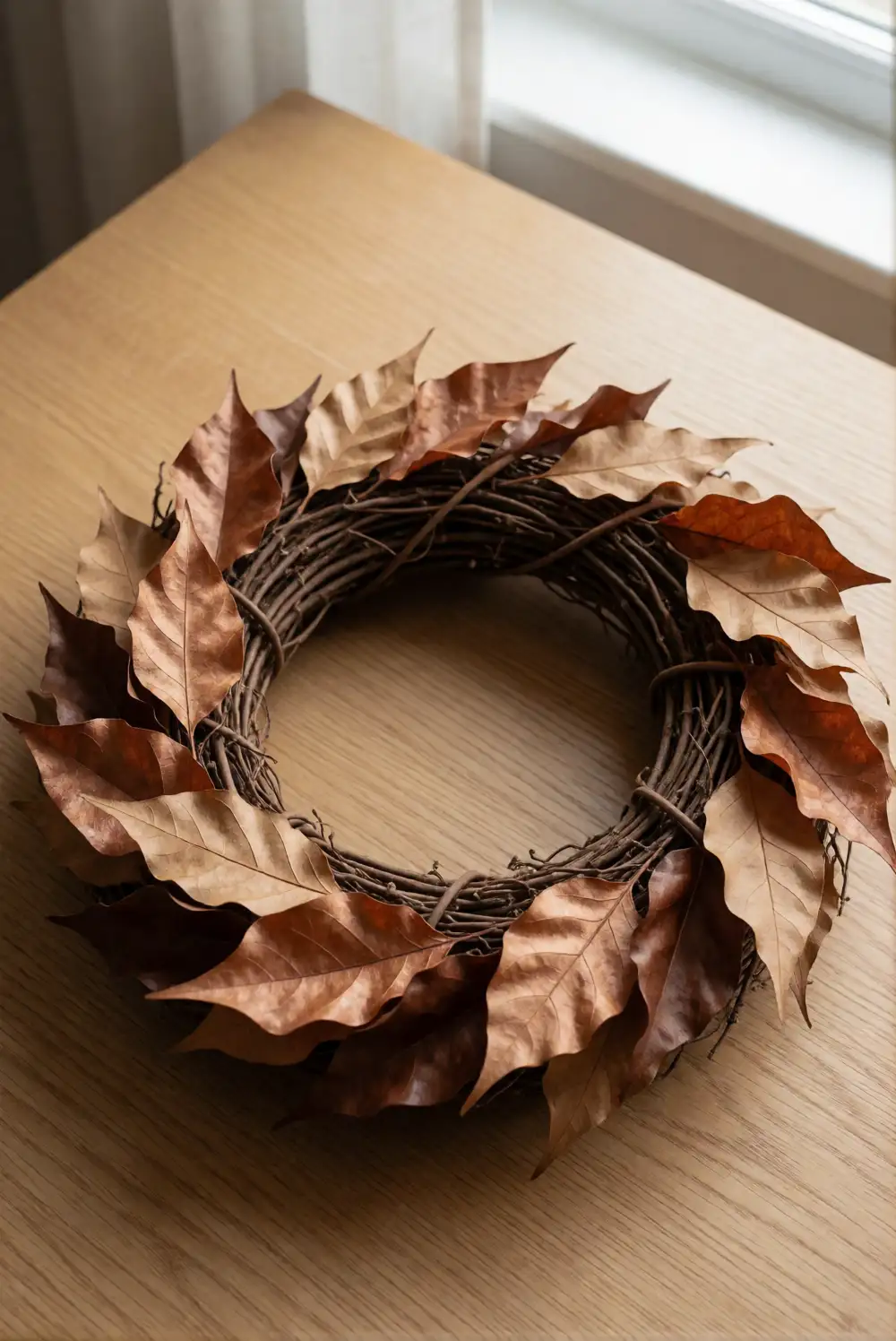
Start with a plain twig wreath form and tuck dried leaves into the branches, working around the circle in one direction. Use a mixture of small and broad leaves in copper, tan, and deep brown, placing larger pieces first and filling gaps with smaller ones. Secure loose stems between the twigs or use fine floral wire where needed. Keep some of the woven base visible to balance the colorful foliage and show off its natural texture.
Hang the wreath on an interior door, above a mantel, or on a wall where it can be seen from across the room. A narrow fabric ribbon in a muted shade can add softness without hiding the leaves. For a less full design, decorate only one side of the wreath and let the twig base remain visible on the other. Keep the finished piece dry and away from direct heat so the leaves stay in good condition.
Autumn Branches in a Tall Ceramic Vase
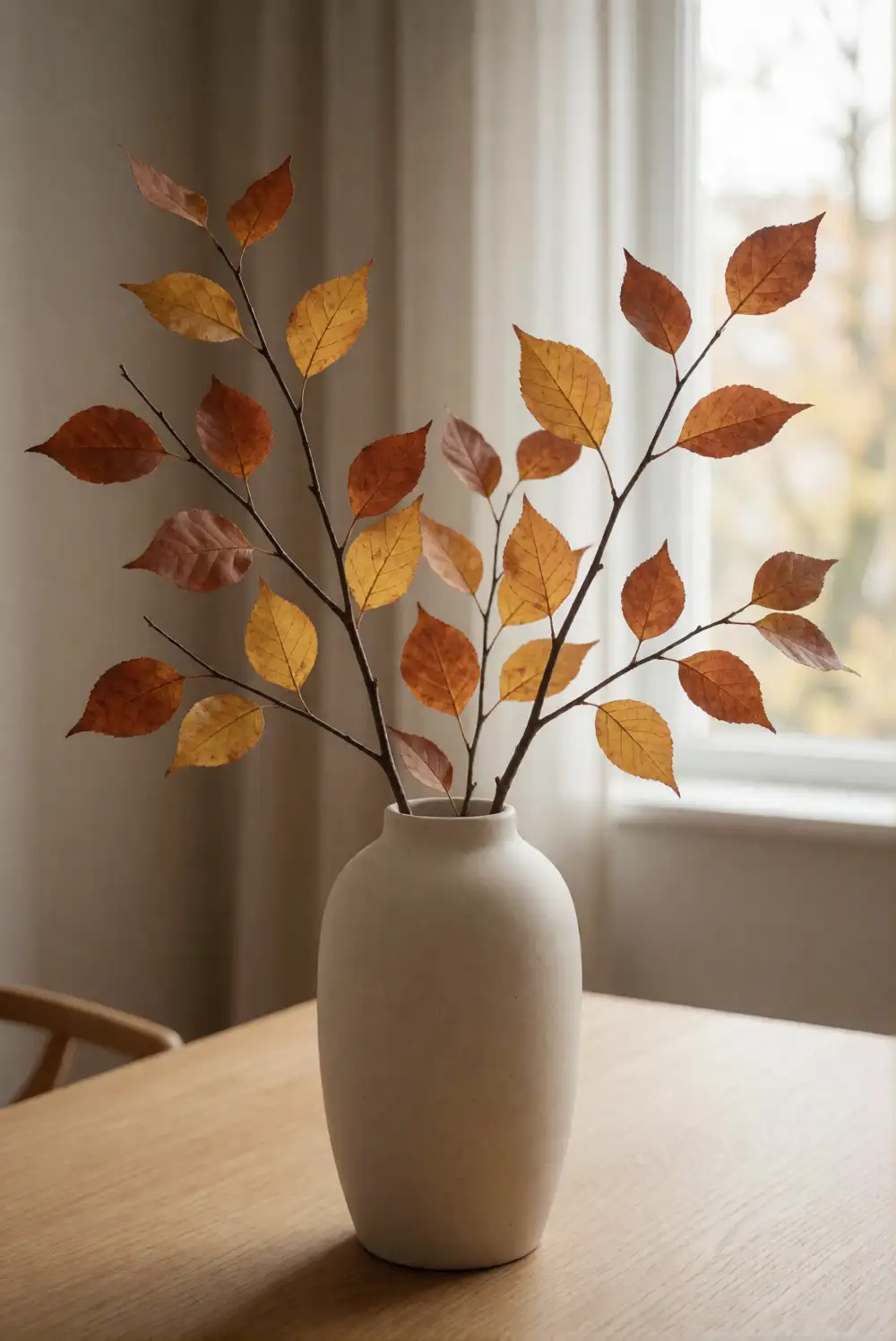
Choose several sturdy branches with colorful leaves and trim their ends to create a range of heights. Place them in a tall ceramic vase with a stable, weighted base, then turn the stems until the arrangement looks balanced from different sides. A matte cream, brown, or olive vessel complements the foliage without drawing attention away from it. If using fresh branches, add water and remove leaves that would sit below the waterline.
Position the vase where the branches have room to spread, such as an entryway table or the edge of a mantel. A few branches usually make a stronger silhouette than a tightly packed bundle, especially in a small room. Rotate the vase occasionally to keep the display looking even, and remove leaves as they dry and drop. For a lasting seasonal accent, replace fresh branches with dried stems that retain their warm color.
A Layered Leaf Display Under a Glass Cloche
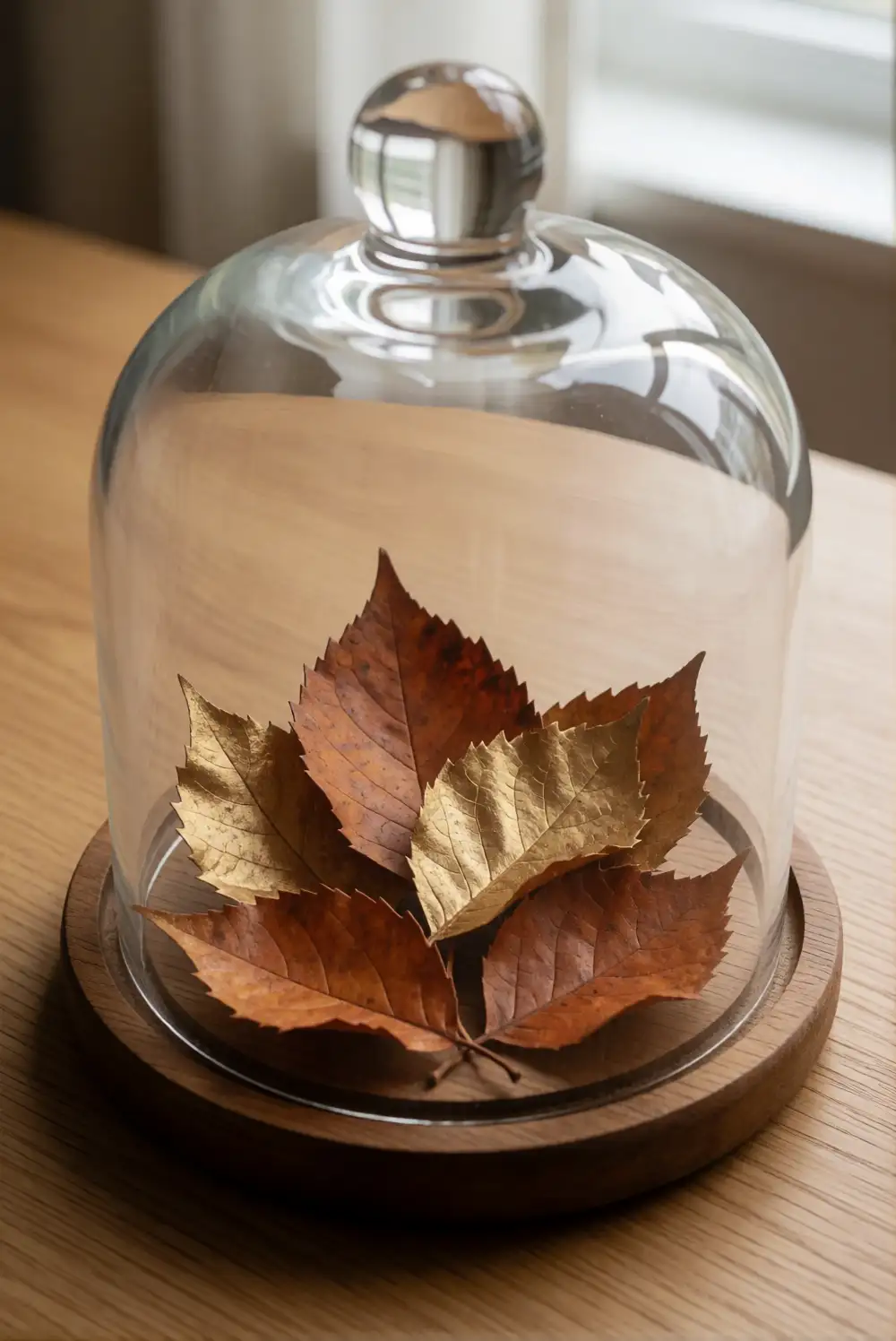
Place a small group of dry, clean leaves on a wooden or ceramic base, arranging them in overlapping layers with their stems turned inward. Set a clear glass cloche over the composition, checking that no leaf touches the sides. Mix broad leaves with a few smaller ones in varied shades of rust and gold to give the display depth. Choose a flat base that is slightly wider than the cloche so the arrangement looks grounded and easy to lift.
Style the cloche on a side table, bookshelf, or dining-room console, where its glass cover can catch the light. Keep the display away from moisture and direct sun, and lift the cover occasionally to check for condensation. A single dried seed head or small twig can add height, but leave enough clear space to keep the leaves as the focus. Pair the cloche with other natural materials, such as wood or linen, for a softly layered vignette.
A Warm Foliage Runner Along the Dining Table
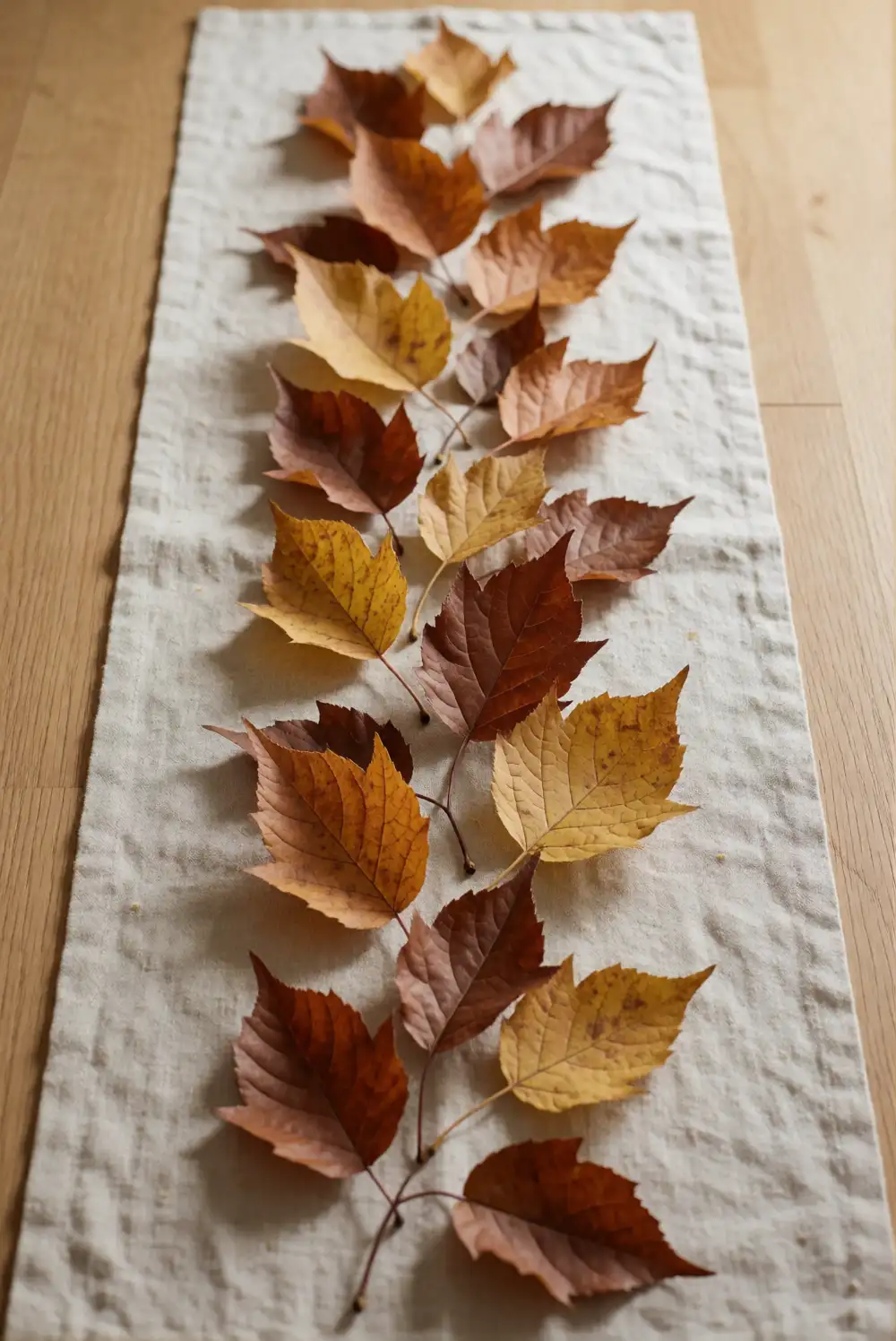
Create a natural table runner by laying a narrow strip of linen down the center of the table and arranging dry leaves along its length. Alternate broad leaves with smaller sprigs, keeping the arrangement low and leaving clear space at both ends. Choose a linen shade such as oatmeal or soft brown to support the foliage’s warm colors. Arrange the leaves loosely rather than fastening them, making it easy to move the runner when the table is needed.
For a more practical setting, gather the foliage into small clusters between serving areas instead of covering the full runner. This keeps plates and dishes easy to place while preserving the seasonal look. Add simple ceramic pieces in cream or muted green, and let the natural leaf shapes provide the visual detail. Remove brittle leaves before guests arrive, and store the linen separately from the foliage to keep it clean for another use.
A Small Pumpkin and Leaf Tray Arrangement
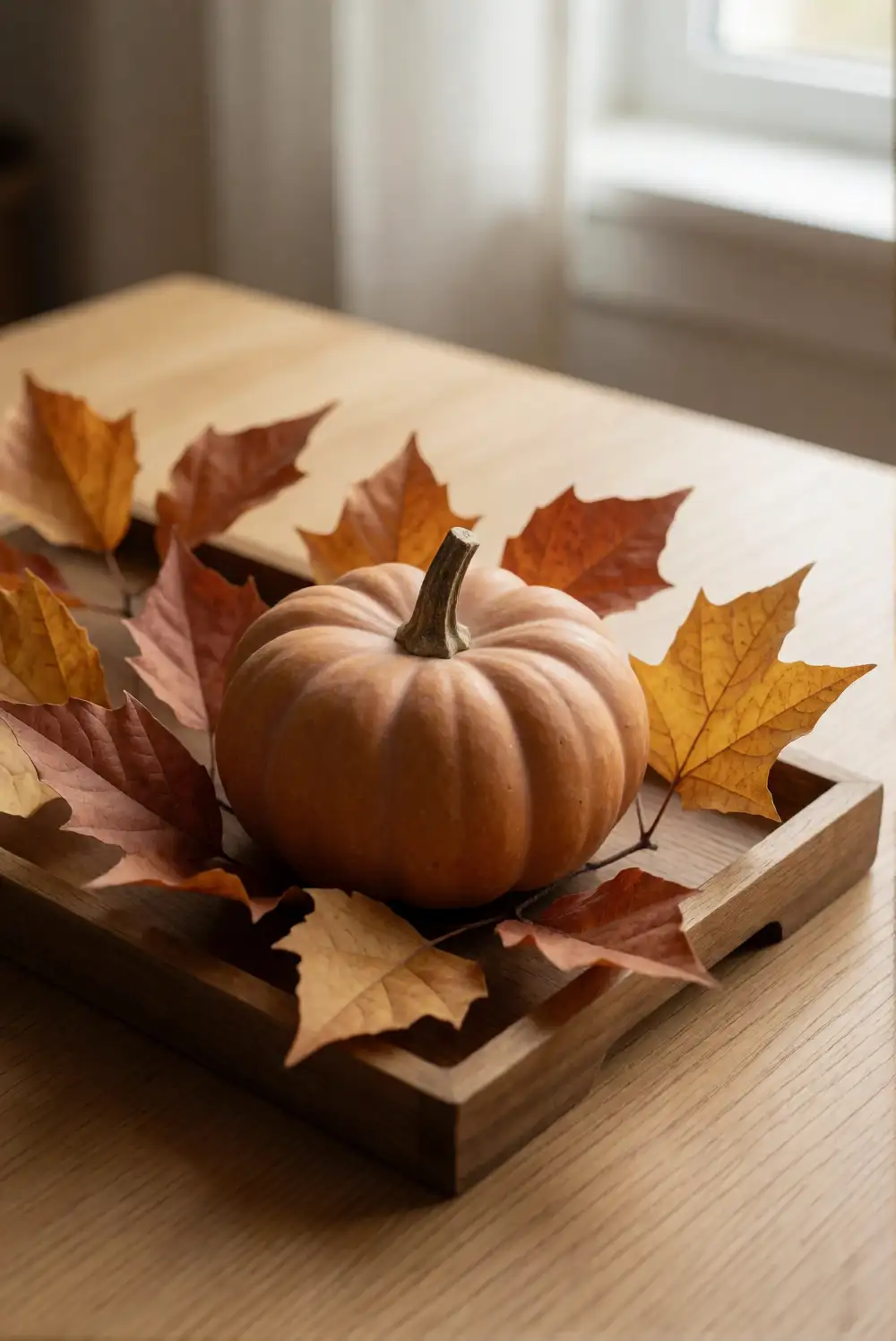
Set a low wooden or ceramic tray on a console, then place a small decorative pumpkin near one side. Tuck dry leaves around its base in a loose fan, mixing muted gold with deeper rust for contrast. Add a short, sturdy branch or a few seed pods if the tray has room, keeping the arrangement stable and easy to carry. Choose a pumpkin with a smooth surface and a color that complements the foliage rather than matching it exactly.
Use the tray as a movable accent on an entry table, coffee table, or kitchen counter. Keep the tallest element low enough that it does not block sightlines, and avoid crowding the pumpkin with too many small pieces. A neutral tray lets the warm colors stand out, while a darker wood finish creates a richer, more layered look. When the season changes, remove the foliage and reuse the tray with fresh everyday decor.
A Natural Leaf Bowl for a Side Table
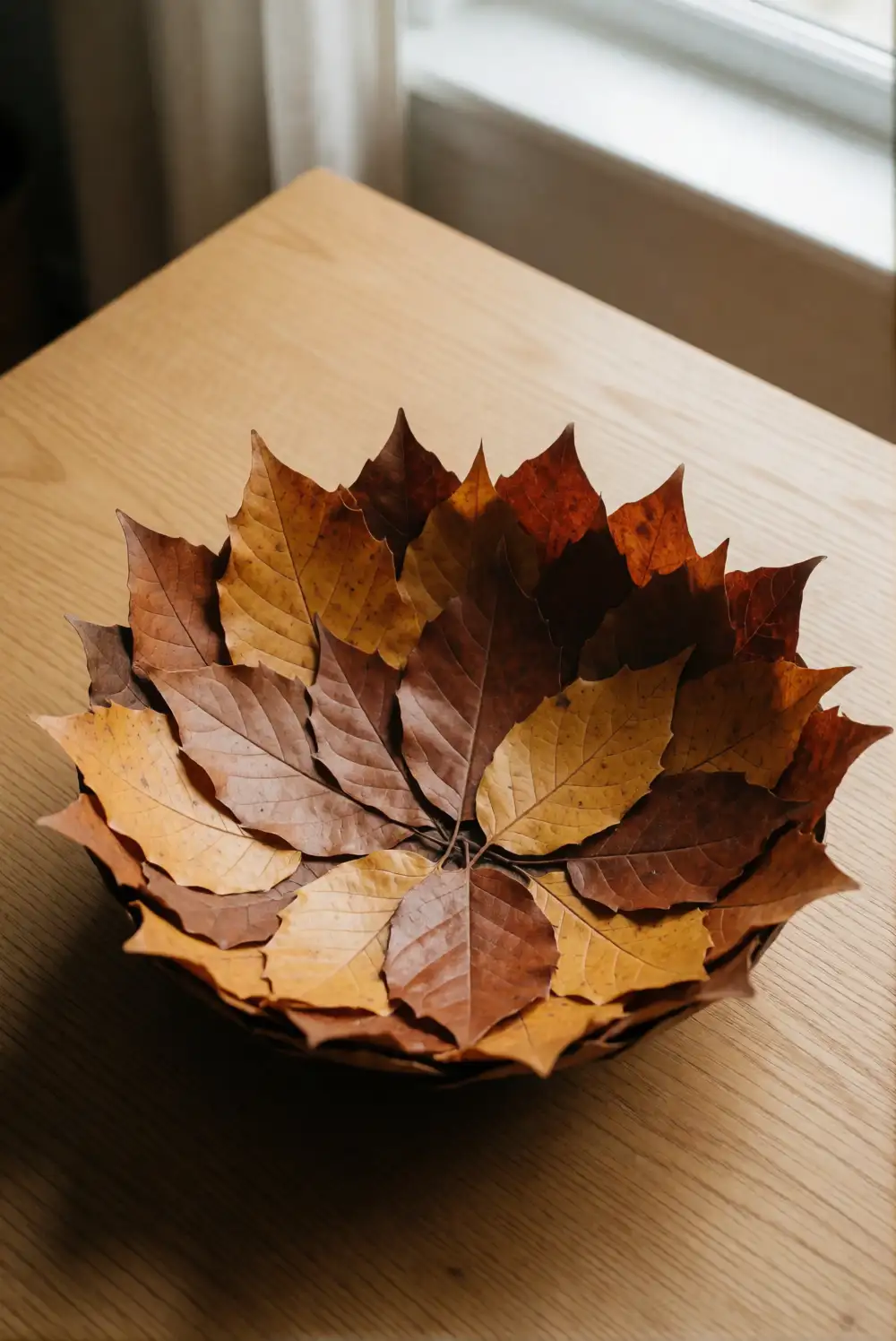
Make a decorative leaf bowl with large, clean leaves, a small bowl as a mold, and clear craft adhesive intended for home decor. Cover the outside of the upside-down mold with a light layer of adhesive, then overlap leaves across its surface, pressing them gently into place. Let the arrangement dry fully before lifting it away and removing the mold. Keep the finished bowl decorative only, since natural leaves and craft finishes are not intended for food use.
Display the bowl on a side table or bookshelf with nothing inside, allowing its layered leaf shapes to remain visible. Choose leaves with strong veins and varied warm colors for a textured finish. If a piece lifts at the edge, apply a small amount of suitable adhesive and allow it to dry again. Keep the bowl away from water, food, and direct heat, and place it where it will not be bumped or handled often.
A Muted Fall Cushion Cover with Leaf Motifs
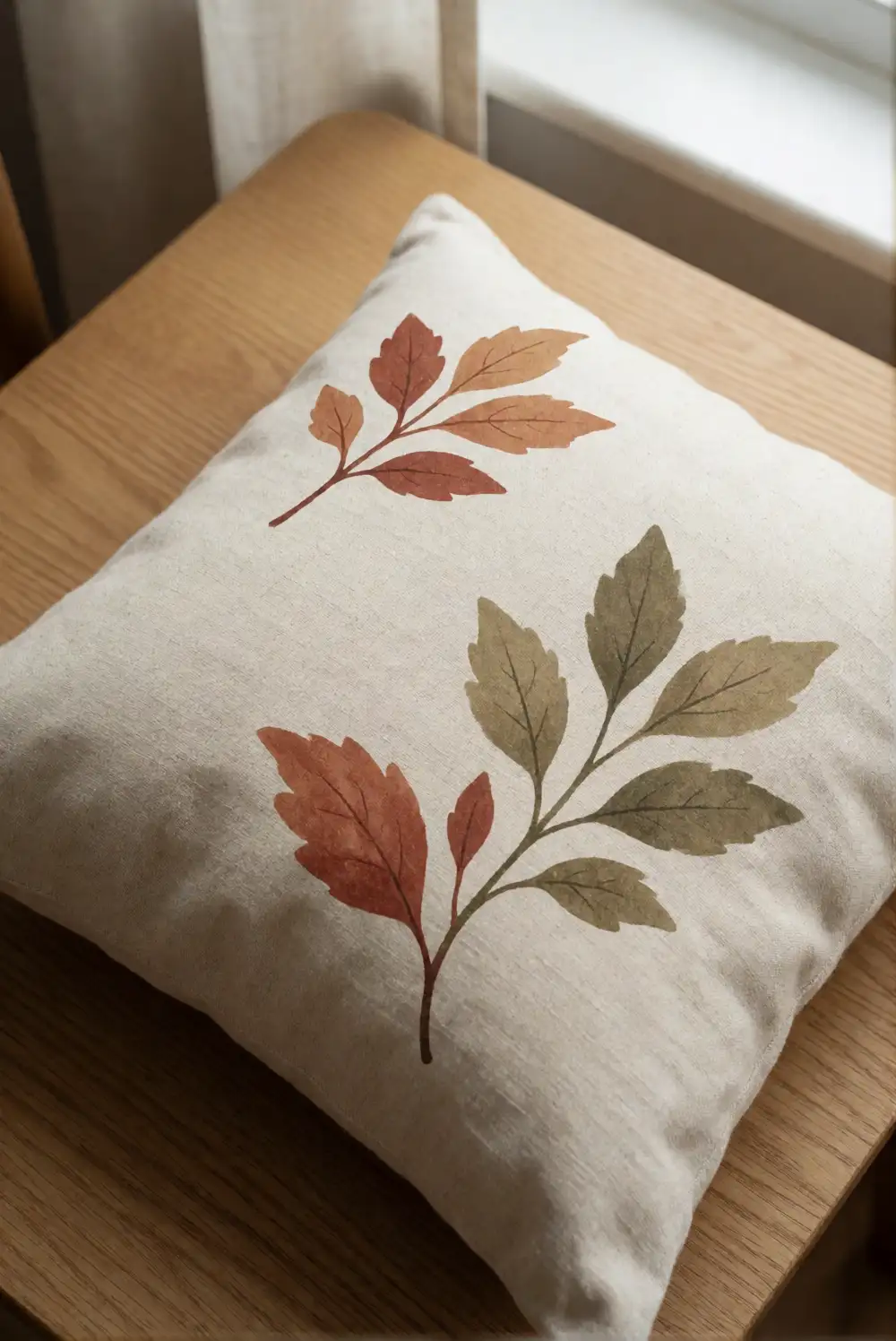
Refresh a plain cushion cover with a simple leaf motif using fabric paint and a sturdy leaf as a stamp. Place cardboard inside the cover to prevent paint from transferring through the fabric. Brush a thin, even layer of fabric paint onto the veined side of the leaf, press it onto the cover, then lift it straight away. Repeat with a few leaves in a loose arrangement, choosing rust, ochre, or muted olive paint for an understated seasonal pattern.
Let the paint dry and follow the product directions for setting it before using or washing the cover. Keep the motif off the seams and leave generous open space so the fabric still feels calm. Use one accent cushion among solid cream or brown pillows, or make a matching pair for a coordinated sofa. A removable cover makes it easy to store this seasonal look and bring it back when warm foliage colors suit the room again.
Warm fall foliage can bring color and natural texture to a home without complicated projects or elaborate supplies. Choose a frame, tabletop arrangement, or soft accent that suits your space, then let a few well-chosen leaves set the seasonal mood.