Bring the colors of changing leaves indoors with autumn leaf palettes that feel current, warm, and easy to live with. These practical fall decor ideas pair seasonal shades with approachable materials and specific styling tips, so you can create a coordinated mantel, table, entryway, or living space without making your home feel overly themed.
Burnt Orange, Cream, and Warm Wood Mantel
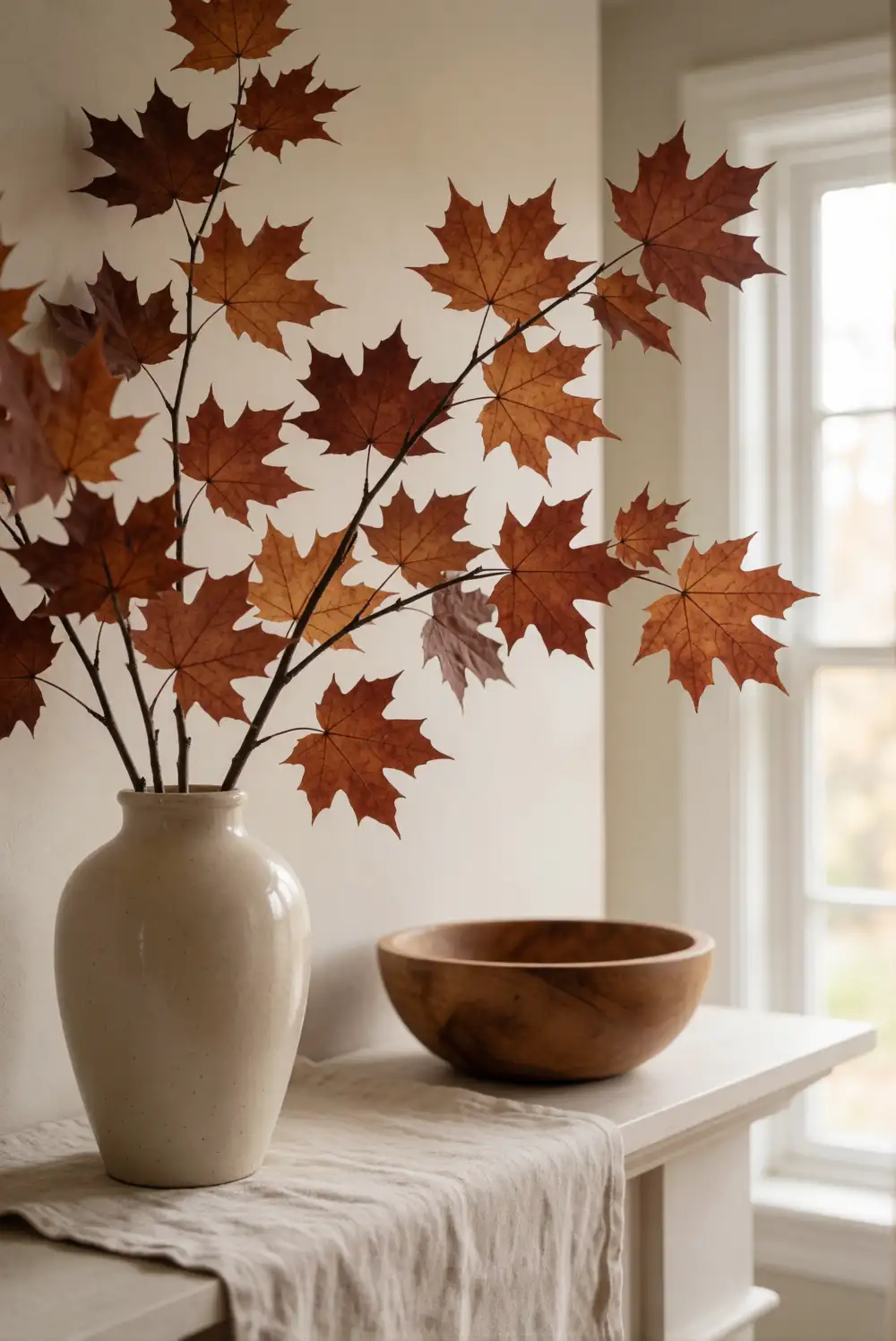
Give a mantel the look of a leaf-strewn autumn walk with burnt orange, cream, and warm wood. Arrange a few fallen maple leaves or sturdy faux leaves along the mantel, then add a cream ceramic vase with slender branches and a small wooden bowl. Keep the tallest element toward one side and let the leaves trail loosely across the surface. The mix of smooth pottery, natural wood, and crisp leaf shapes creates an inviting display without crowding the fireplace.
Use leaves in varied shades of rust and copper to keep the orange tones from looking flat. If you prefer a softer look, add more cream pottery and leave open space between objects; for a richer version, bring in a darker wooden frame or basket. Check that foliage stays clear of heat sources, and use faux branches if the mantel is above an active fireplace. This palette also works on a console table or shelf.
Burgundy, Mustard, and Beige Leaf Table Runner
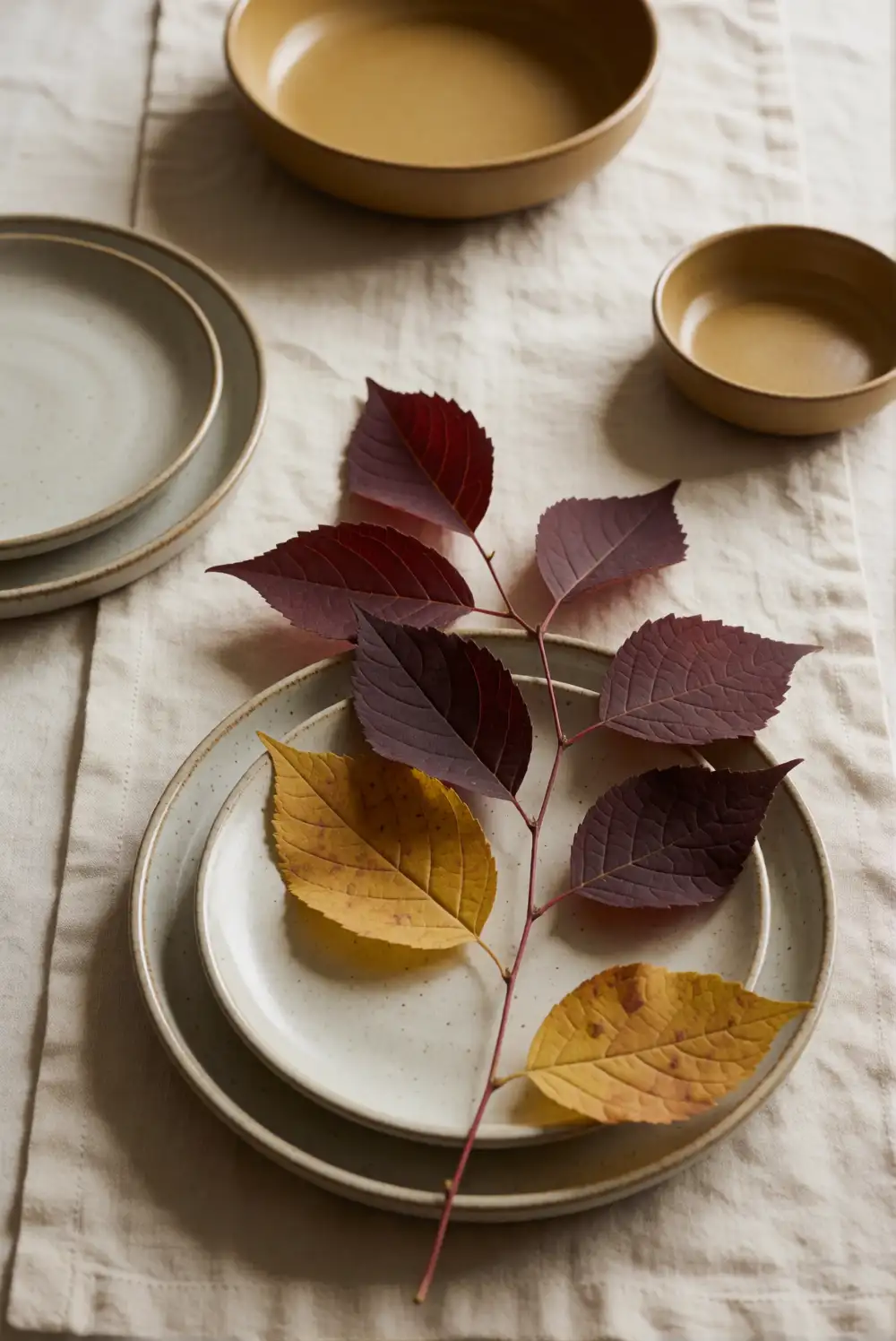
Style a dining table with a relaxed runner inspired by burgundy leaves, mustard foliage, and beige linen. Lay a beige fabric runner down the center, then arrange pressed or faux leaves in small overlapping clusters along its length. Add simple stoneware plates and a low mustard-colored bowl to anchor the arrangement. Keep the leaves flat and the centerpiece low so the table remains useful for serving and conversation. The layered colors bring a seasonal look without needing elaborate materials.
For an understated table, choose muted burgundy and dusty mustard rather than highly saturated shades. A few natural wooden serving pieces can connect the palette to the beige runner, while cream napkins keep place settings light. Swap in fresh leaves when they become brittle, or use washable fabric leaves for a display you can bring back each fall. Keep the center arrangement narrow, especially on a smaller table, so it does not interfere with everyday meals.
Sage, Terracotta, and Cream Leaf Wreath
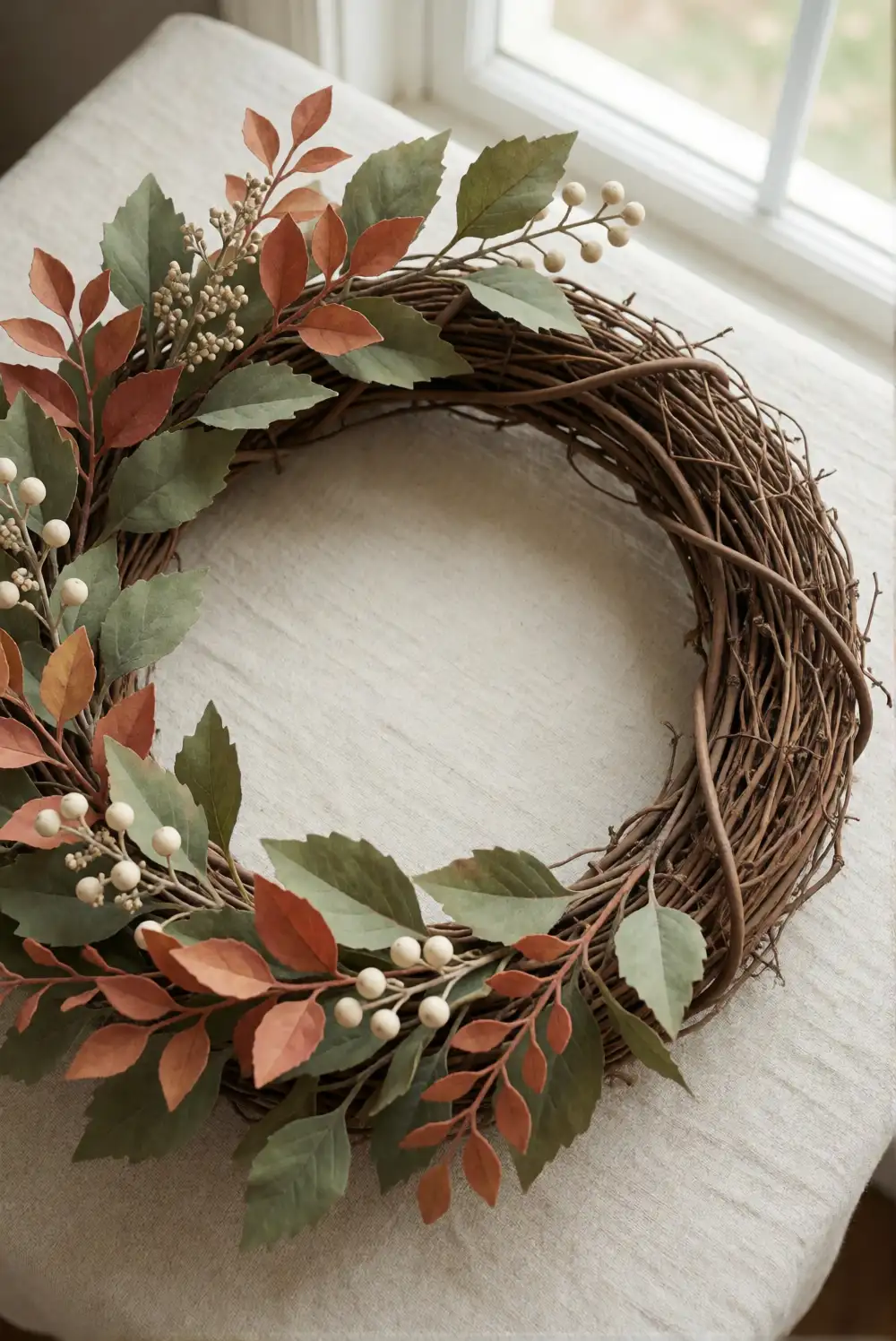
Create a soft autumn wreath with a simple grapevine base, sage-toned leaves, terracotta foliage, and a few cream-colored accents. Tuck the leaves into the base in one direction, layering larger pieces underneath smaller ones for a natural shape. Leave some of the woven vine visible so the finished wreath feels airy rather than packed. A narrow piece of neutral fabric can secure the wreath to a hook without adding another strong color.
Place the terracotta leaves in small groups so they draw the eye without overpowering the sage. For a more organic finish, vary leaf shapes and let a few stems extend beyond the wreath’s outline. Hang it on a door, above an entryway bench, or on an interior wall where its muted colors can complement everyday decor. If using natural foliage, let it dry fully before arranging and keep the wreath away from damp or windy spots.
Golden Yellow, Brown, and White Entryway Bowl
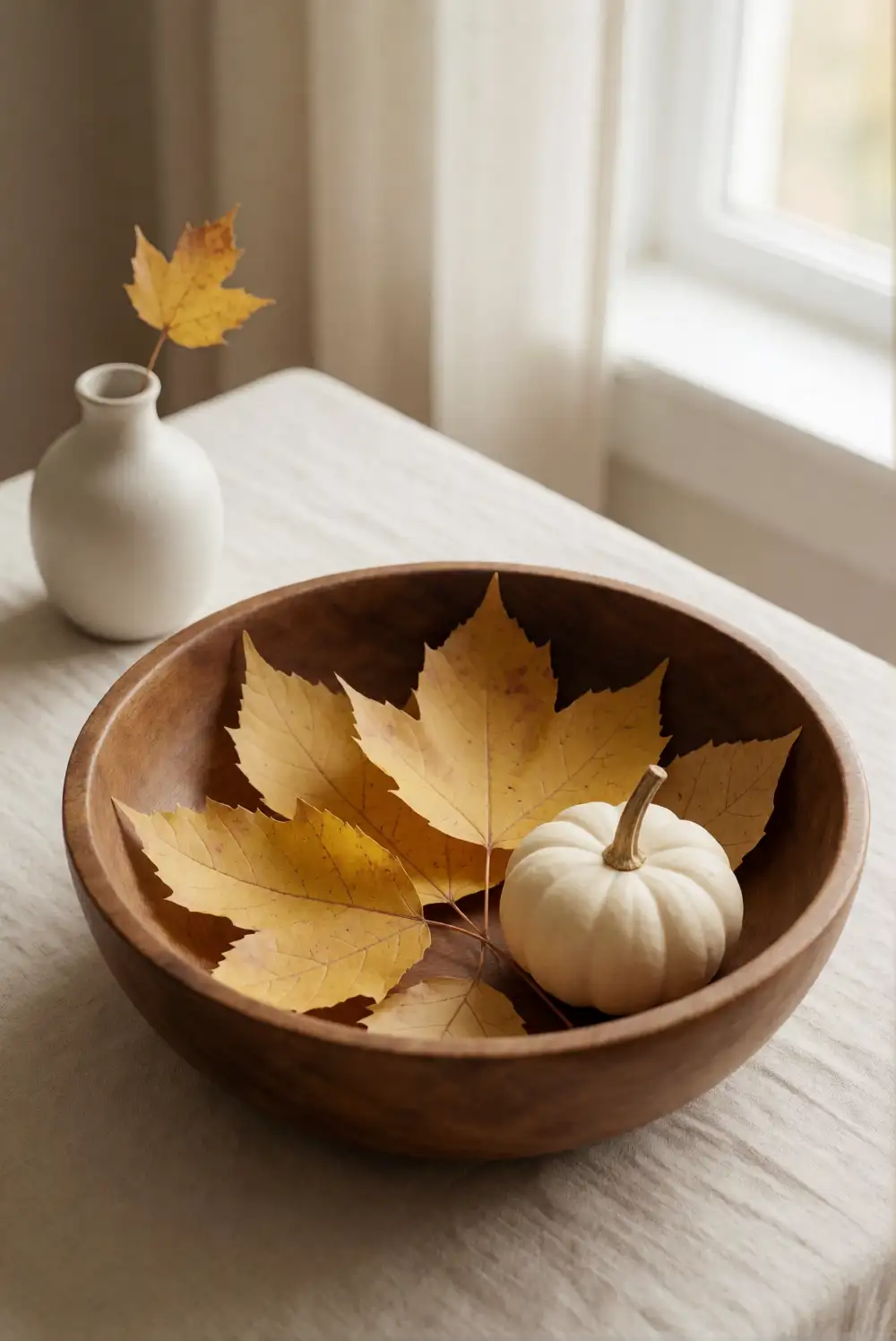
Bring a sunny leaf palette to the entry with a wide brown bowl, golden yellow leaves, and a few white decorative gourds. Set the bowl on a console or entry table and place the gourds inside, then tuck leaves around the rim so some curl naturally over the edge. A small white vase beside the bowl can echo the lighter accents and balance the deeper wood. This simple arrangement makes a useful landing spot feel seasonal without taking over the whole surface.
Choose a shallow bowl if the entry table is narrow, and keep the leaves away from keys or other items you use every day. A mix of golden and ochre leaves adds depth, while the white pieces keep the display fresh. For a more minimal arrangement, use only a few leaves and one larger gourd; for a fuller look, layer in extra foliage. Replace dried natural leaves as needed, or choose reusable faux versions for easy seasonal storage.
Rust, Blush, and Olive Sofa Cushion Mix
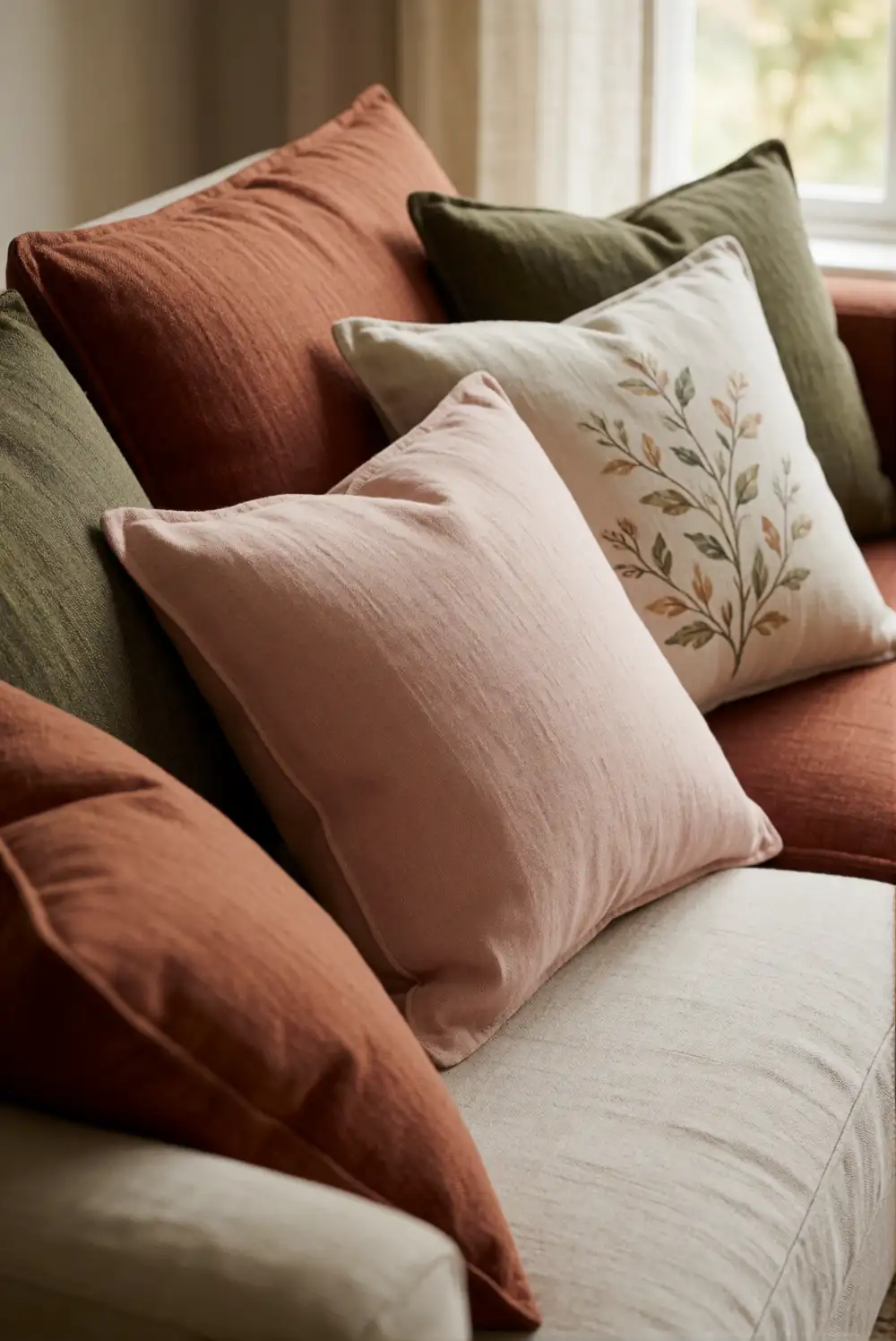
Refresh a sofa with a leaf-inspired combination of rust, blush, and olive cushions. Start with solid covers in two of the shades, then add a cushion with a subtle botanical pattern that includes the remaining color. Arrange the larger cushions at the corners and place the patterned one where its print can be seen. Repeat one shade in a nearby throw or small vase to connect the seating area with the rest of the room.
Keep the fabrics varied but coordinated: washed linen, soft cotton, and a nubby weave add texture without needing bold prints. If your sofa is already colorful, use blush and olive as small accents and let rust appear in just one cushion. For a quieter palette, choose dusty versions of each shade rather than bright tones. This mix works especially well with cream upholstery and natural wood, and the covers can be changed easily when the season shifts.
Copper, Plum, and Oatmeal Shelf Styling
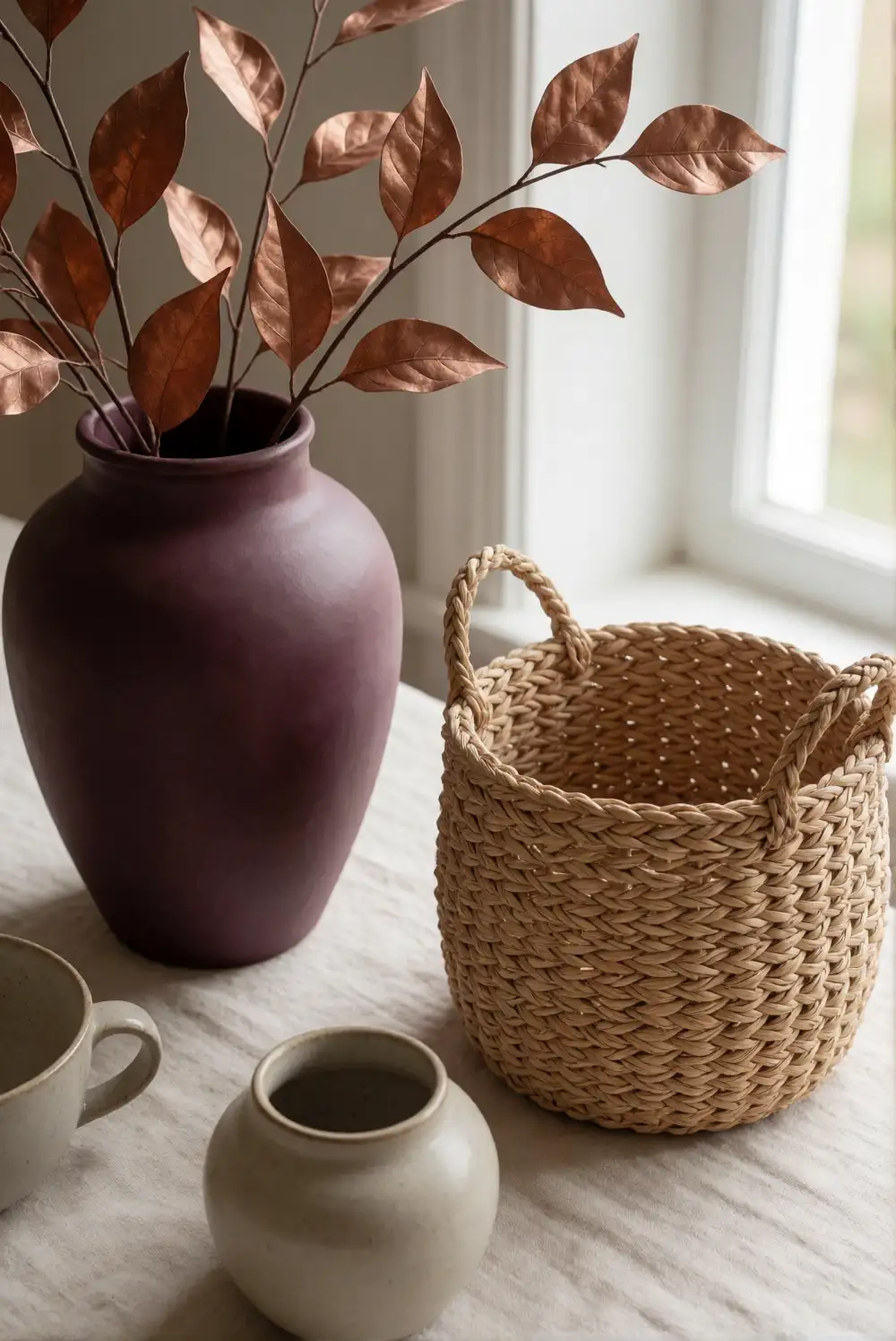
Make a bookshelf or floating shelf feel autumnal with copper leaves, plum-colored pottery, and oatmeal-toned objects. Group a small plum vase with a bundle of copper foliage, then balance it with a pale woven basket or neutral ceramic piece. Leave space around the arrangement so nearby books and everyday objects remain easy to reach. The contrast between rich plum and soft oatmeal gives the leaves a setting that feels seasonal while still blending with a calm home interior.
Keep the display grounded by repeating the plum shade on another shelf or in a nearby textile. A single copper-toned object can provide enough shine, so avoid scattering metallic accents throughout the room. If you are using real branches, trim them to fit comfortably and change the water regularly. For a simple variation, place the leaves in a low ceramic vessel instead of a tall vase. This palette looks especially balanced against light walls and natural wood shelving.
Rust, Dusty Blue, and Camel Coffee Table Tray
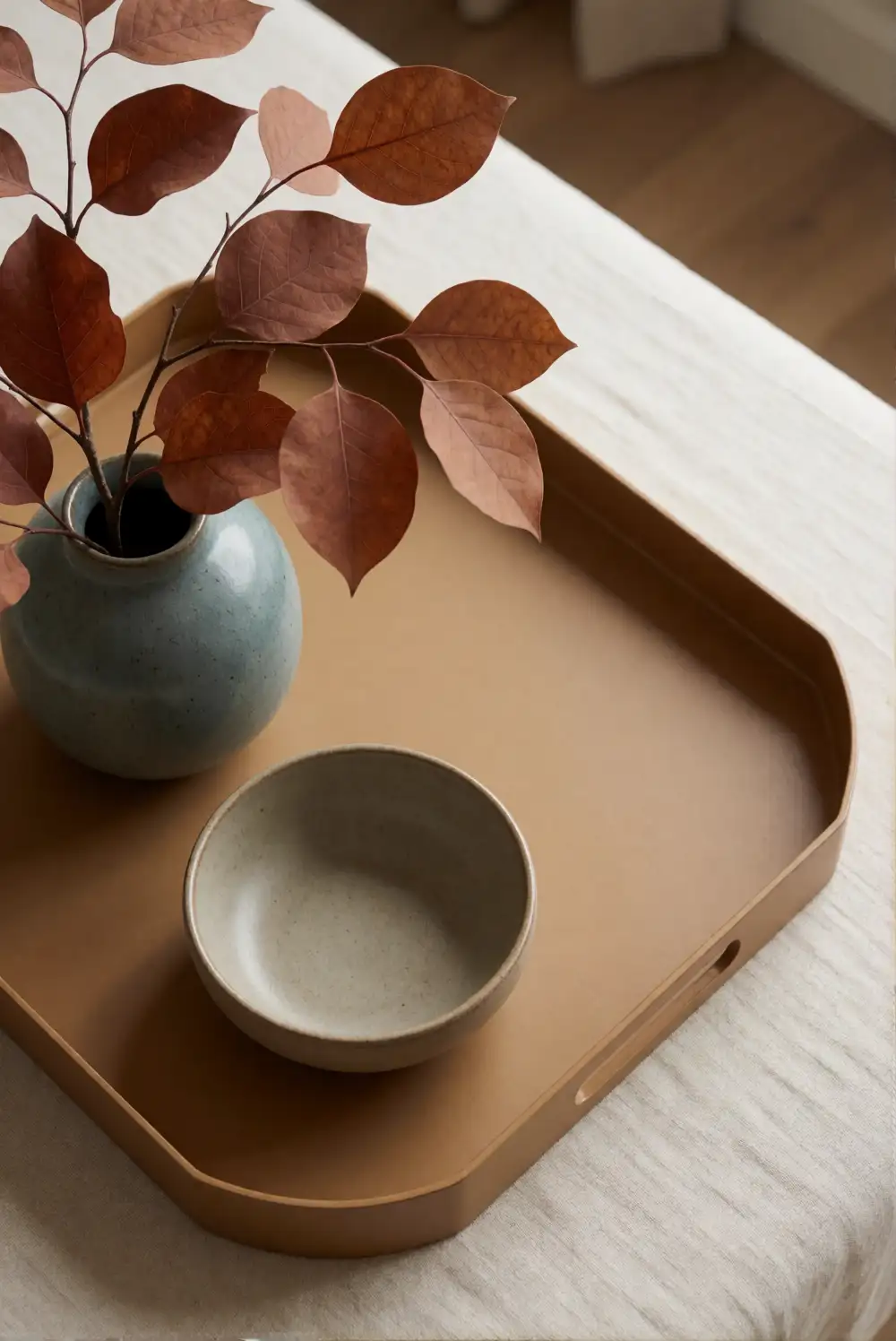
Build a coffee table arrangement around a camel-colored tray, then bring in rust leaves and one small dusty blue ceramic vessel. Place a low bowl or coaster stack inside the tray, leaving enough room for the objects to feel intentional rather than crowded. A few leaves can rest beside the vessel or tuck into it as a simple arrangement. The unexpected blue softens the warmth of rust and camel, creating a fall palette that feels fresh instead of strictly traditional.
Choose a tray with handles if you want to move the arrangement when using the table. Keep decorative pieces low enough to preserve sightlines across the room, and limit the number of items so the tray remains practical. If your room already includes blue, echo it in a cushion or small art object nearby. For a more earthy effect, choose a muted blue glaze and textured camel fabric, then let the leaves provide the strongest seasonal color.
Cranberry, Moss, and Ivory Dining Centerpiece
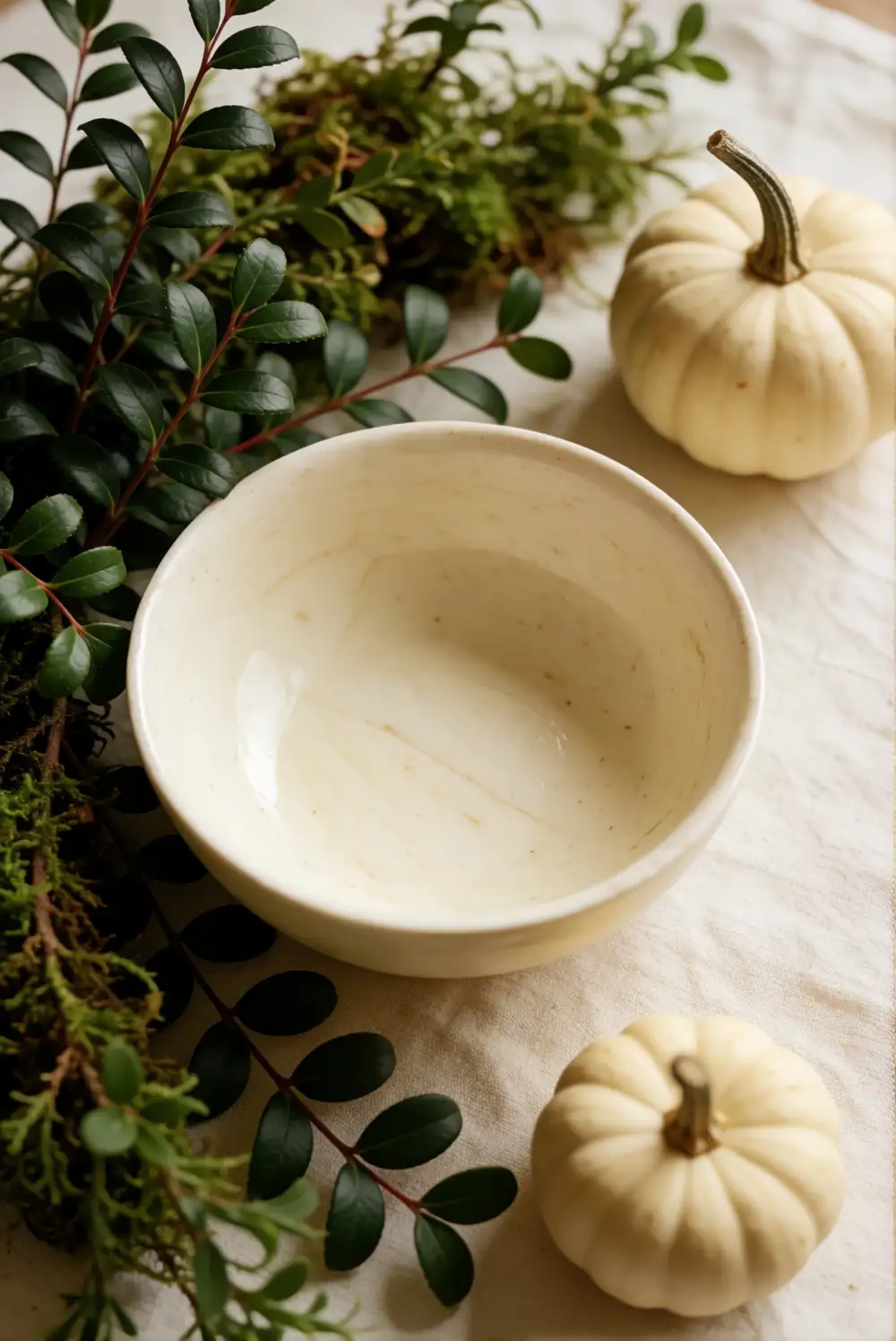
Arrange a dining centerpiece with cranberry-colored leaves, moss green foliage, and ivory ceramics. Set a low ivory bowl in the center of the table and layer the leaves around its base, alternating the deeper red with green so each shade is visible. Add a few small ivory gourds or smooth ceramic forms inside the bowl. Keeping the display low makes it easy to see across the table, while the combination feels rich enough for a seasonal meal.
Use cranberry as an accent rather than covering the whole table with it; the ivory pieces help the darker color stand out. Moss-colored napkins or placemats can carry the green through the place settings without competing with the centerpiece. For a softer everyday version, use fewer cranberry leaves and more pale ceramics. Natural leaves suit a short-lived gathering, while fabric or faux leaves make the arrangement reusable. Keep the centerpiece compact enough to leave room for serving dishes.
Amber, Charcoal, and Ivory Porch Pot
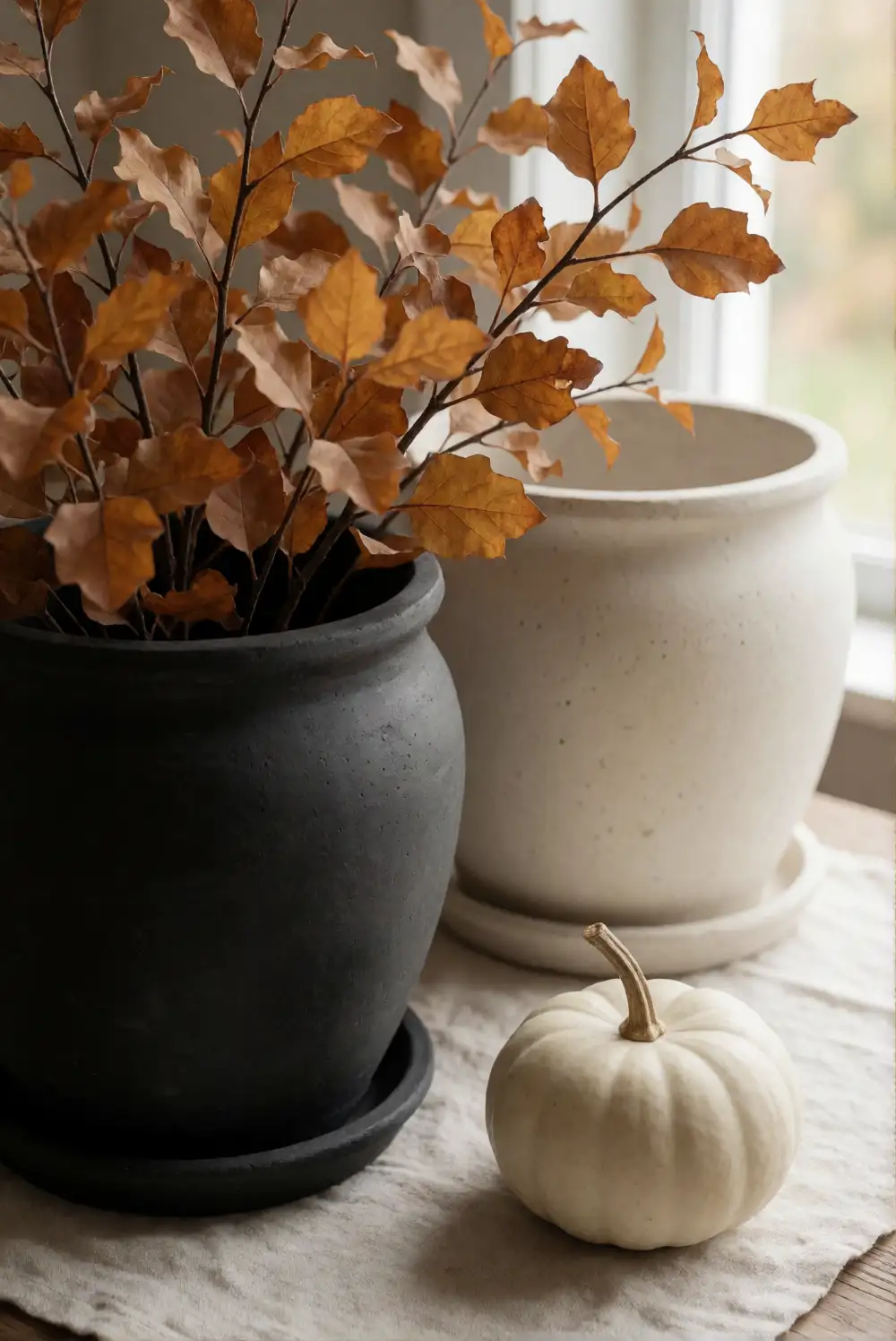
Style a porch pot with amber leaves, a charcoal planter, and ivory accents for a crisp autumn entry. Fill a sturdy planter with seasonal foliage or branches, arranging taller stems toward the back and lower leaves around the rim. Set a small ivory planter or pale decorative gourd nearby to lighten the darker container. The amber leaves bring warmth, while charcoal gives the display a defined shape that works well against pale siding, brick, or natural wood.
Choose outdoor-friendly materials and secure lightweight stems where wind is common. A mix of leaf sizes makes the pot look fuller without requiring a dense arrangement, and a charcoal planter can be reused through other seasons. If the porch is shaded, choose brighter amber and ivory details to keep the display visible. For a coordinated entry, repeat charcoal in a doormat or outdoor lantern, then keep the rest of the colors simple so the foliage remains the focal point.
Ochre, Dusty Rose, and Forest Green Bedroom Layers
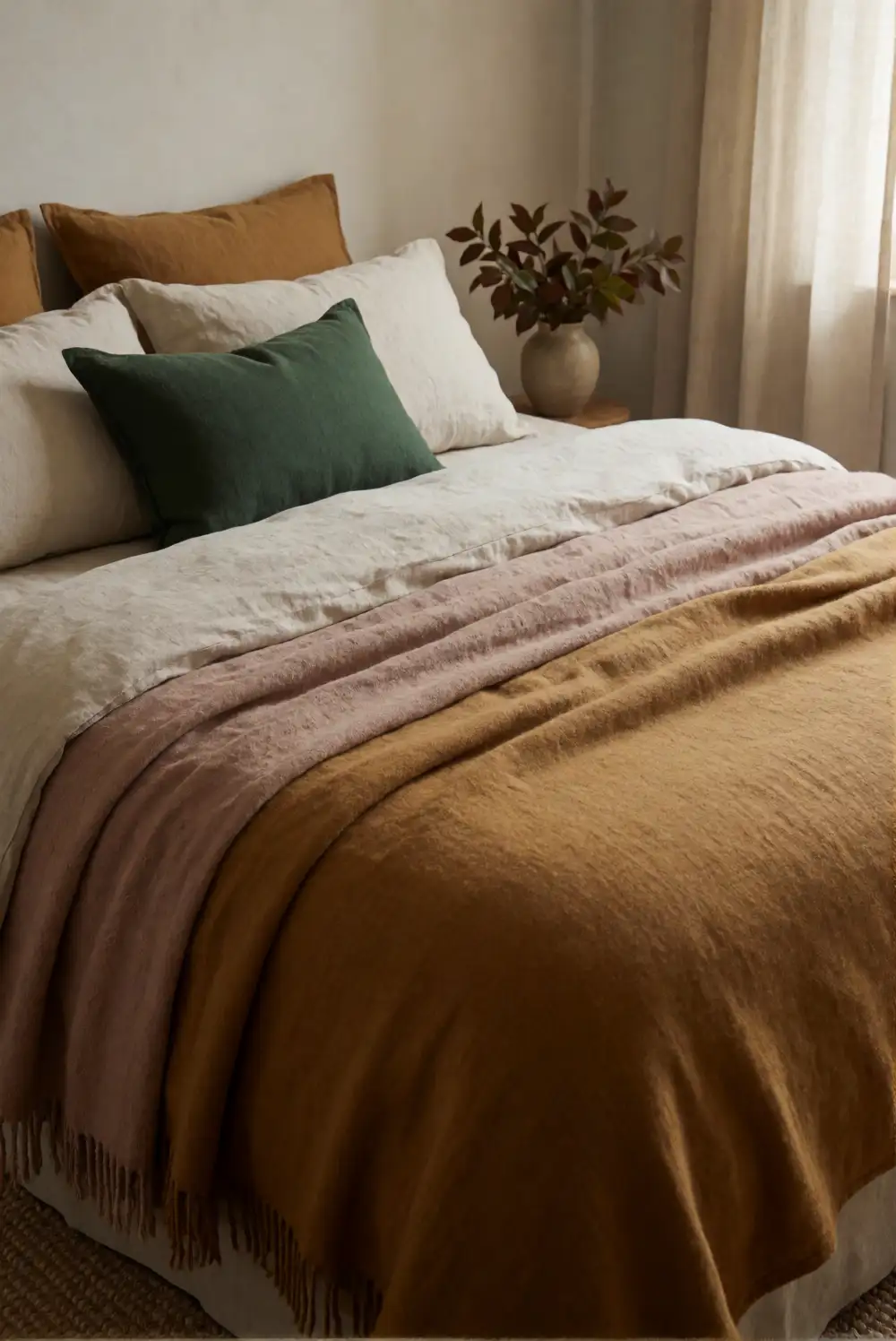
Bring leaf colors into a bedroom with ochre bedding, a dusty rose throw, and forest green accent cushions. Keep the largest area calm with cream or neutral sheets, then fold the ochre layer across the foot of the bed. Add dusty rose in a soft throw and use forest green in a cushion or small bedside vase. The balance of warm and cool shades gives the room an autumn update while keeping the bed comfortable and easy to restyle.
Use soft, washable textiles for pieces that will be handled often, and choose muted shades that work with your existing furniture. If the room is small, keep forest green to a couple of accents and let lighter bedding preserve an open feel. A small vase of seasonal leaves on the nightstand can tie the palette together without adding visual clutter. When the season changes, swap the ochre and rose layers for lighter colors while keeping the neutral base in place.
Autumn leaf colors can make a room feel seasonal without requiring a complete decor overhaul. Choose a palette that suits your home, repeat its shades thoughtfully, and use leaves, textiles, pottery, or wood to bring the colors together. A few well-placed changes can refresh a mantel, dining table, entryway, or bedroom while keeping the space comfortable and personal.