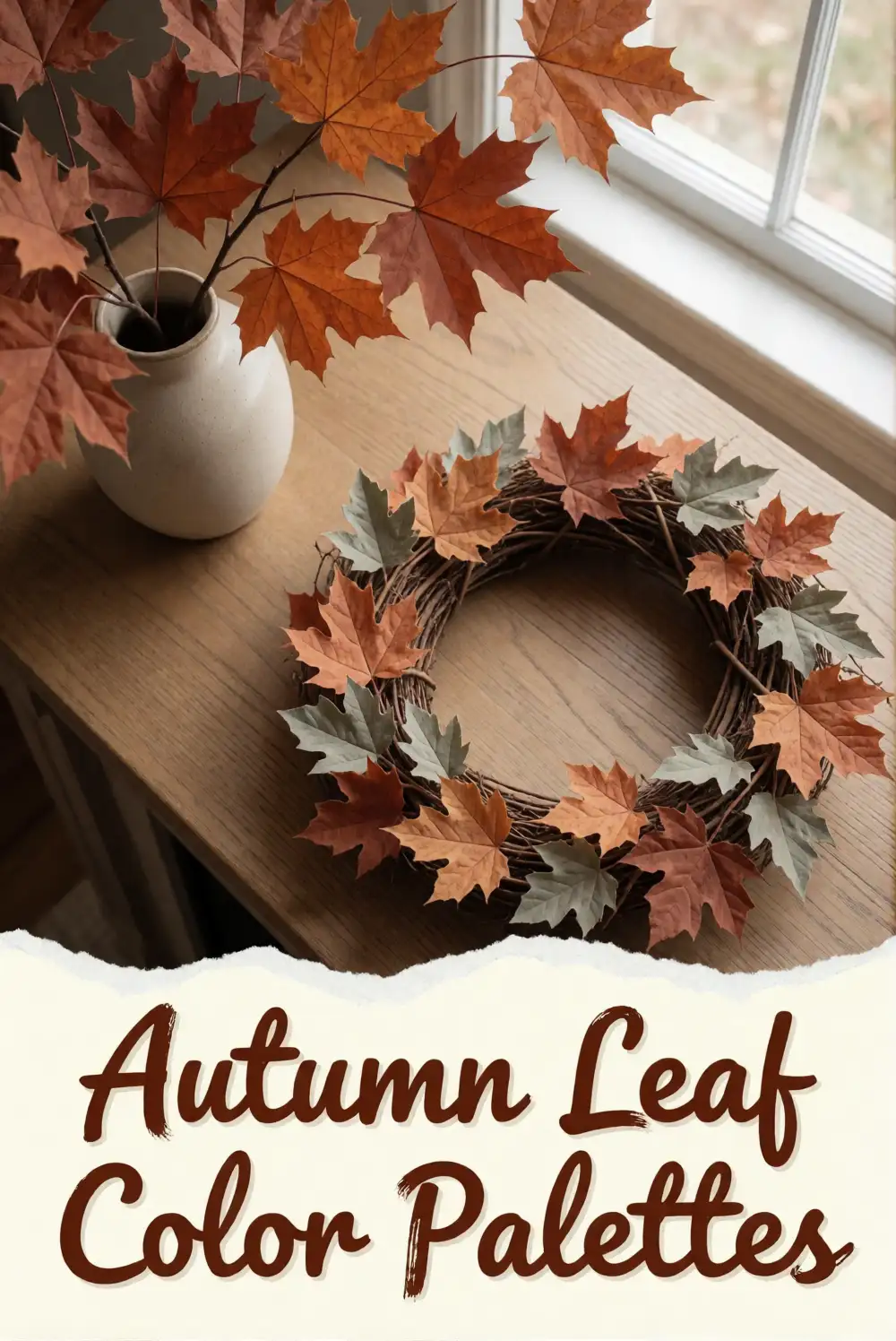
Bring the quiet beauty of autumn indoors with natural textures, warm colors, and simple decor inspired by the changing season. These approachable projects use leaves, branches, dried flowers, and other earthy details to make your space feel snug and thoughtfully styled.
Pressed Leaf Art in a Simple Wooden Frame
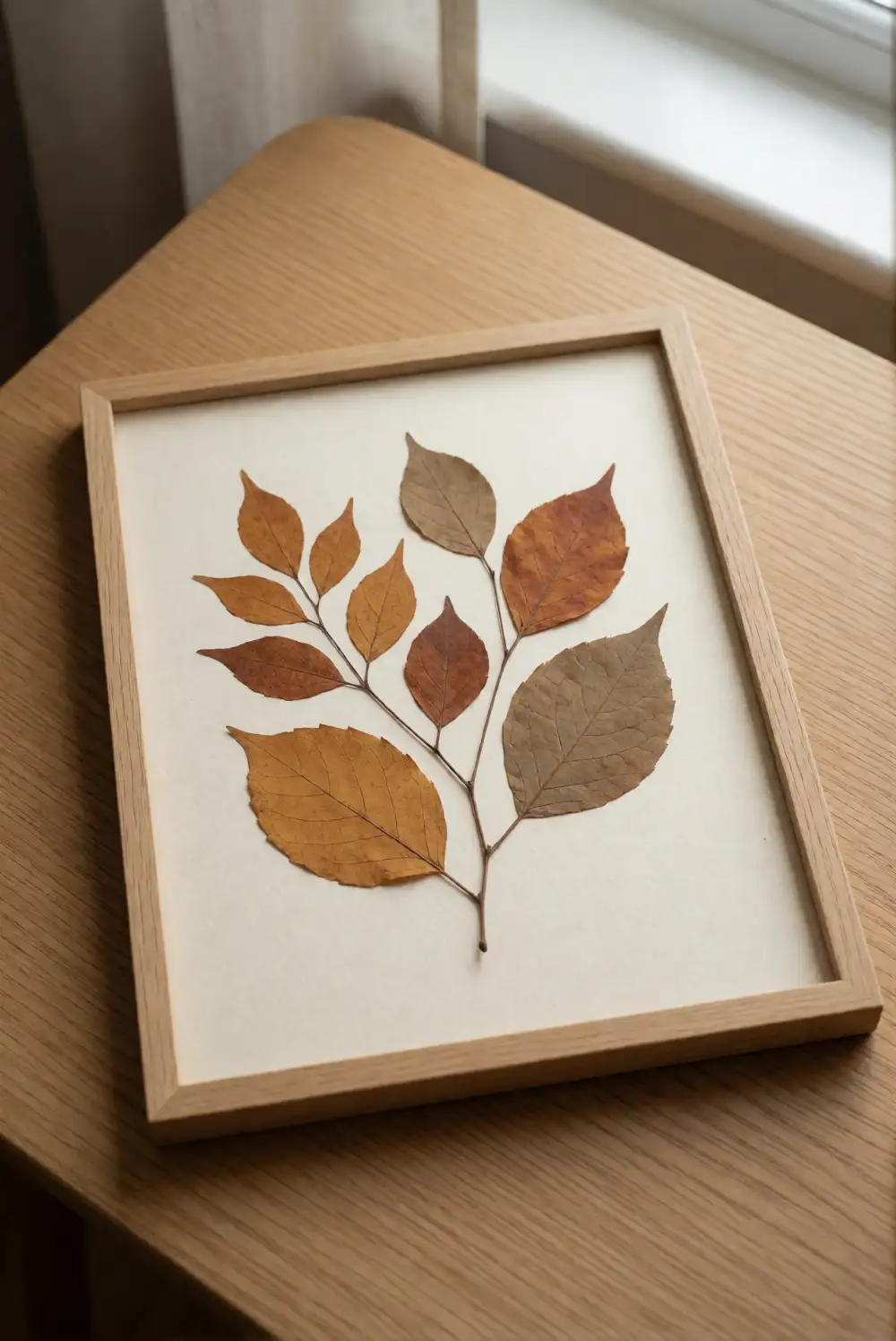
Gather a few freshly fallen leaves in varied shapes, then press them between sheets of absorbent paper under a heavy book until fully dry. Arrange the flattened leaves on cream cardstock, leaving breathing room around each one, and secure them with small dots of clear craft glue. Place the composition inside a plain wooden frame with the glass removed or fitted carefully over the art. Choose leaves in ochre, rust, and muted brown for a naturally moody effect.
Keep the arrangement airy rather than filling every corner, so the leaf silhouettes remain easy to appreciate. A single large leaf can make a quiet statement, while several smaller leaves create a loose botanical composition. Lean the frame on a mantel or shelf beside pottery and a small branch clipping. If the leaves curl or crumble, press fresh replacements and handle them gently. A pale background helps the earthy leaf colors stand out against darker furnishings.
A Dried Leaf Garland for a Mantel
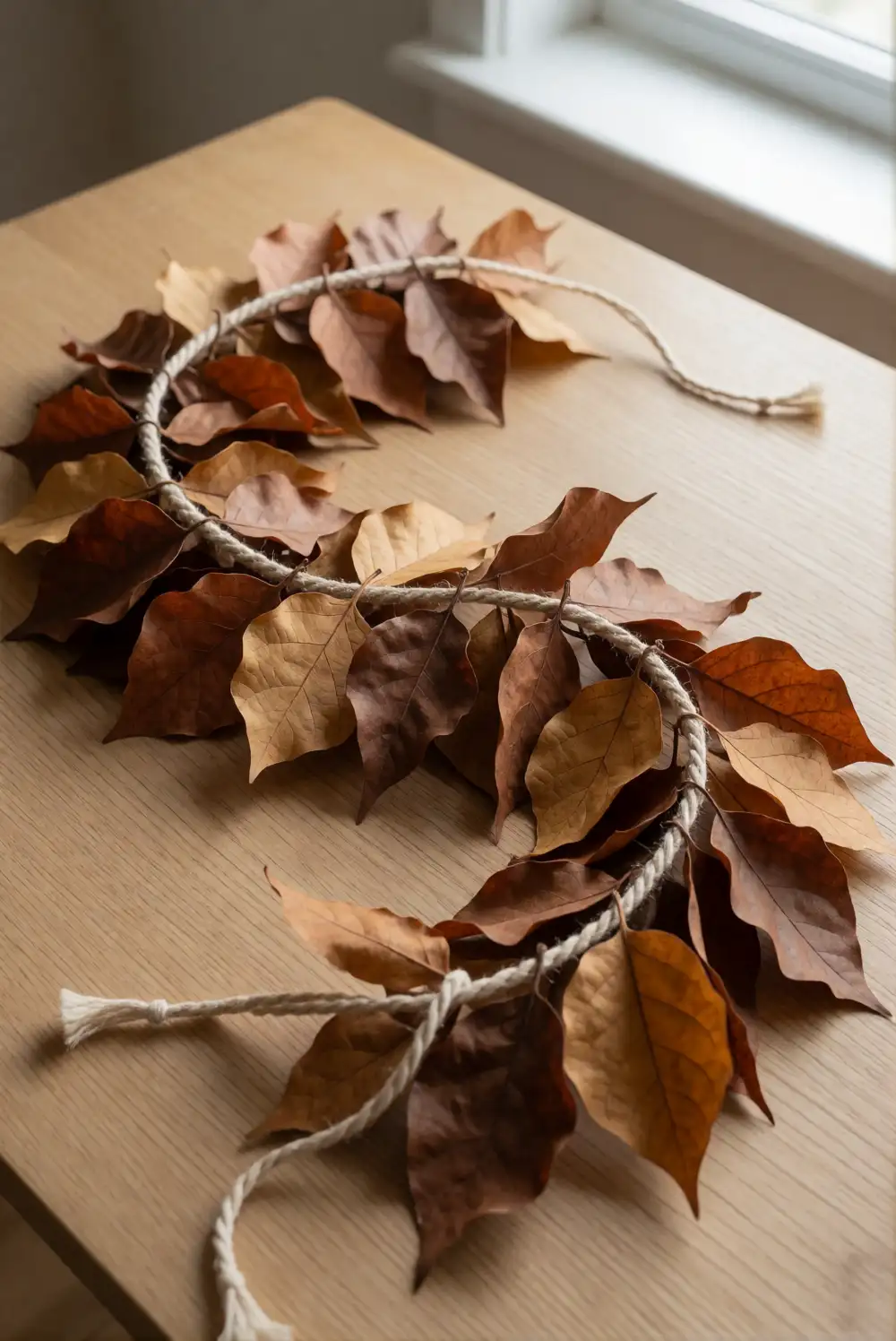
Choose sturdy leaves in warm autumn shades and let them dry flat between sheets of paper. Cut a length of natural cotton cord to suit your mantel, then attach each leaf with a small piece of floral wire wrapped gently around its stem. Alternate leaf shapes and colors as you work, leaving a little space between each one so the garland feels light rather than crowded. Tie simple loops at the ends for hanging, or drape it loosely across the mantel surface.
For a fuller look, tuck in a few dried seed heads or slender sprigs of preserved foliage. Keep the garland away from heat sources and use removable hooks if you are hanging it on a painted wall. Let the ends trail naturally over the mantel edges, or arrange the cord in a soft curve. Pair it with a ceramic vase and a stack of neutral-toned books for an understated seasonal display that does not overwhelm the room.
A Mini Pumpkin and Dried Grass Arrangement
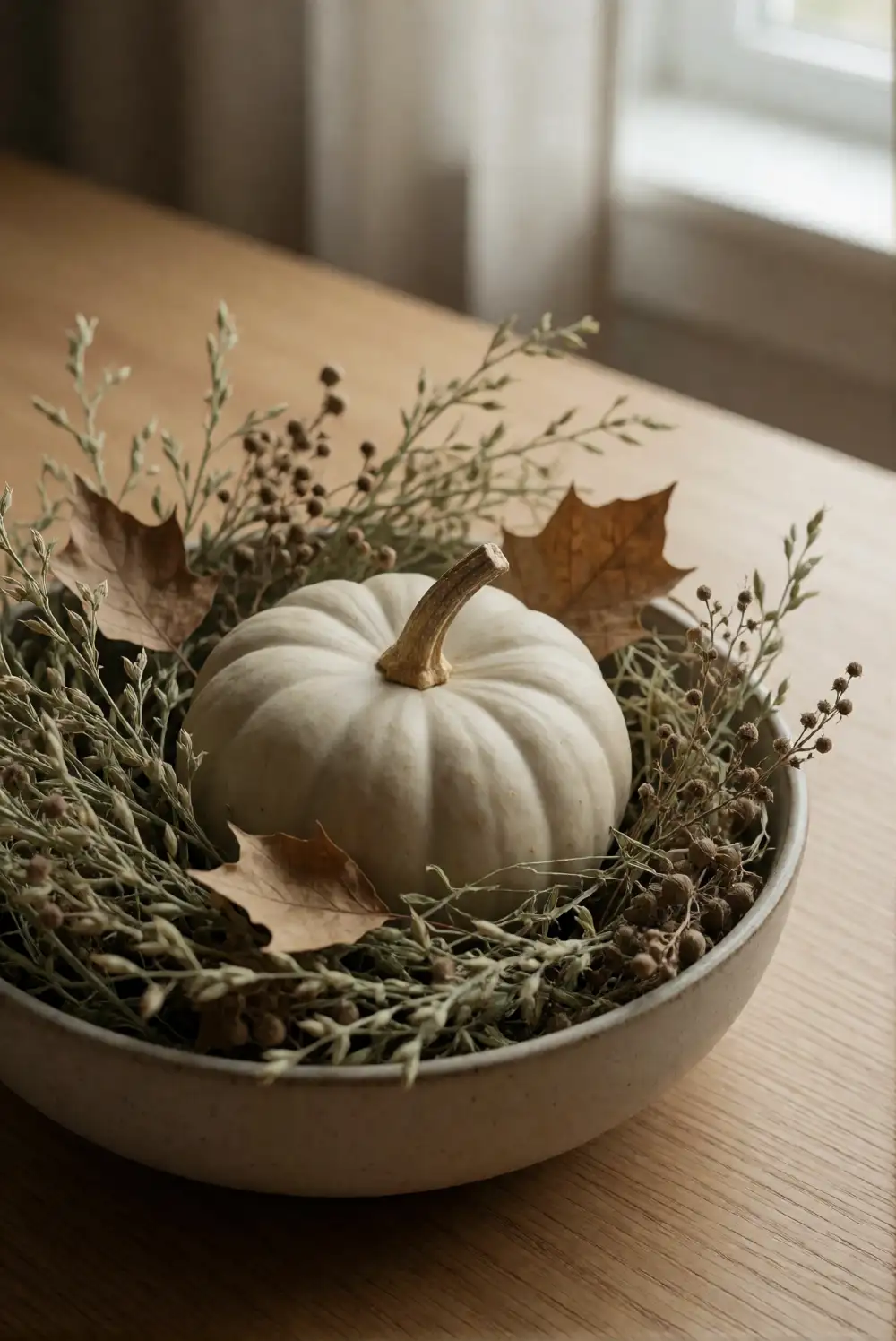
Select a small decorative pumpkin with an intact stem, then place it in a shallow ceramic bowl or low tray. Add dried grasses, preserved leaves, and a few slender seed stems around its base, trimming them with garden scissors so the arrangement stays low and balanced. Turn the pumpkin until its best side faces forward, and vary the heights of the stems for a relaxed, natural silhouette. A muted cream, sage, or dusty orange pumpkin suits a warm, earthy room.
Use the arrangement as a dining table centerpiece, a coffee table accent, or a welcoming detail on an entry console. Keep the bowl simple so the pumpkin and grasses remain the focus, and avoid overcrowding the display with too many contrasting textures. Refresh any dusty stems by gently brushing them outdoors. For a subtle variation, combine two small pumpkins in different tones and use a shallow wooden dish instead of ceramic for an especially rustic finish.
A Branch Arrangement in an Amber Glass Vase
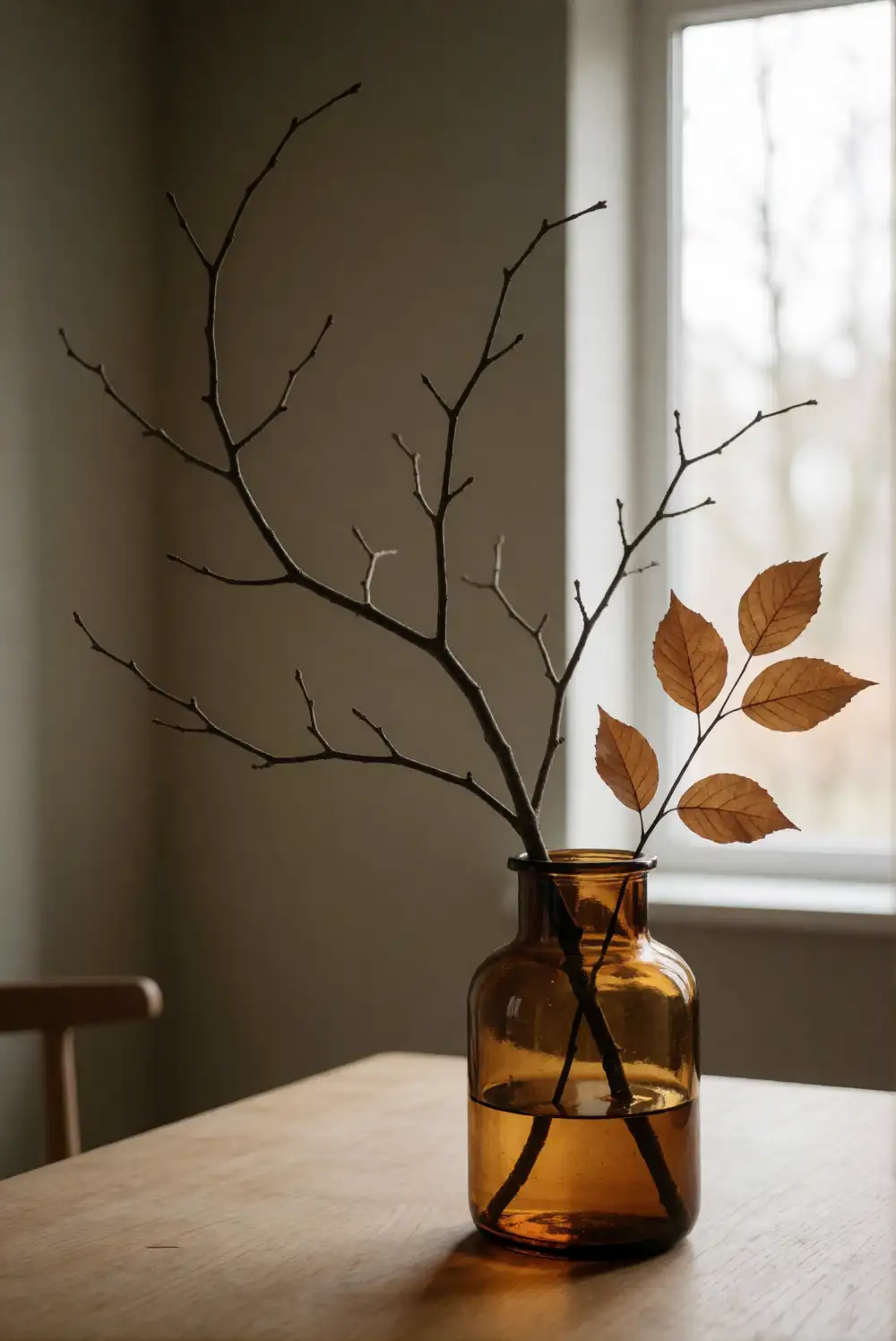
Find a few clean fallen branches with interesting curves and remove any loose bark or leaves. Choose an amber glass vase with a sturdy base, then add the branches one at a time, turning the vase as you work to create a balanced outline. If the stems slide around, place a small bundle of pebbles inside the vase to anchor them. Keep the branches long enough to make an elegant shape without brushing a nearby wall or blocking a view.
Set the vase on a side table, mantel, or low shelf where its silhouette can stand out against a calm background. Amber glass adds warmth, while clear glass gives the natural wood more visual emphasis. A few dried leaves attached to the branches create a softer autumn look, but a bare arrangement feels especially sculptural. Dust the branches occasionally and keep them away from walkways, where a projecting twig could be bumped or snagged.
A Pinecone and Moss Table Centerpiece
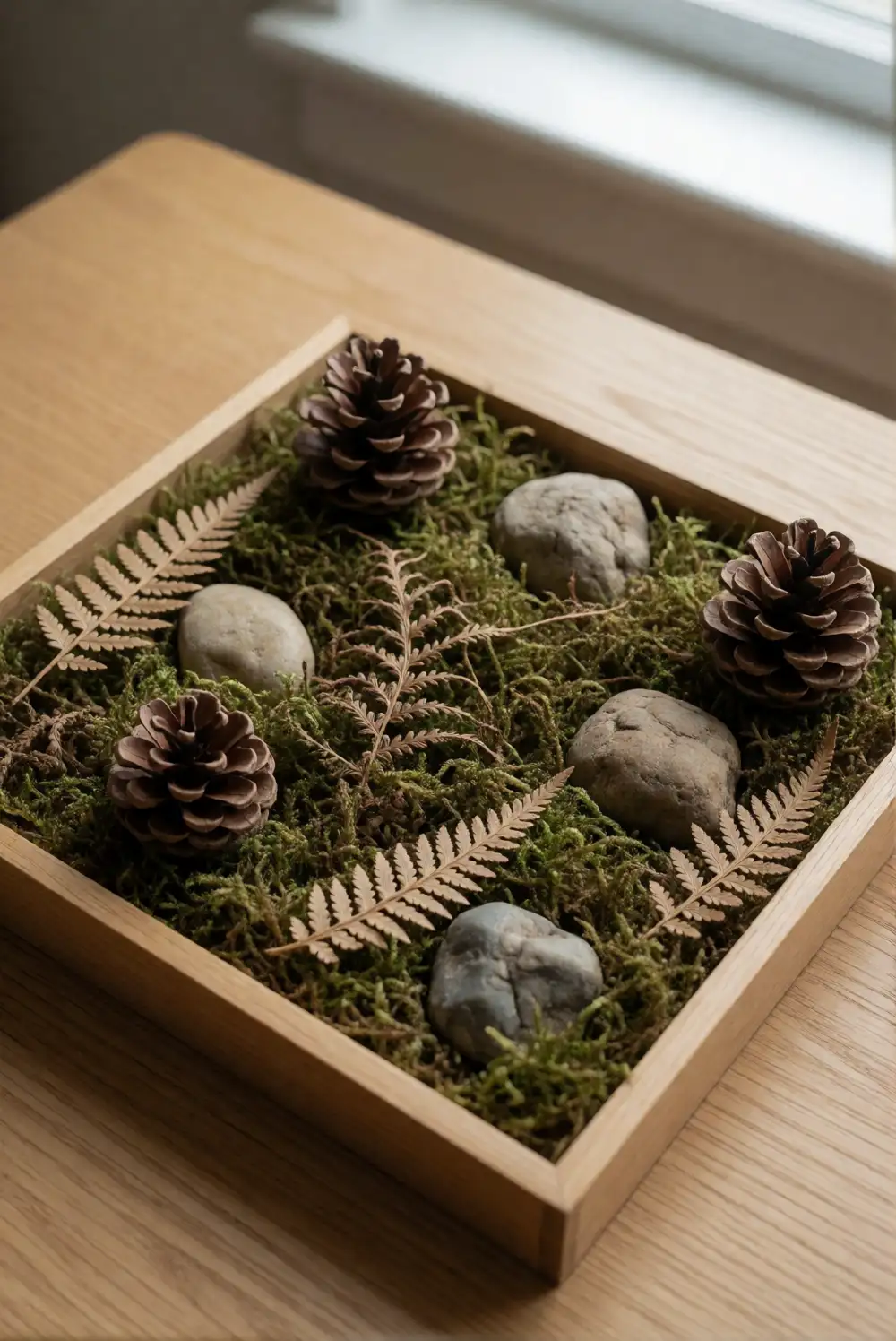
Place a shallow wooden tray on a table and cover its center with a thin layer of preserved moss. Arrange several clean pinecones across the moss, turning each one to show its open scales and natural shape. Tuck in dried fern pieces or a few small branches to soften the edges, then add a smooth stone or two for contrast. Keep the materials loosely grouped, allowing small patches of the tray to remain visible for an unfussy woodland-inspired composition.
Choose pinecones with varied sizes and tones to give the centerpiece depth without making it feel busy. The tray makes the arrangement easy to move when the table is needed, and it can also dress a console or open shelf. Add a small ceramic dish nearby for a warmer layered display, or leave the centerpiece alone as a quiet focal point. If using collected natural materials, make sure they are clean and completely dry before arranging them indoors.
A Botanical Wreath Made with Dried Foliage
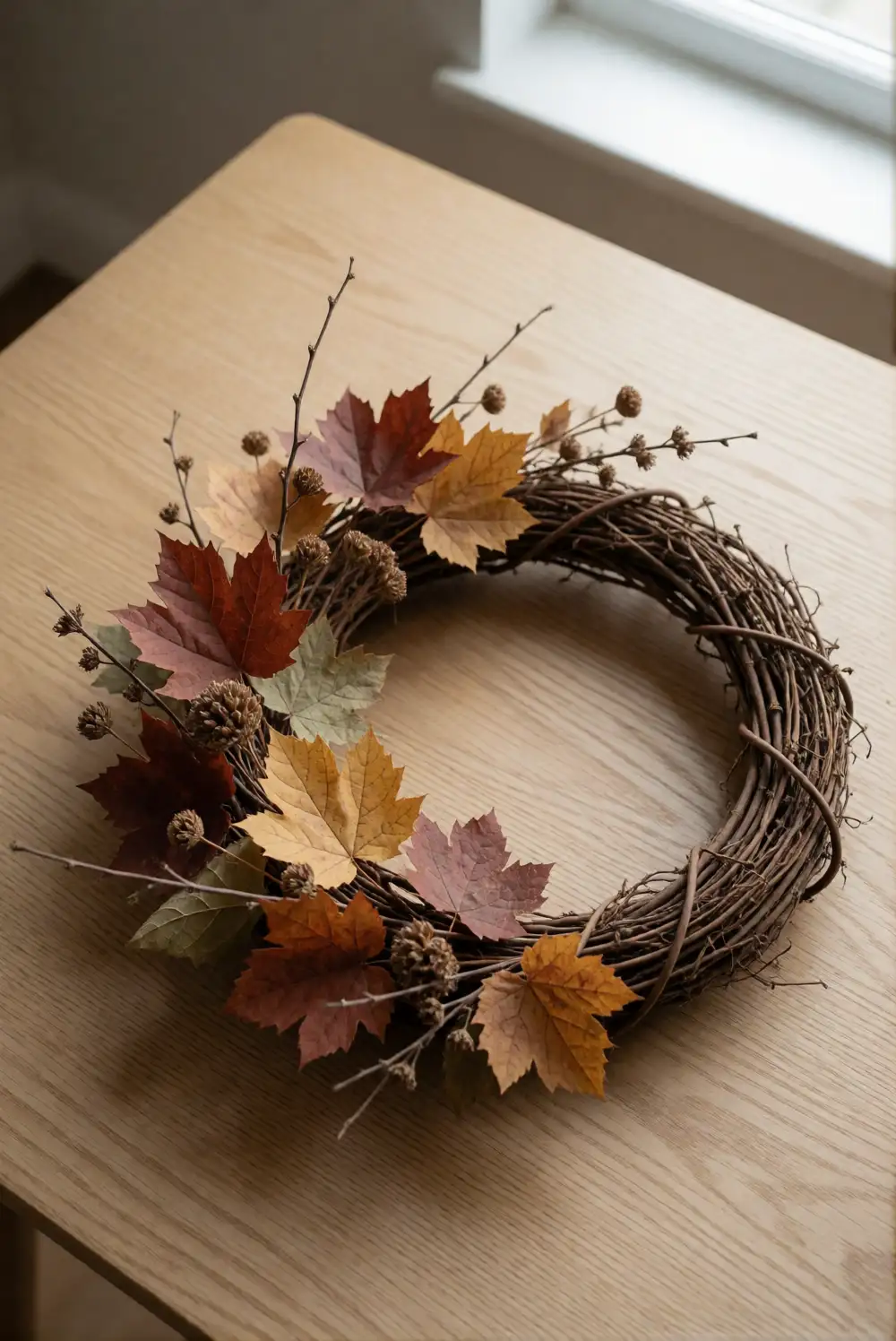
Start with a plain grapevine wreath base and gather dried leaves, seed heads, and slender branches in a restrained autumn palette. Attach the foliage in small bundles using floral wire, working in the same direction around the ring so the stems create a flowing shape. Leave sections of the woven base visible for a natural, airy finish. Tuck the stems securely into the grapevine, then trim any pieces that stick out awkwardly or make the wreath difficult to hang.
Hang the wreath on an interior door, above a console, or against a simple wall where its colors can be appreciated. Keep the design slightly asymmetrical for an organic look, or distribute the foliage evenly if you prefer a more traditional circle. A narrow linen ribbon can soften the top edge without competing with the leaves. Store the wreath in a dry box between seasons, and handle delicate dried stems carefully when moving or rehanging it.
A Fabric-Wrapped Jar with a Soft LED Glow
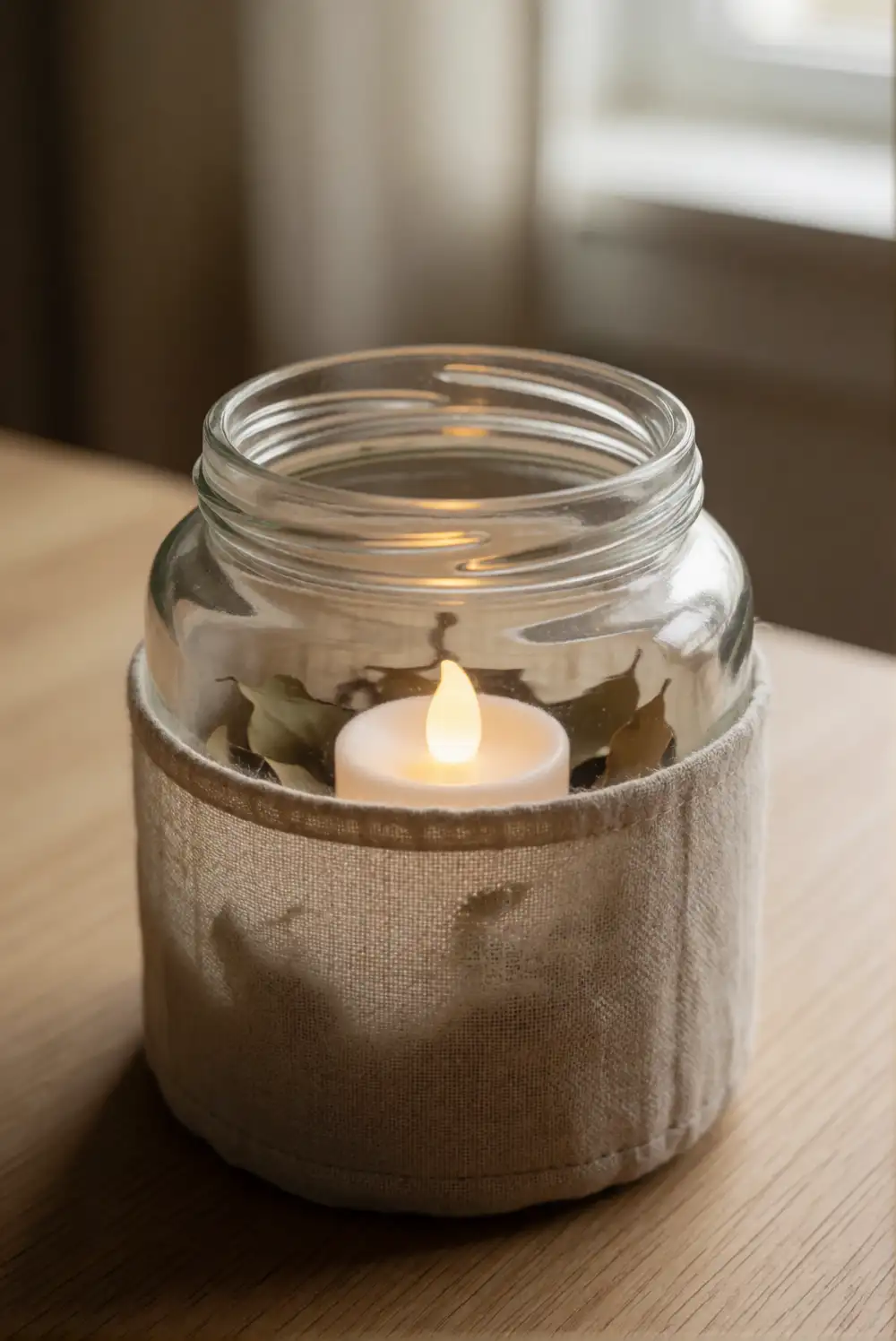
Wash and dry a clear glass jar, then wrap its middle with a strip of textured linen or gauze in a warm neutral shade. Secure the fabric discreetly at the back with craft glue, keeping the jar opening clear. Place a battery-operated LED tea light inside and check that it sits upright before switching it on. Add a few dried leaves around the base of the jar, rather than inside it, for a simple arrangement with a gentle, cozy glow.
Use the jar on a bookshelf, bedside table, or entry console, where the soft light can make an evening corner feel inviting. Try a loosely woven fabric for a more rustic texture or a smooth cotton strip for a cleaner look. Keep the fabric away from the LED unit if it becomes warm, and follow the light maker’s use instructions. A small grouping of jars in different shapes can create a coordinated display without requiring matching materials.
A Dried Orange and Leaf Garland
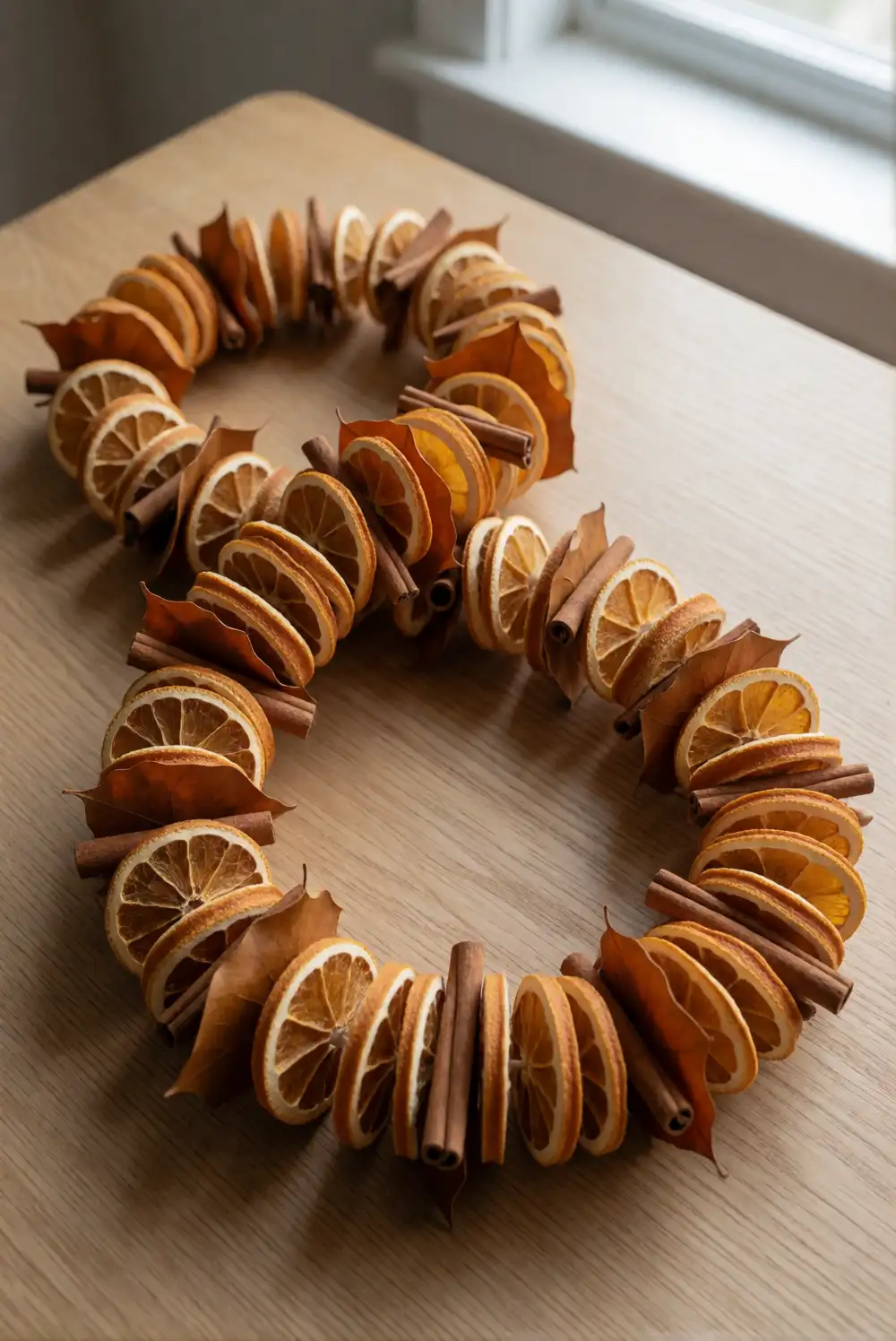
Slice oranges into thin rounds and dry them slowly in a low oven, turning them occasionally until they feel firm and no longer damp. Let the slices cool completely, then thread them onto natural cord with a large blunt craft needle, spacing each round with dried leaves or short cinnamon sticks. Tie a secure knot at both ends and trim the cord to the length you need. The translucent citrus and warm leaf colors bring a seasonal, handmade detail to a simple wall.
Drape the garland over a mantel, across a shelf, or around a plain wreath base. Keep it away from moisture and direct heat so the fruit stays crisp and the leaves keep their shape. If threading feels difficult, attach the pieces with small loops of floral wire instead. Choose orange slices with varied shades and sizes to give the garland a relaxed rhythm, and pair it with natural wood or cream textiles for a calm, coordinated display.
A Woodland Tray with Acorns and Dried Ferns
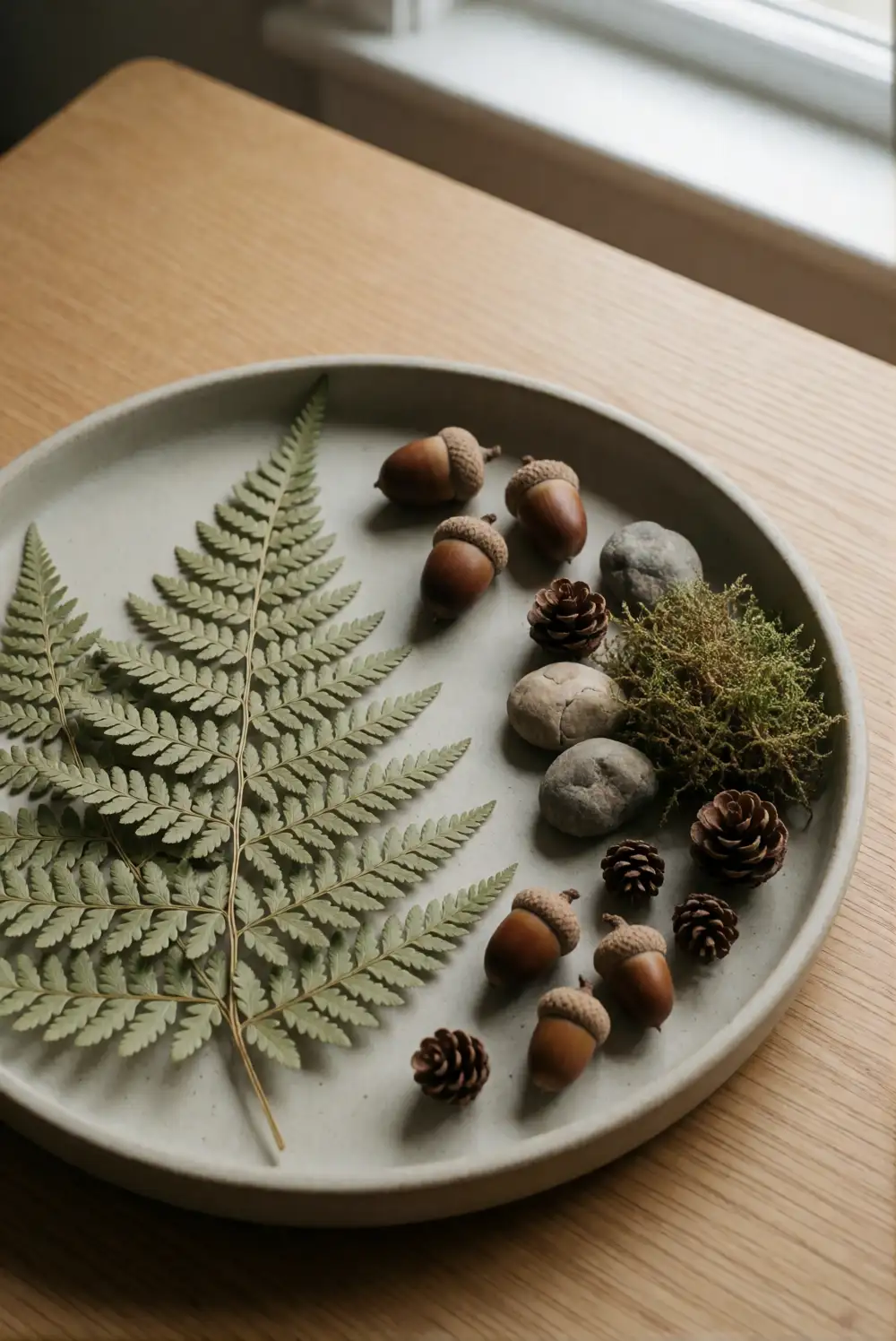
Choose a shallow tray in wood or matte ceramic and arrange a few dried fern fronds along one side. Add clean acorns, small pinecones, and smooth stones in loose clusters, leaving some open space so the natural forms remain distinct. A small piece of preserved moss can add a soft green note beneath the objects. Keep the palette restrained, combining brown, muted green, and warm cream for a collected woodland look that feels composed rather than overly decorative.
Place the tray on a coffee table or console and use it to gather small seasonal objects into one tidy display. Turn the fern fronds so their delicate shapes are visible, and move the heavier pinecones toward the center for balance. You can switch a stone for a small piece of driftwood or add a dried seed head when the display needs a little height. Make sure collected materials are clean and dry before bringing them into your home.
A Layered Fall Shelf with Natural Textures
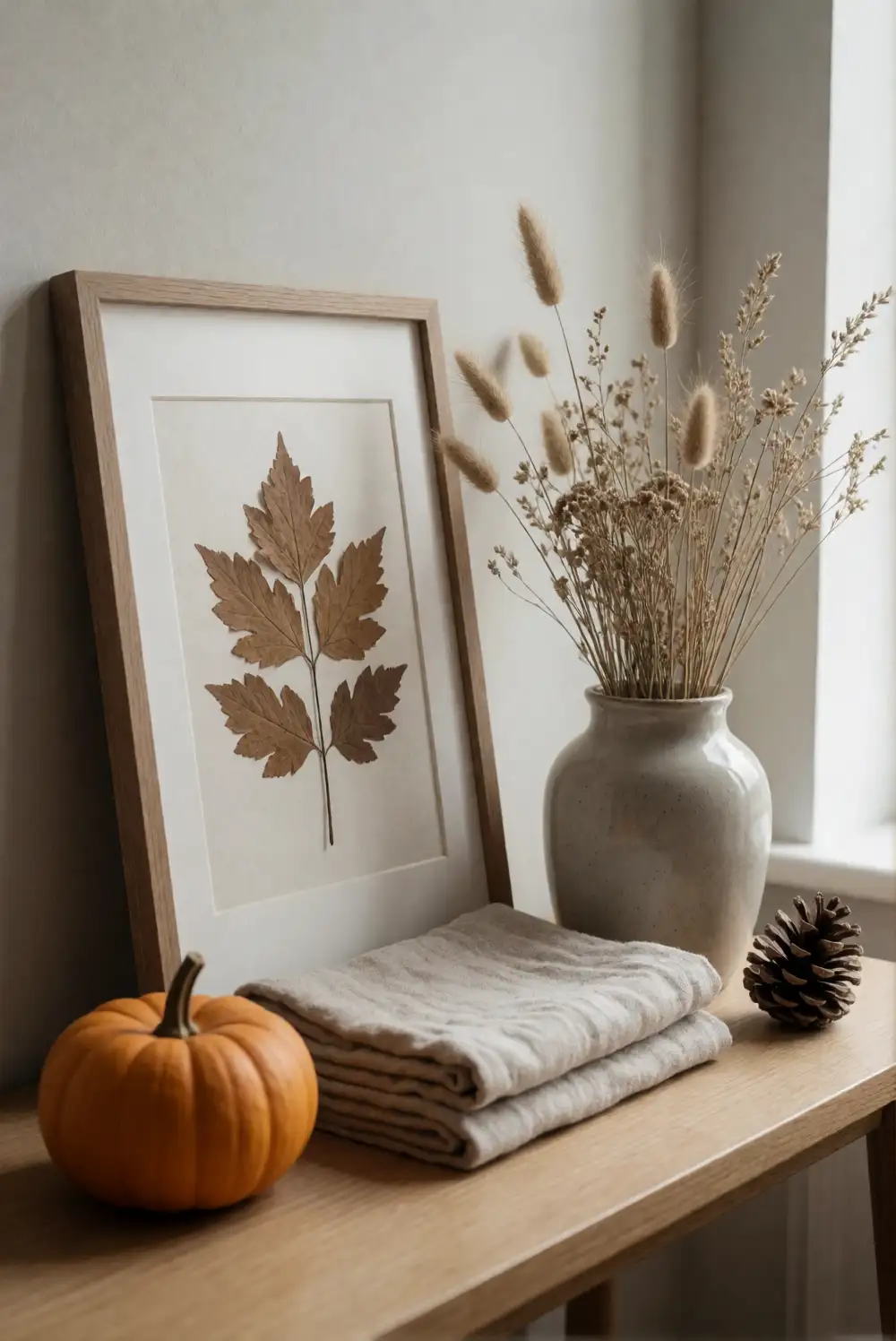
Begin with a calm base of a small framed leaf print, a low ceramic vase, and a folded piece of textured linen. Add a branch clipping or dried grasses to create height, then place a small pumpkin or pinecone nearby to introduce an autumn detail. Lean the frame against the wall rather than hanging it, and vary the height of objects so the arrangement feels layered. Keep a little open space between pieces to prevent the shelf from looking crowded.
Repeat one or two colors, such as rust and cream, across the objects to make the display feel connected. A stack of neutral books can lift a vase, while a shallow dish can gather small natural finds. Move the tallest item toward one end and balance it with a low object on the other side. Edit the shelf by removing anything that competes for attention, and leave room to change a leaf or branch as the season shifts.
Natural autumn details can make a room feel warmer without a complete seasonal makeover. Try a framed leaf, a branch in amber glass, or a softly glowing fabric-wrapped jar, then build your display with textures and colors that already suit your home. A few considered touches are enough to bring the outdoors in and create a cozy fall atmosphere.