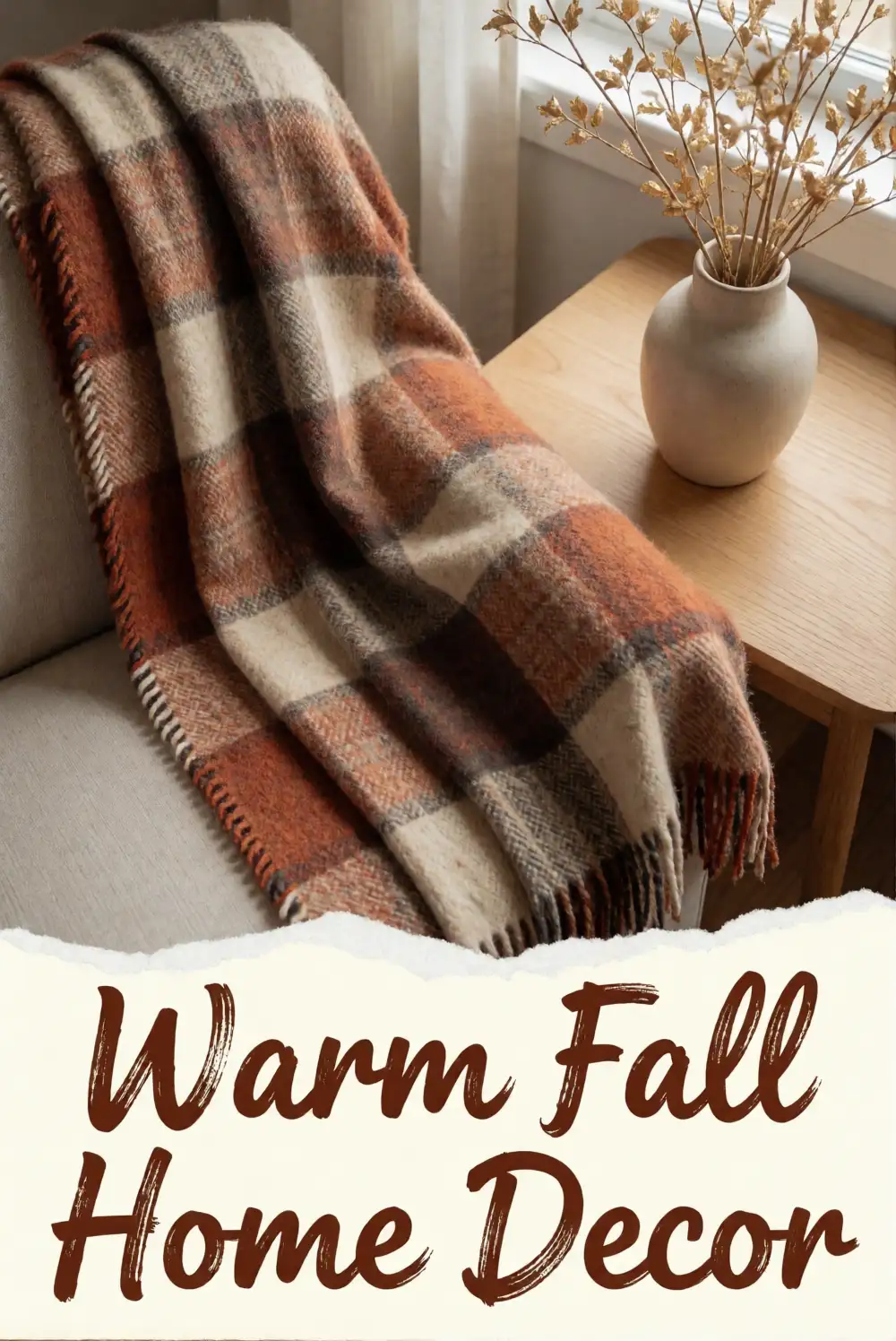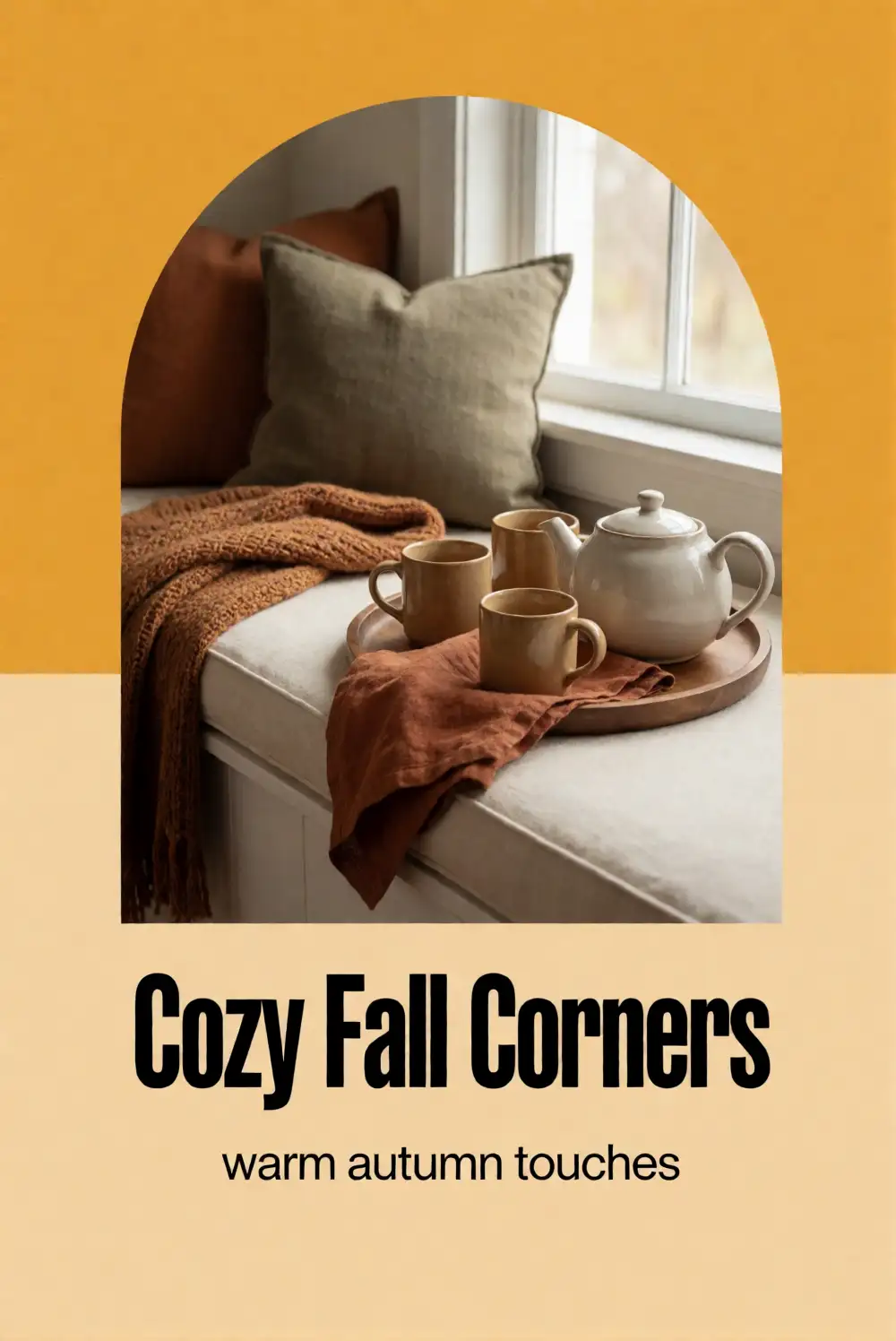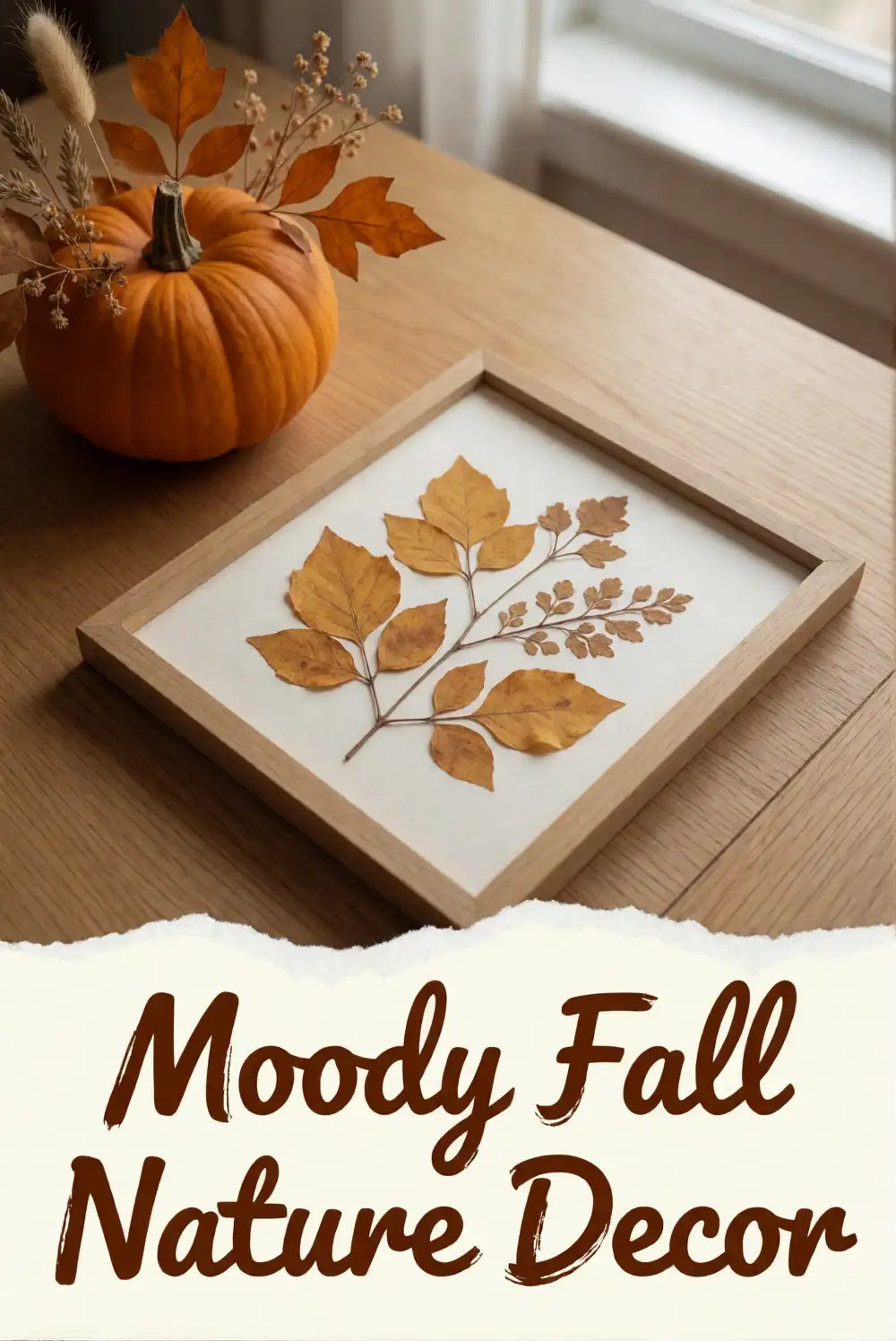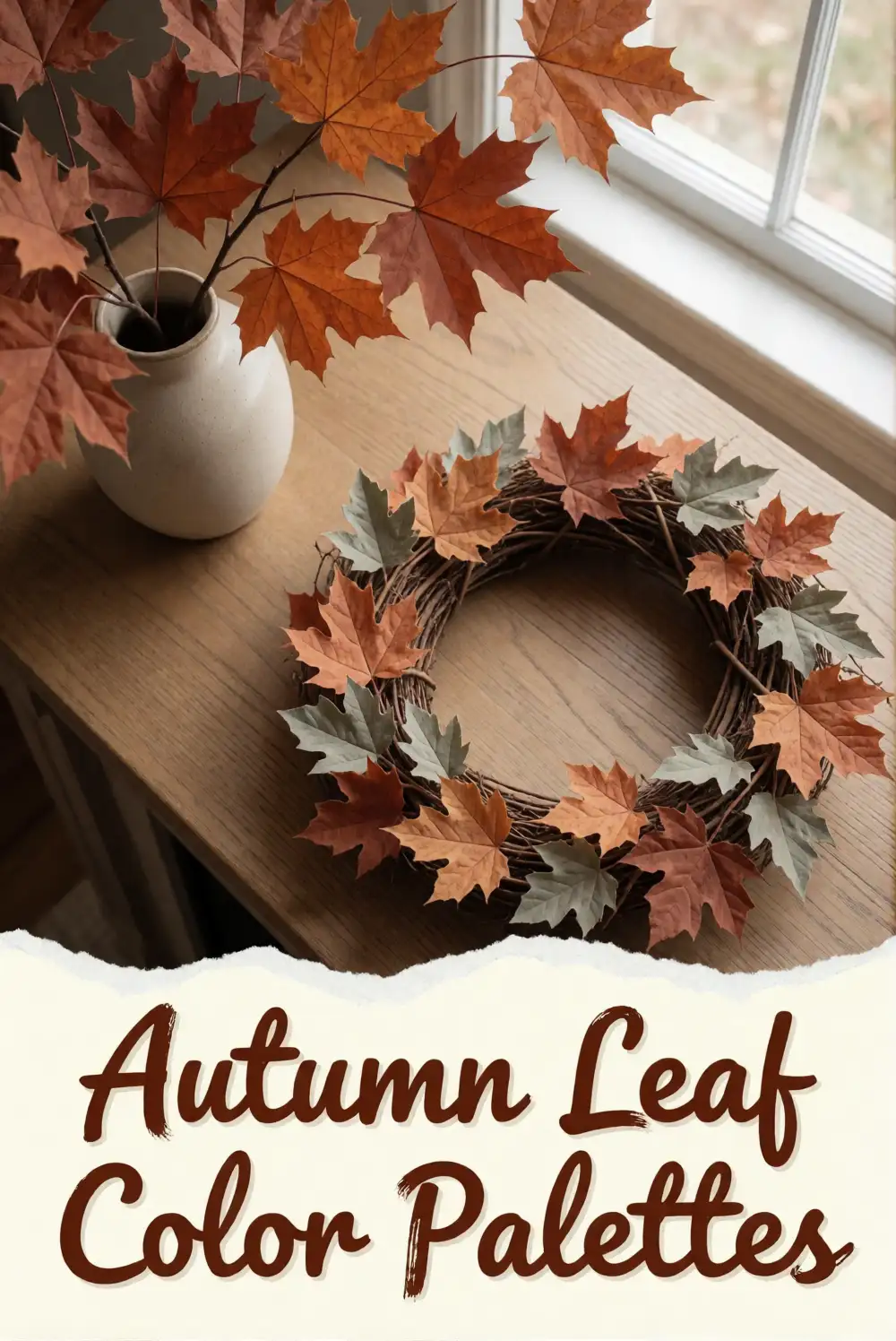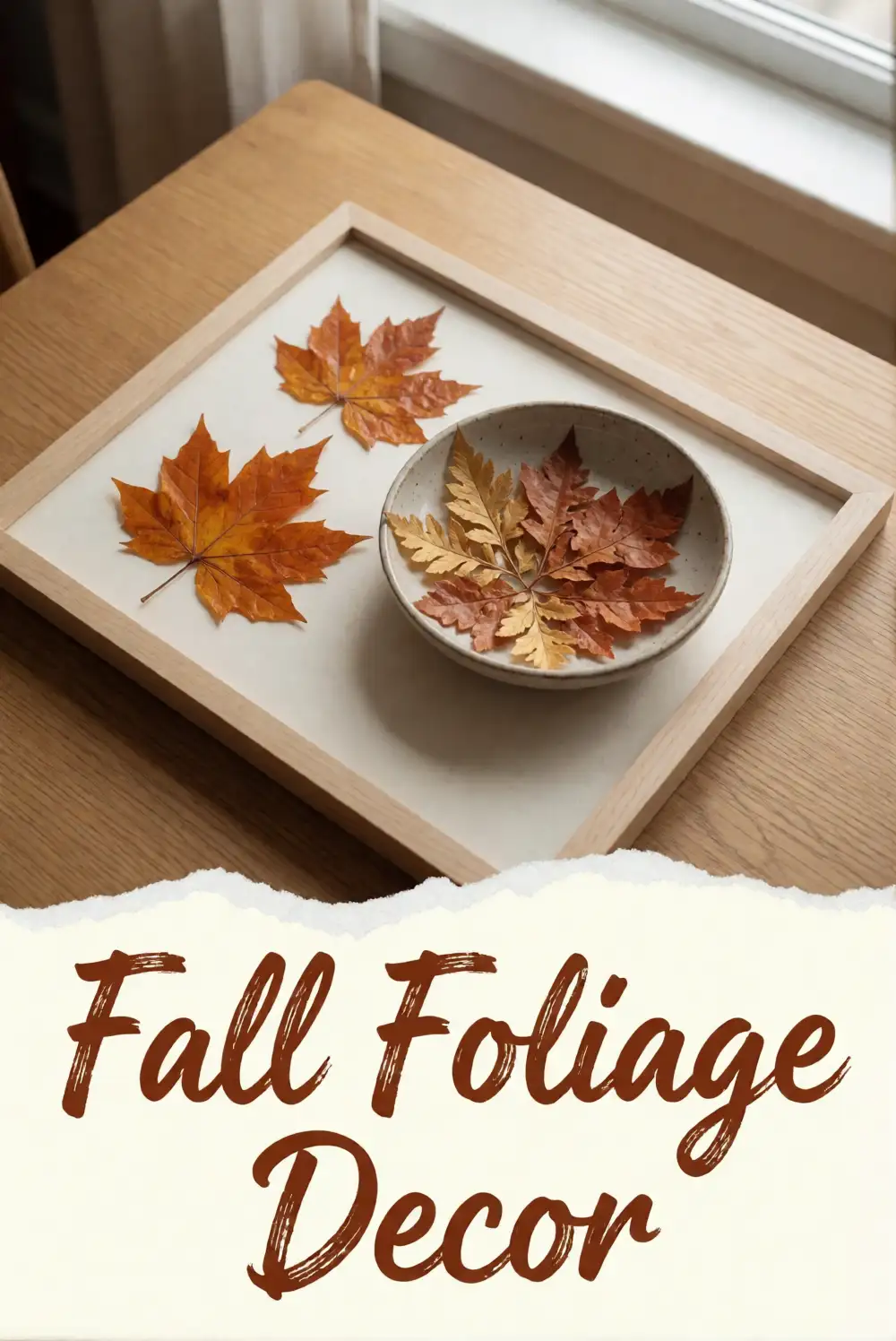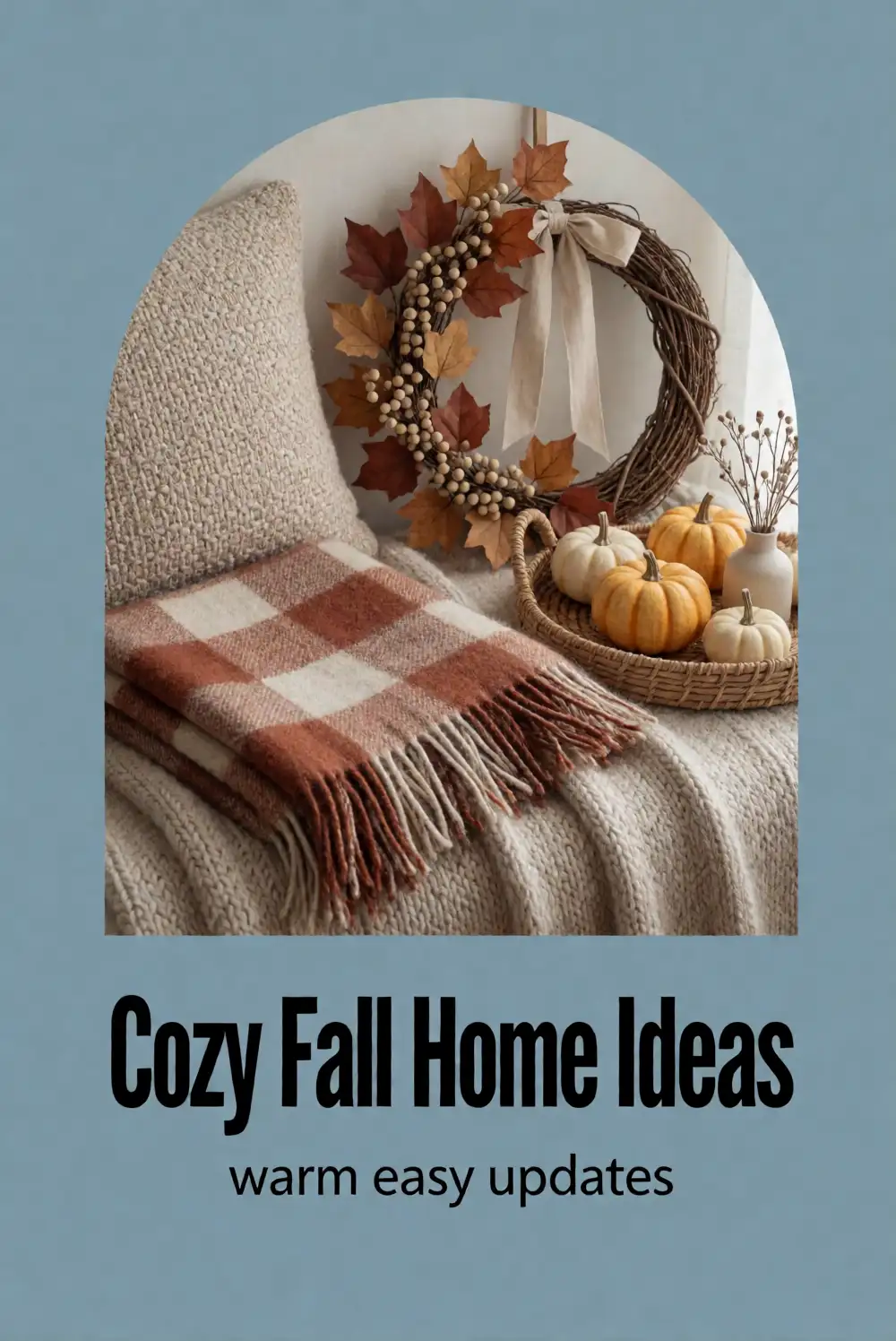
Bring the colors and textures of fall into thoughtful flatlay arrangements with these easy seasonal styling ideas. Use fallen leaves, cozy fabrics, simple ceramics, and natural accents to create inviting scenes for your home, a gathering, or a favorite photo.
Layer Autumn Leaves with a Plain-Covered Book

Choose a closed book with a plain, unmarked cover, then gather a few clean, dry leaves in varied shapes. Place the book slightly off-center on a flat surface and tuck the leaves beneath one corner, letting their edges fan outward. Add a small branch or a single acorn nearby for another natural texture. Keep the arrangement loose rather than perfectly symmetrical so each leaf remains visible and the book gives the flatlay a calm, grounded anchor.
Try a cream cover with rust and golden leaves for a gentle contrast, or choose a darker cover to make pale leaves stand out. Make sure the book has no readable cover text in the finished scene. A folded knit scarf can soften one edge without crowding the composition. This arrangement works on a coffee table or as a seasonal photo; rotate the leaves until their shapes make a clear, balanced outline around the book.
Style a Ceramic Mug with a Leaf Garland
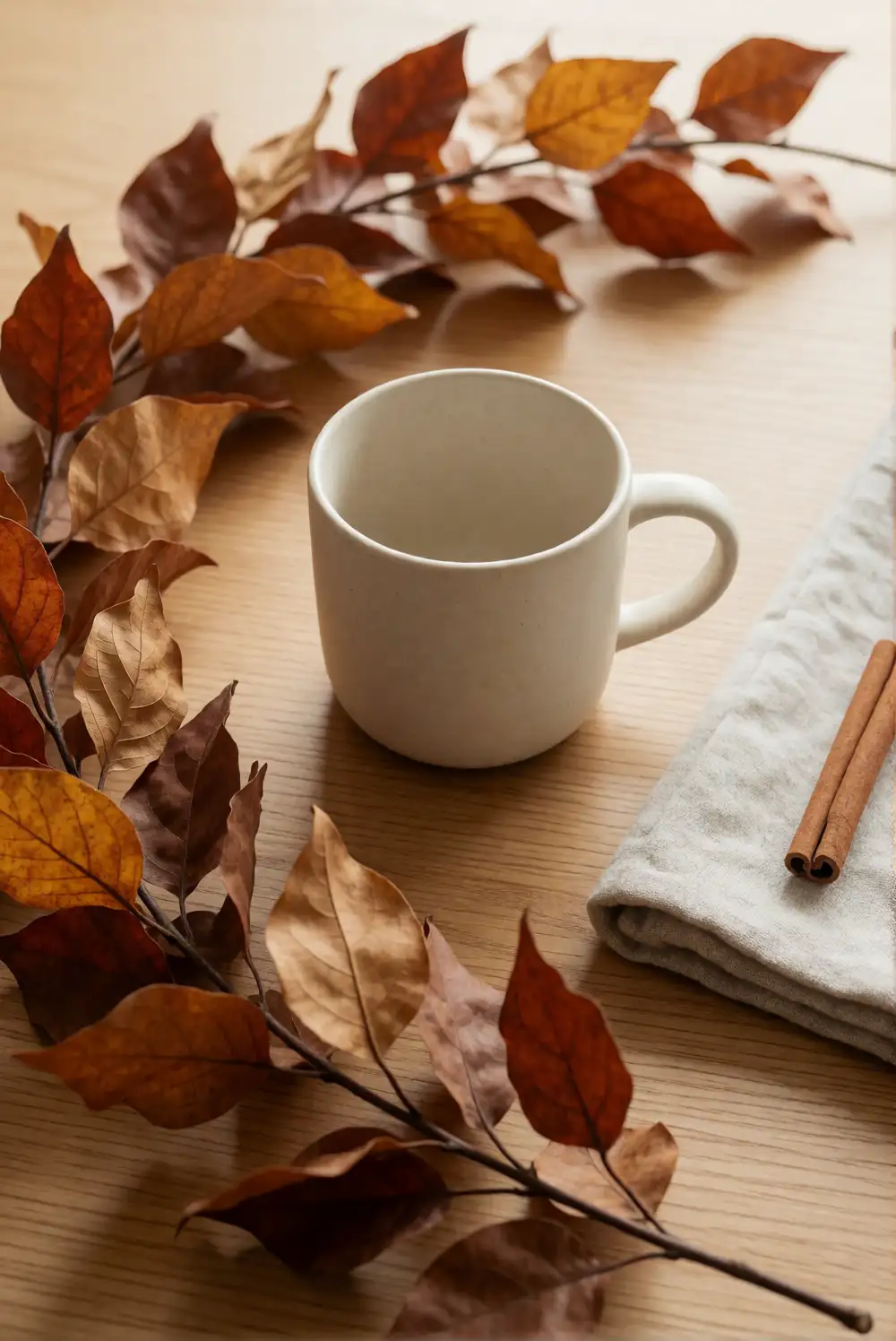
Set a simple ceramic mug near the center of a tray or tabletop, then arrange small dry leaves in a curved line beside it. Use leaves in a limited mix of ochre, rust, and brown, and leave open space around the mug so it stays the focal point. A cinnamon stick or a small piece of folded linen can add texture without making the layout feel busy. Keep the mug empty for a styling display, or use it for a warm drink nearby.
For a softer look, choose a matte cream mug and pale leaves; for richer contrast, pair a charcoal mug with golden foliage. Arrange the leaves so their stems point in varied directions rather than forming a rigid border. If you are styling a tray for a sitting area, add a plain folded napkin and keep the rest of the surface clear. Refresh the leaves when they curl or shed, especially if the arrangement is kept indoors.
Arrange Leaves Around a Small Pumpkin
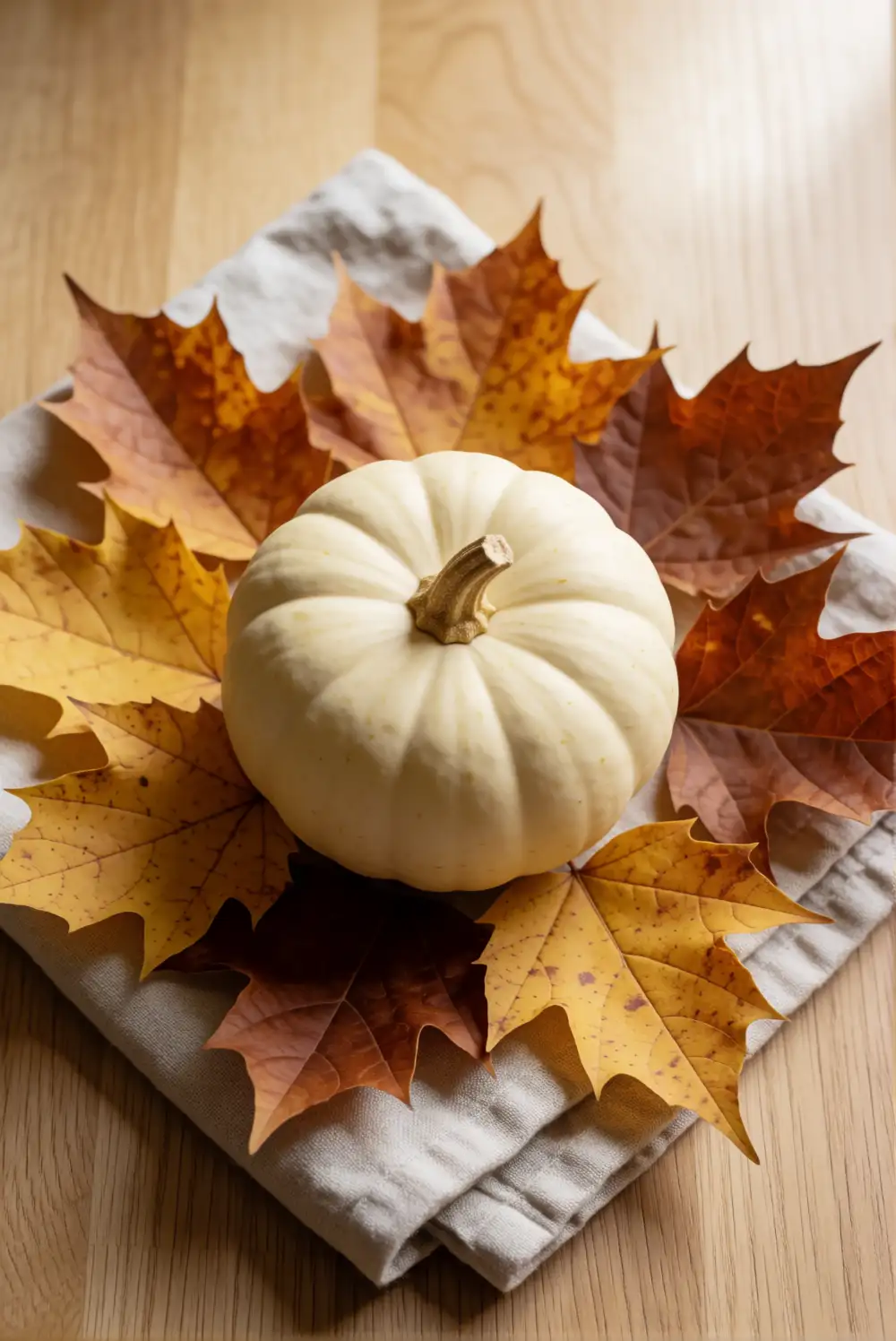
Place a small, unpainted pumpkin on a flat surface and fan a handful of clean leaves around its base. Choose leaves with distinct silhouettes, such as maple or oak, and alternate warm shades so the pumpkin remains easy to see. Position the largest leaves first, then fill only a few gaps with smaller ones. A plain linen napkin underneath can define the arrangement while keeping the natural colors of the pumpkin and foliage in focus.
Use a cream pumpkin with deep red leaves for a softer palette, or a bright orange pumpkin with muted brown foliage for a classic fall look. Keep the leaves flat and avoid piling them high, which can hide the central object. This styling works as a tabletop accent or as a seasonal entryway display. If the pumpkin is fresh, check it regularly and remove any leaves that become damp or damaged beneath it.
Build a Cozy Flatlay with a Folded Knit Scarf
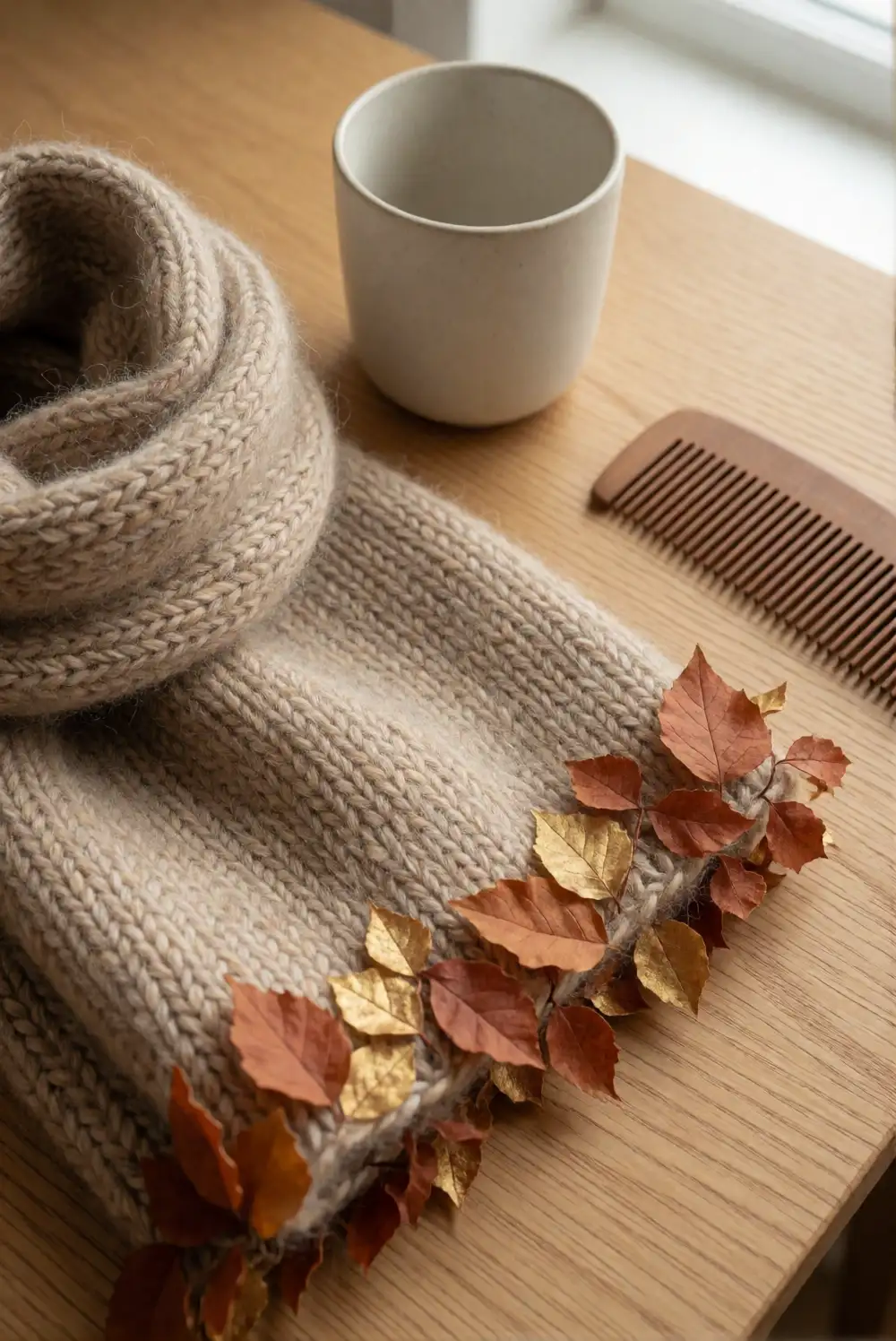
Fold a soft knit scarf into a relaxed rectangle and place it across one side of a table or tray. Arrange several dry leaves along the scarf’s edge, allowing a few to rest partly on the fabric. Add a plain ceramic cup or a smooth wooden comb as a small supporting object, keeping the overall arrangement simple. Choose a scarf with visible knit texture and a quiet seasonal color, such as oatmeal, rust, or muted olive.
Let the scarf’s folds create gentle lines, then place leaves where those lines lead the eye toward the cup or other featured object. A narrow scarf works well for a compact arrangement, while a wider one can anchor a larger tabletop. Avoid covering the knit with too many leaves; showing the fabric texture is part of the appeal. After photographing or enjoying the display, fold the scarf neatly and store the leaves separately to prevent fragments from catching in the yarn.
Create a Leaf and Pear Harvest Arrangement
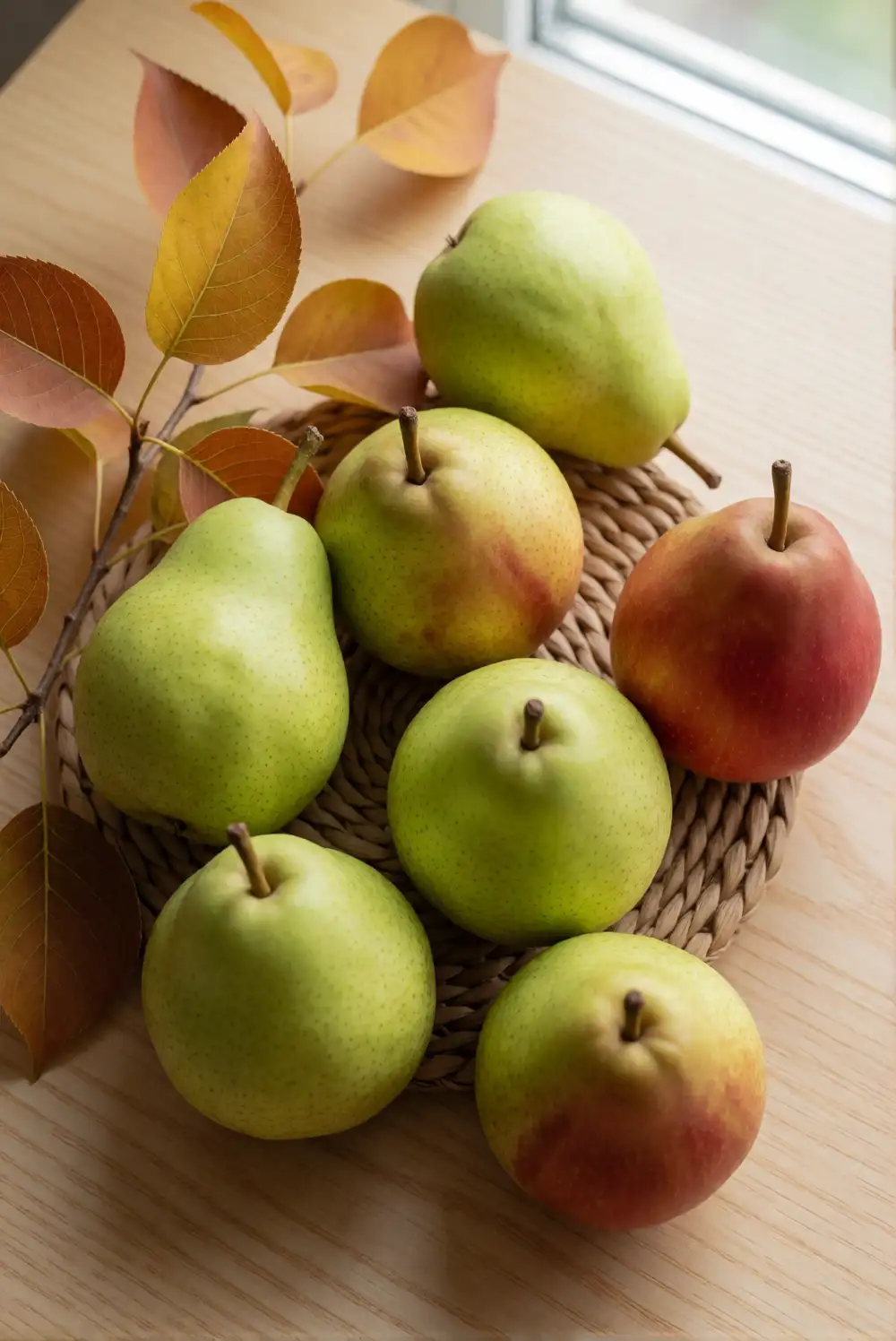
Gather a few firm pears and clean, dry leaves for a simple harvest-inspired flatlay. Place the pears in a loose cluster, varying their angles so the stems are visible, then tuck leaves around the outer edges. Use a plain plate or a small woven mat beneath part of the arrangement to introduce another texture. Keep the fruit clean and the leaves dry, and leave enough open surface around the cluster to make the composition feel airy.
Green pears pair well with golden leaves, while red pears bring a richer accent to a mostly neutral layout. Add a small branch if you want a natural line leading into the arrangement, but skip extra pieces that compete with the fruit. This setup can dress a kitchen counter or serve as a seasonal centerpiece before the pears are eaten. If using the fruit for food, wash it again before serving and remove any leaves that have touched unclean surfaces.
Pair Pressed Leaves with a Blank Sketchbook
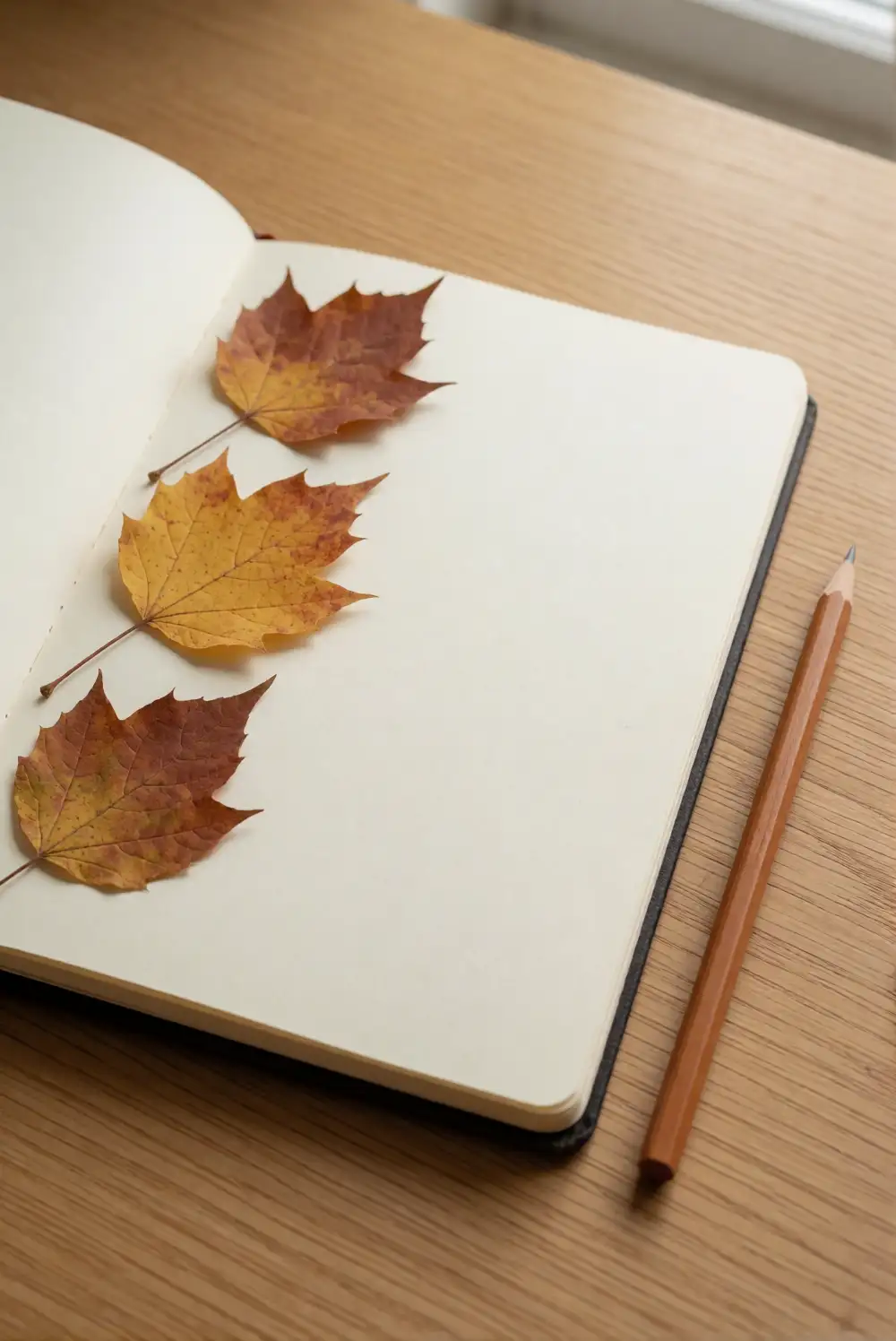
Open a blank sketchbook to an unused spread and set it at a slight angle on your surface. Place a few pressed leaves along one page edge, choosing intact specimens with varied outlines and colors. Add a plain pencil beside the book to suggest a drawing session without adding written words. Keep the pages empty and the leaf placement sparse, allowing the paper’s clean surface and the fine veins in the leaves to provide the visual detail.
For a tidy display, use one larger leaf as the focal point and place two smaller leaves nearby rather than filling both pages. A warm wood pencil and cream paper complement russet foliage, while green leaves bring a fresher seasonal feel. This arrangement suits a desk or reading nook and can be reset easily after use. If the leaves are fragile, handle them by the stem and place them on the page only for display, rather than pressing them beneath a heavy object.
Set a Seasonal Place Setting with Leaf Accents
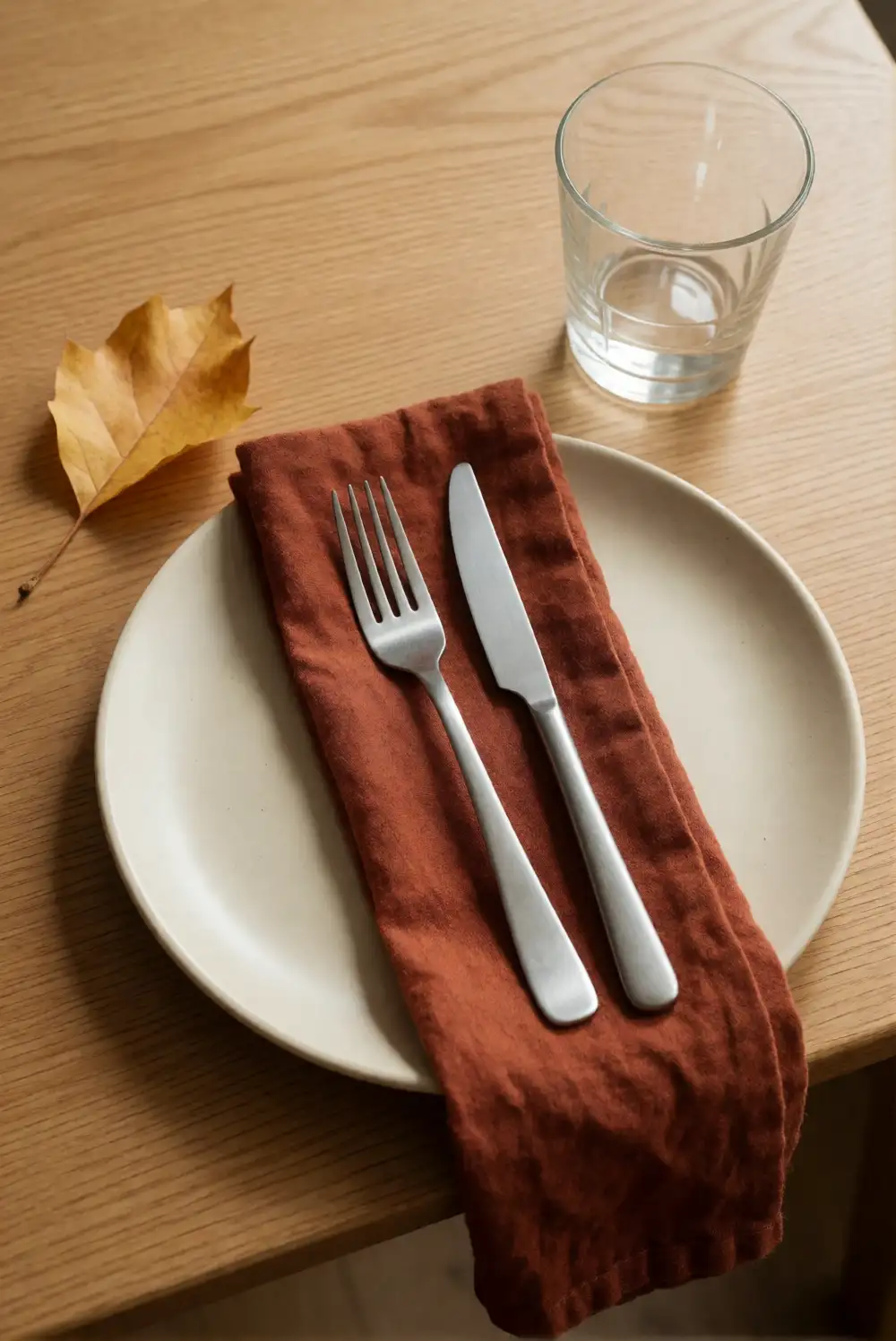
Begin with a plain dinner plate on a folded cloth napkin, then place one clean, dry leaf beside the plate or near its lower edge. Add simple cutlery and a clear glass, arranging them with comfortable space between each piece. Choose a leaf with a sturdy shape and a color that complements the napkin. Keep the setting practical, with the leaf outside the eating area, so the seasonal detail enhances the table without getting in the way.
A cream plate and rust napkin create a warm, classic combination, while a pale green napkin gives the arrangement a quieter botanical feel. Use a fresh leaf for a short-lived gathering display, or choose a pressed leaf for a longer-lasting styling prop. Repeat the same simple setup at each place for a coordinated table. Remove the leaf before serving food, and avoid placing foliage where it could touch dishes or ingredients.
Make a Rustic Tray with Leaves and Pinecones
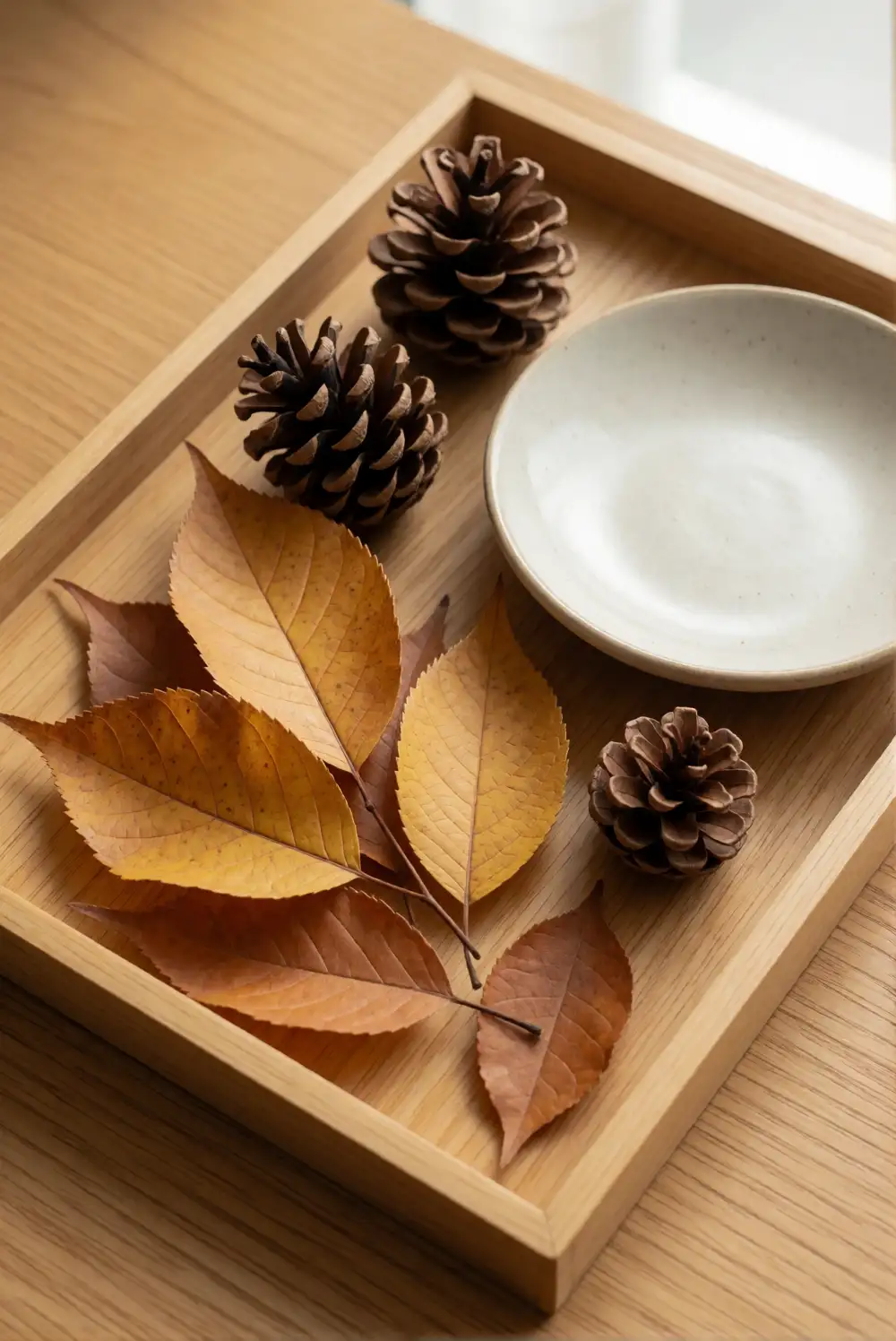
Choose a shallow wooden tray and place a few dry leaves inside, arranging them in a loose curve rather than covering the entire base. Add two or three clean pinecones at different points to introduce a sturdy, sculptural texture. A plain ceramic dish can complete the arrangement without taking attention away from the natural materials. Keep the objects spaced apart, and make sure the tray remains easy to lift if you plan to move it around the room.
Mix pale pinecones with golden leaves for a light look, or use darker cones with russet foliage for a deeper autumn palette. A folded napkin tucked partly beneath the tray can soften the wood, but keep the arrangement low enough to feel uncluttered. Set the tray on a coffee table, console, or kitchen island as a seasonal accent. Check the pinecones for loose debris before bringing them indoors, and replace any leaves that have become brittle or crumbled.
Style a Candle with a Ring of Autumn Leaves
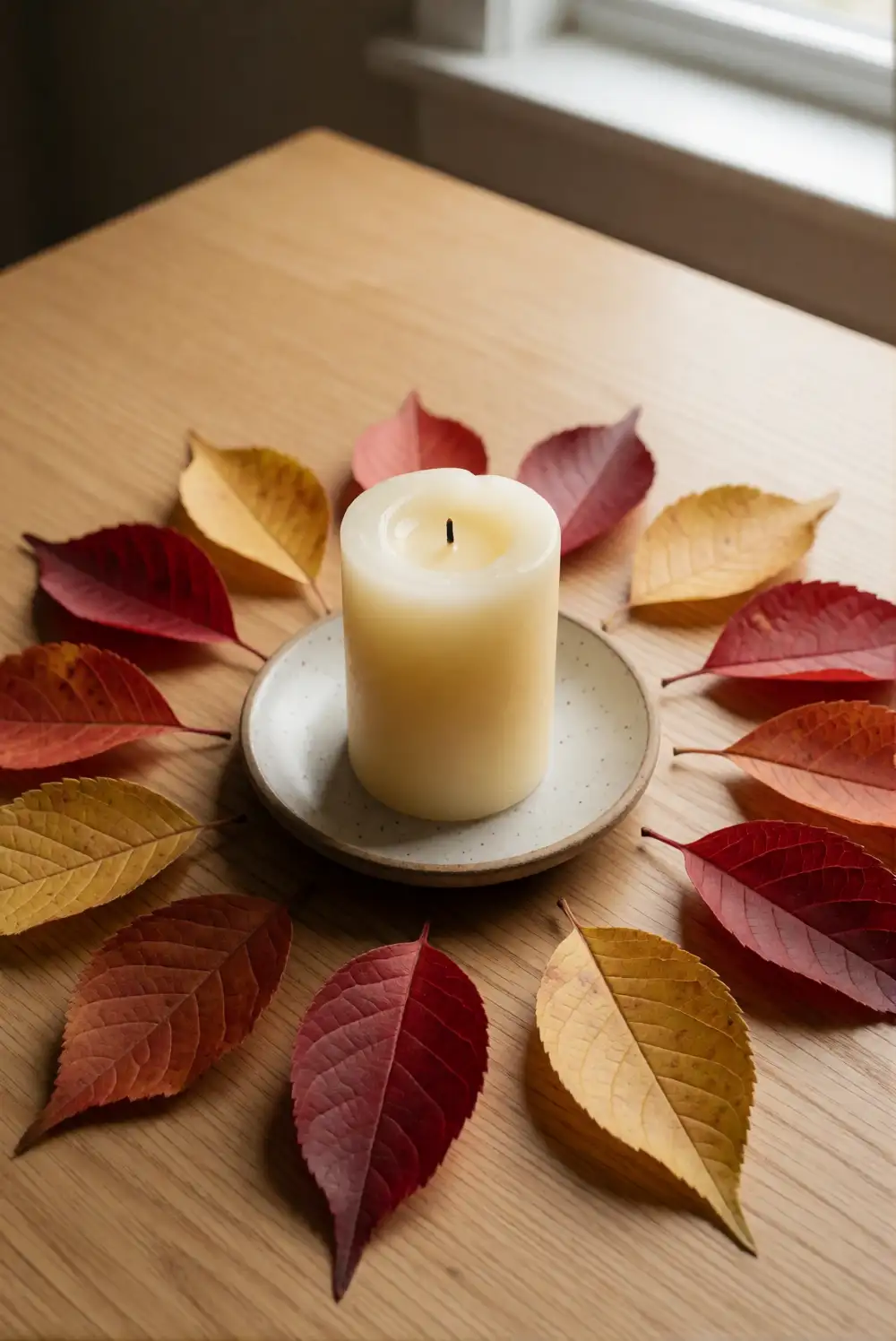
Place a sturdy, unlit pillar candle in a simple holder or on a small heat-resistant dish, then arrange dry leaves around it with space between the foliage and the candle. Choose leaves in warm, complementary colors and keep their points directed outward to create a relaxed wreath shape. For an image or tabletop display, leave the candle unlit and make the leaves the main decorative detail. Keep the setup on a level surface away from curtains and other clutter.
A cream candle with red and gold leaves feels softly seasonal, while a darker candle creates a more dramatic contrast. For regular use, remove all leaves before lighting and follow the candle maker’s safety directions; never leave a burning candle unattended. If you prefer a display that does not require a flame, swap in an LED candle. A low plate beneath the arrangement makes it easier to move and helps keep loose leaf fragments contained.
Gather Leaves in a Glass Bowl Display
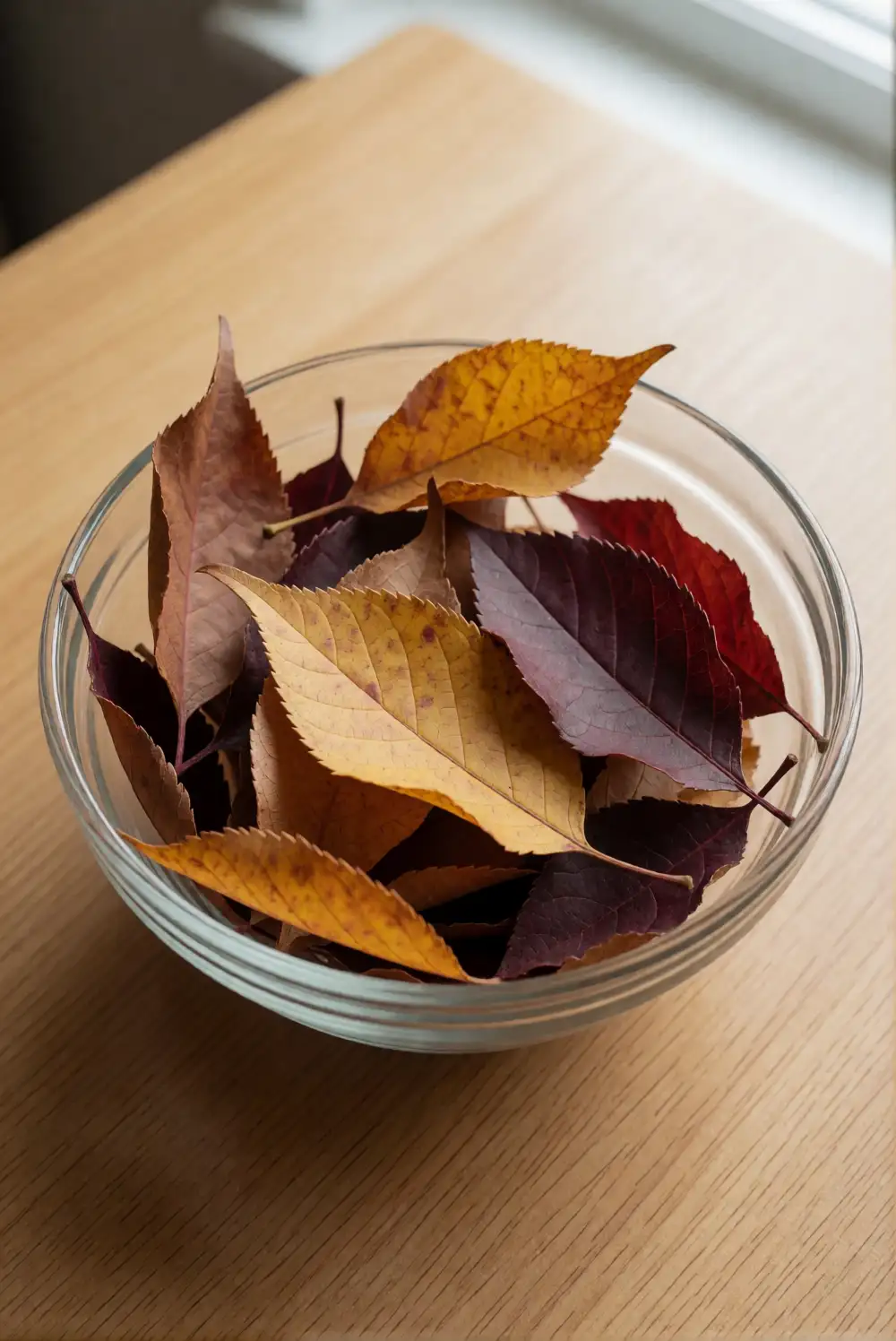
Choose a clear glass bowl with a simple shape and fill it loosely with clean, dry leaves in a few seasonal shades. Let some leaves curve naturally over the rim while keeping the bowl’s form visible. Add one or two small pinecones if you want a more textured look, but leave enough open space for the leaf colors to remain distinct. Set the bowl on a table or tray where the arrangement can be seen from above and from the side.
For a lighter display, combine straw-colored leaves with a few muted green ones; for a richer look, use burgundy, orange, and brown. Avoid compressing the leaves, since their natural shapes bring movement to the bowl. A clear bowl lets the colors show without adding another strong material to the composition. Keep the display dry, and remove fragile leaves before they crumble. When the season changes, empty the bowl and reuse it for fresh branches or another simple natural arrangement.
With a few carefully chosen leaves, familiar home objects can become warm seasonal displays. Try a single arrangement on a tray, table, or kitchen counter, then adjust the colors and spacing to suit your room. Simple materials and open space let each fall leaf bring its own shape and character to the scene.