
A textured blanket can instantly make a living room feel warmer, more polished, and more thoughtfully designed. With the right placement, color story, and surrounding details, this simple accent becomes a cozy styling tool that adds depth, softness, and effortless charm.
Start With the Mood of the Room
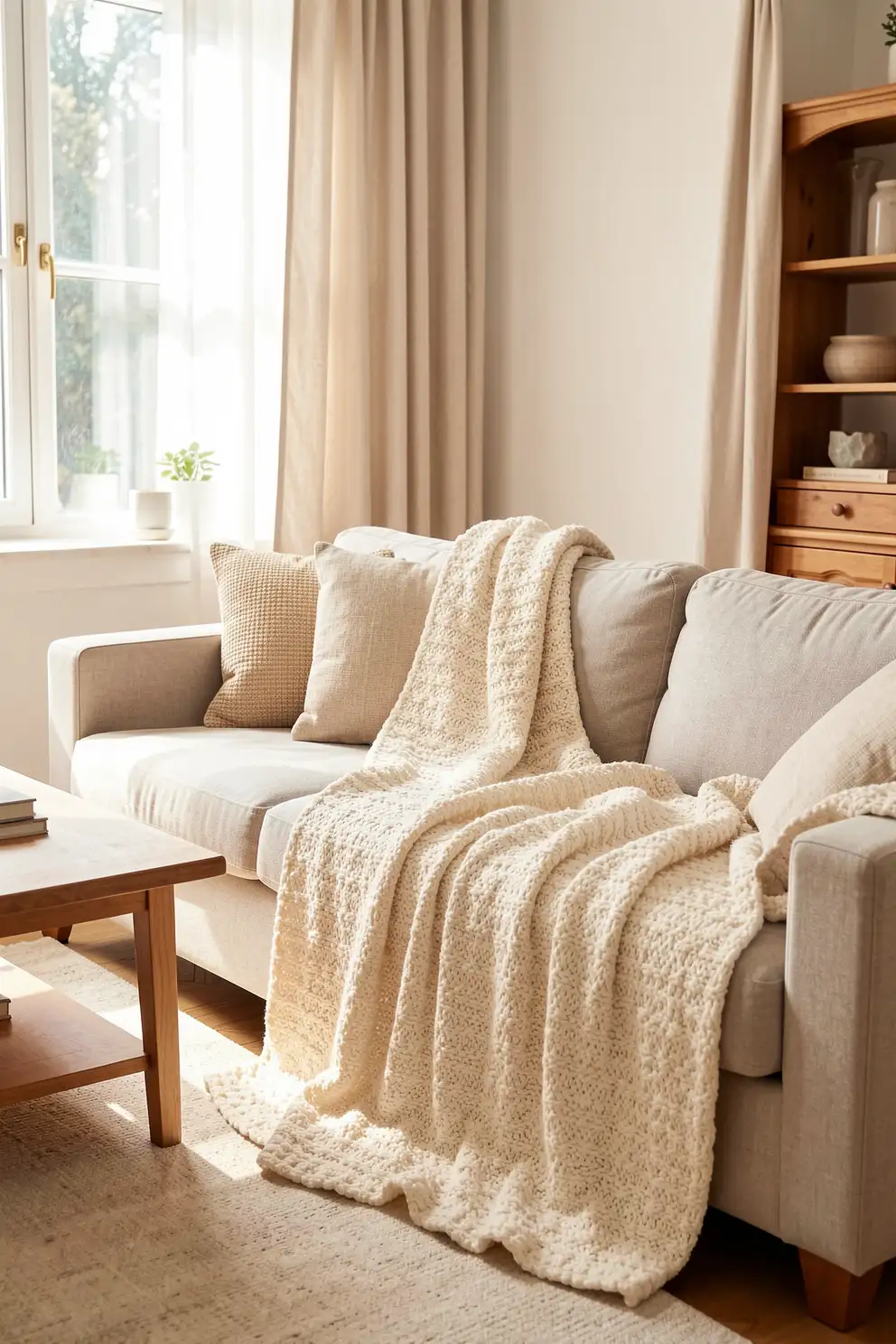
Before placing a textured blanket, look at the feeling your living room already creates. A calm, airy space may call for a soft knit draped loosely over a pale sofa, while a richer room might welcome boucle, faux fur, or thick woven cotton. Styling feels more professional when the blanket supports the existing atmosphere instead of competing with it. Think about whether the room feels relaxed, refined, rustic, modern, or romantic, then choose a styling approach that reinforces that mood.
The mood also helps guide how casual or structured the blanket should look. A soft living room with curved furniture and warm lighting often suits a relaxed drape, while a tailored room with crisp upholstery may benefit from a cleaner fold. When the styling matches the room’s personality, the blanket looks intentional rather than forgotten. This simple design mindset keeps the finished space feeling cohesive, balanced, and welcoming.
Choose a Texture That Feels Intentional
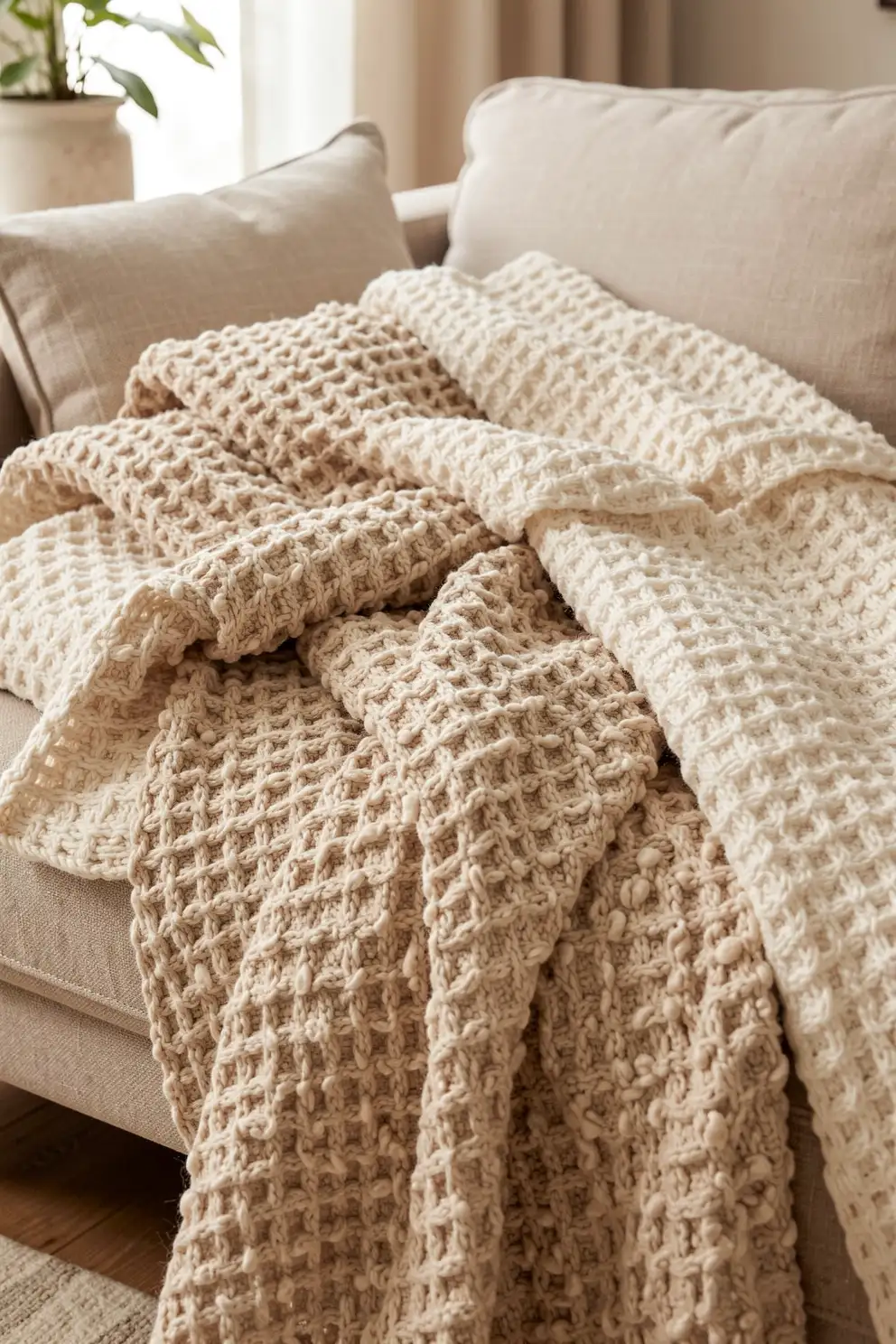
Texture is the reason the blanket becomes more than a practical layer. Chunky knit, waffle weave, brushed cotton, linen blend, boucle, sherpa, and fringe all create different visual effects. A thick knit adds cozy volume, while a flatter woven throw brings subtle sophistication. The best choice depends on what the room needs. If the furniture feels too sleek, choose something tactile. If the room already has heavy texture, choose a blanket with a quieter surface.
A professional-looking living room usually includes contrast, but not chaos. Let the blanket introduce a texture that stands apart from the sofa, cushions, and rug in a gentle way. For example, a nubby throw looks beautiful against smooth upholstery, while a ribbed blanket can add movement beside velvet cushions. The goal is to make the eye pause without overwhelming the room. Texture should feel layered, thoughtful, and comfortable to live with.
Let Color Lead the Styling
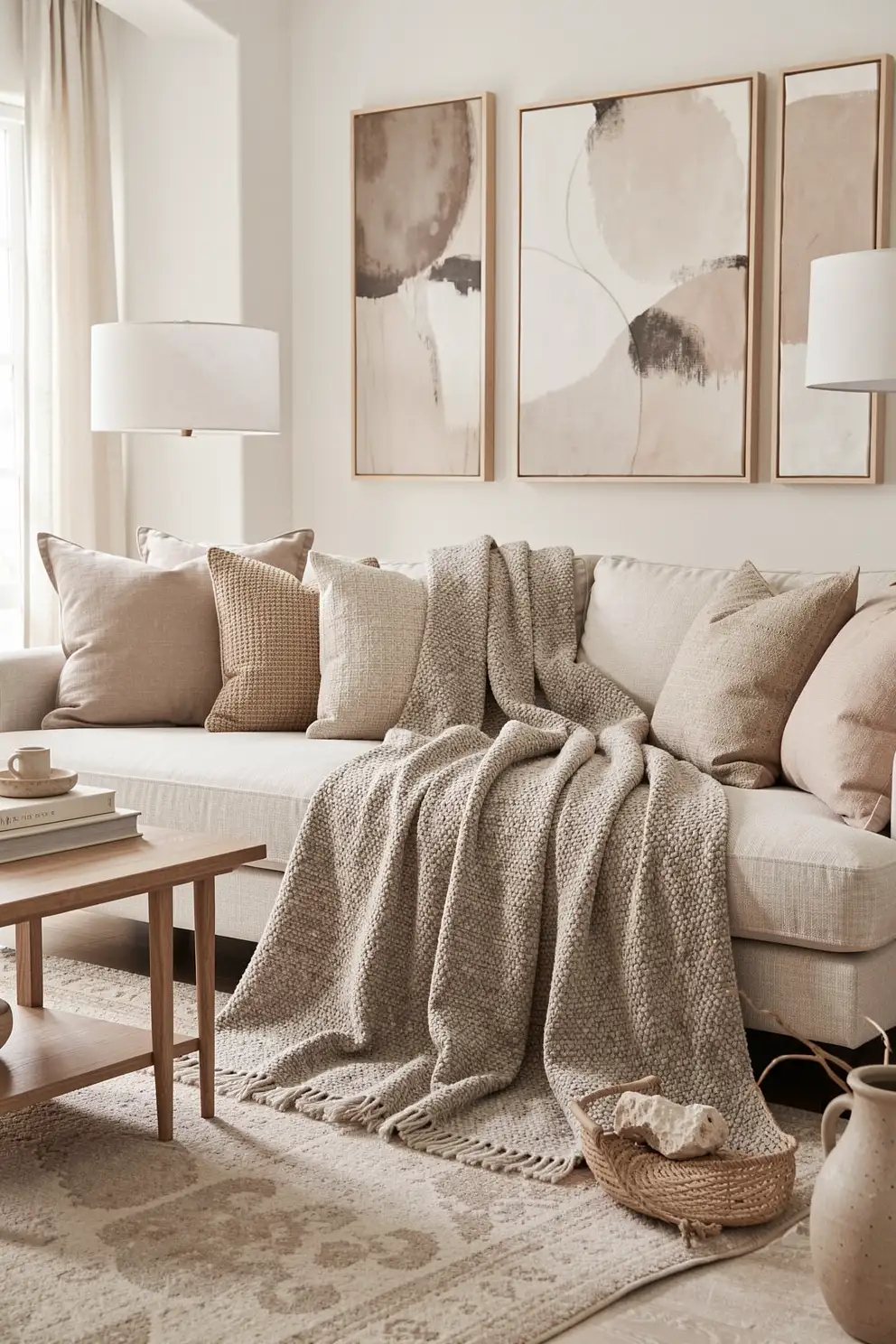
Color is the easiest way to make a textured blanket feel connected to the rest of the living room. You can choose a shade that blends softly with the sofa for a calm, tonal look, or select a warmer accent that echoes the rug, artwork, curtains, or cushions. Professional styling often looks effortless because colors quietly repeat across the room. The blanket does not need to match perfectly, but it should feel like it belongs within the palette.
If your living room leans neutral, a cream, taupe, oatmeal, clay, or soft gray blanket can add depth without disrupting the calm. If the room needs energy, muted terracotta, olive, cocoa, denim, or dusty rose can feel rich but still livable. Avoid choosing a blanket in isolation. Hold it near other fabrics and finishes so you can see how the tones interact in natural light. This keeps the final look harmonious and refined.
Drape With Relaxed Movement
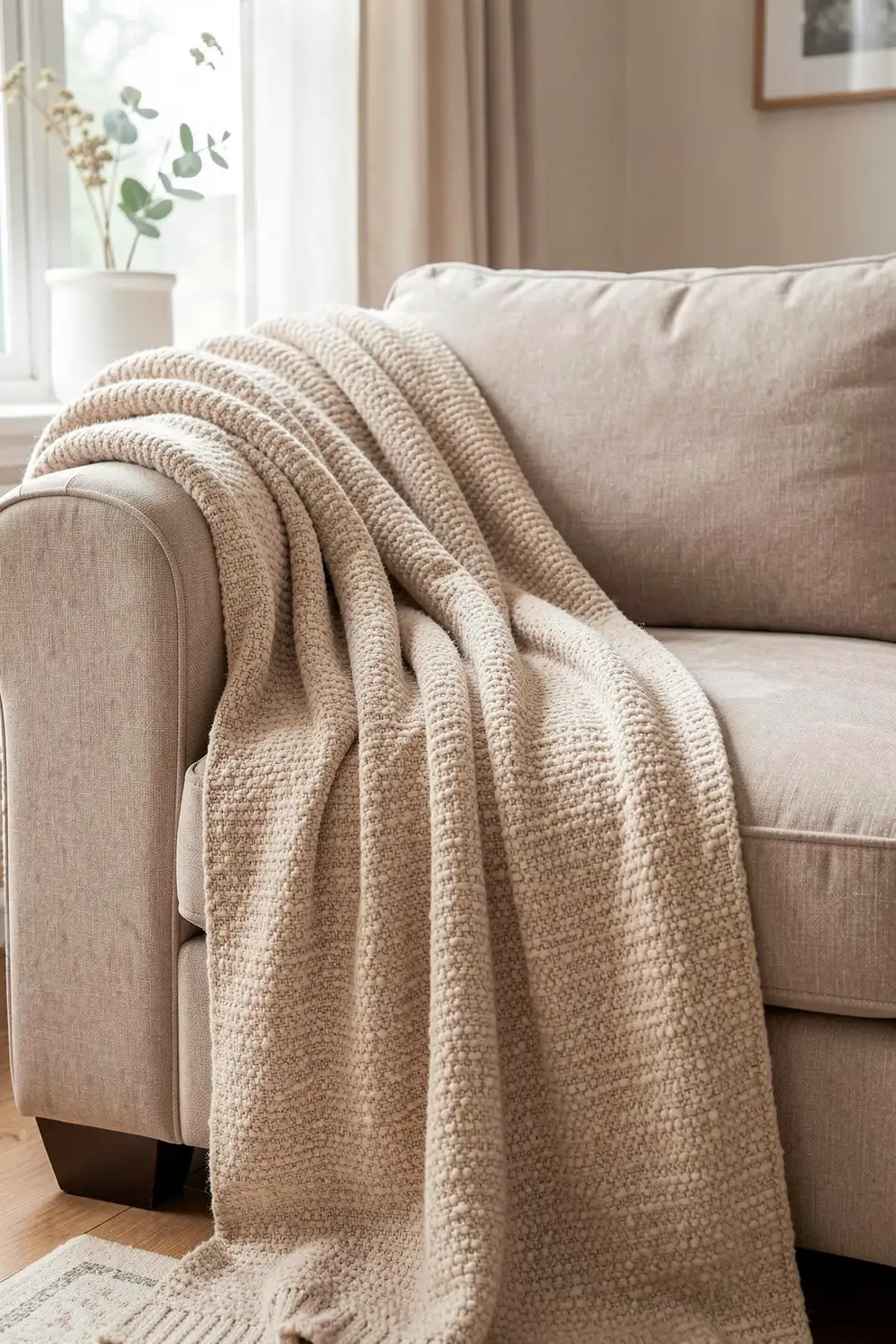
A relaxed drape is ideal when you want the living room to feel cozy, approachable, and lived in. Let the blanket fall over the sofa arm, across the seat, or from the back cushion with soft, natural movement. Avoid overworking the fabric. A slightly imperfect fall often looks more luxurious than a stiff arrangement. The secret is shaping the blanket enough that it feels styled, while still allowing the texture to show its natural weight and softness.
To create this look, gather the blanket lightly through the middle and let the ends fall in an easy way. Smooth any bulky spots, then allow some folds to remain visible. The texture should catch the light and create gentle shadows. This approach works especially well with chunky knits, fringed throws, and soft woven blankets. It invites people to sit down, get comfortable, and enjoy the room without feeling like anything is too precious.
Fold for a Tailored Finish
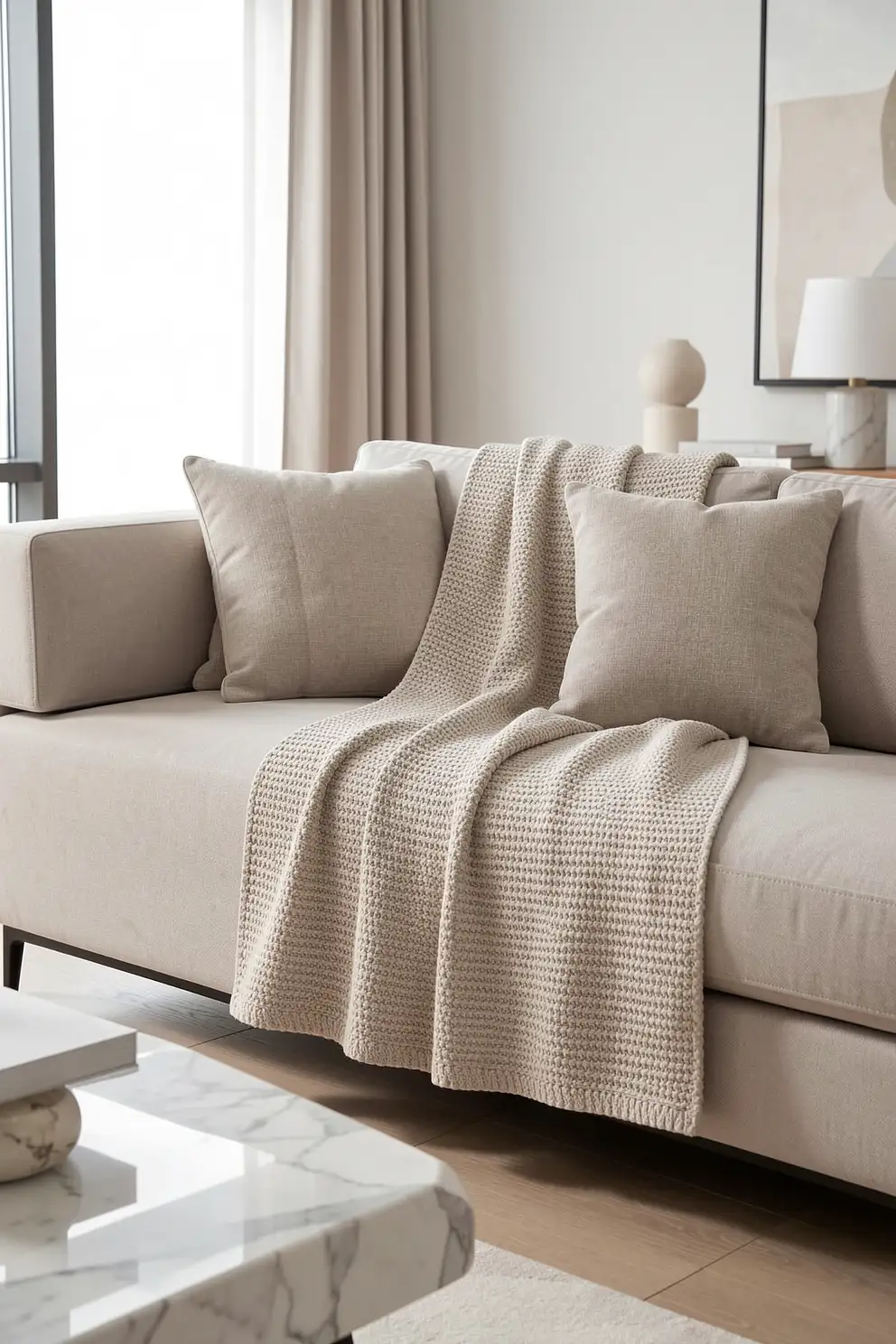
A clean fold gives a textured blanket a polished, decorator-inspired look. This approach works beautifully in rooms with structured sofas, modern silhouettes, or a more minimal style. Instead of letting the blanket spill casually, fold it into a long, neat shape and place it along the sofa back, across an ottoman, or over an armrest. The texture still brings softness, but the presentation feels calm and controlled.
The fold should look crisp without feeling rigid. Let the edges align neatly, then soften the top surface with your hands so the fabric does not appear flat or lifeless. This is especially effective with waffle weave, ribbed cotton, linen blend, or lightweight knit throws. A tailored fold can make the room feel refreshed in minutes, giving the impression that every detail was considered without requiring a full decor update.
Layer Over the Sofa Back
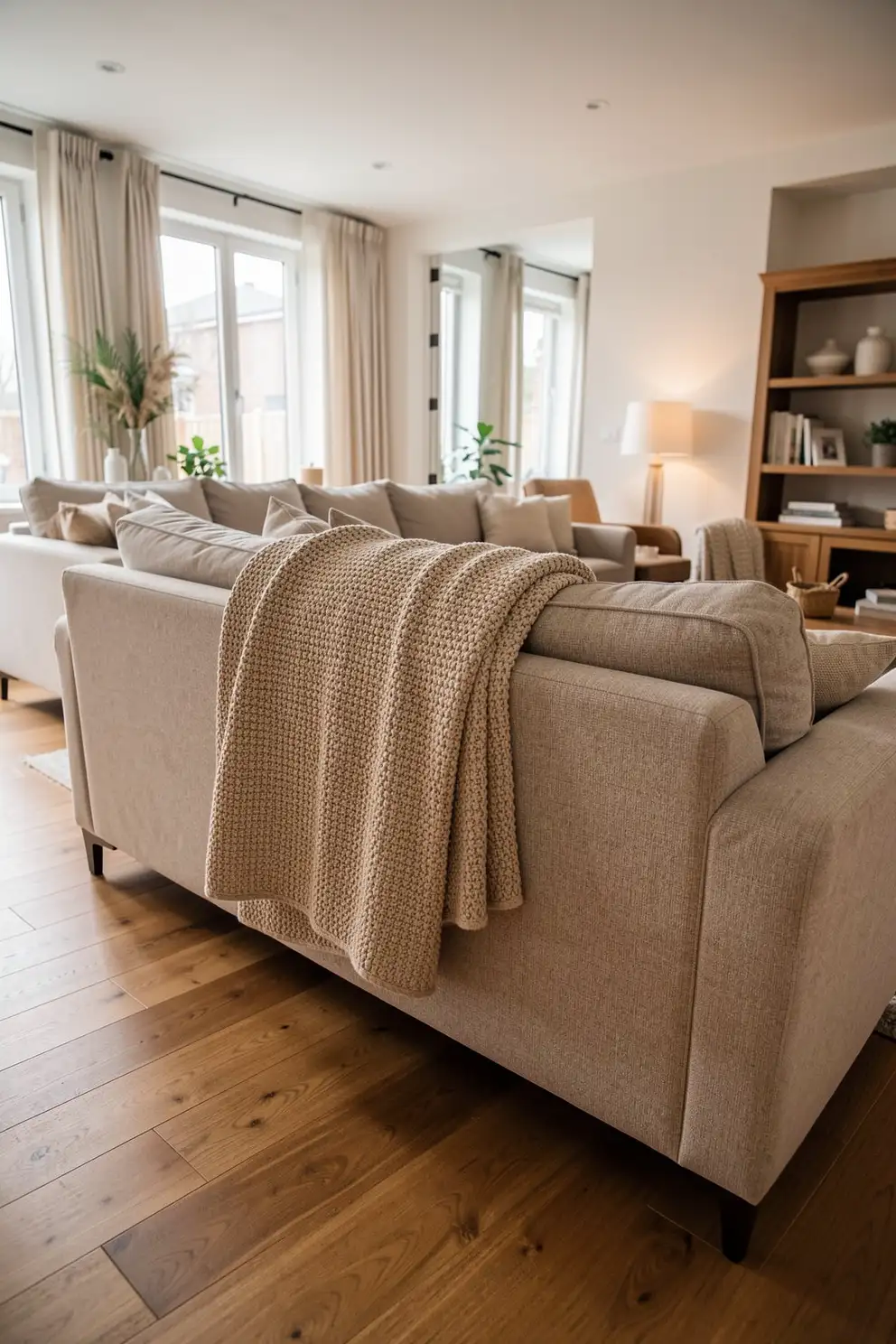
Placing a textured blanket over the sofa back creates an elegant backdrop and adds height to the seating area. This works especially well when the sofa is positioned away from the wall or visible from multiple angles. The blanket softens the outline of the furniture and gives the room a more finished look. Choose a placement that allows the fabric to fall evenly enough to feel intentional, while still showing the blanket’s texture.
This method is helpful when the sofa color feels too flat or when the room needs extra warmth. A cream throw over a charcoal sofa can brighten the space, while a warm brown blanket over a beige sofa can add depth. Keep nearby cushions simple so the sofa back does not feel busy. When done well, this styling choice turns a plain seating area into a layered focal point.
Tuck Into a Corner Seat
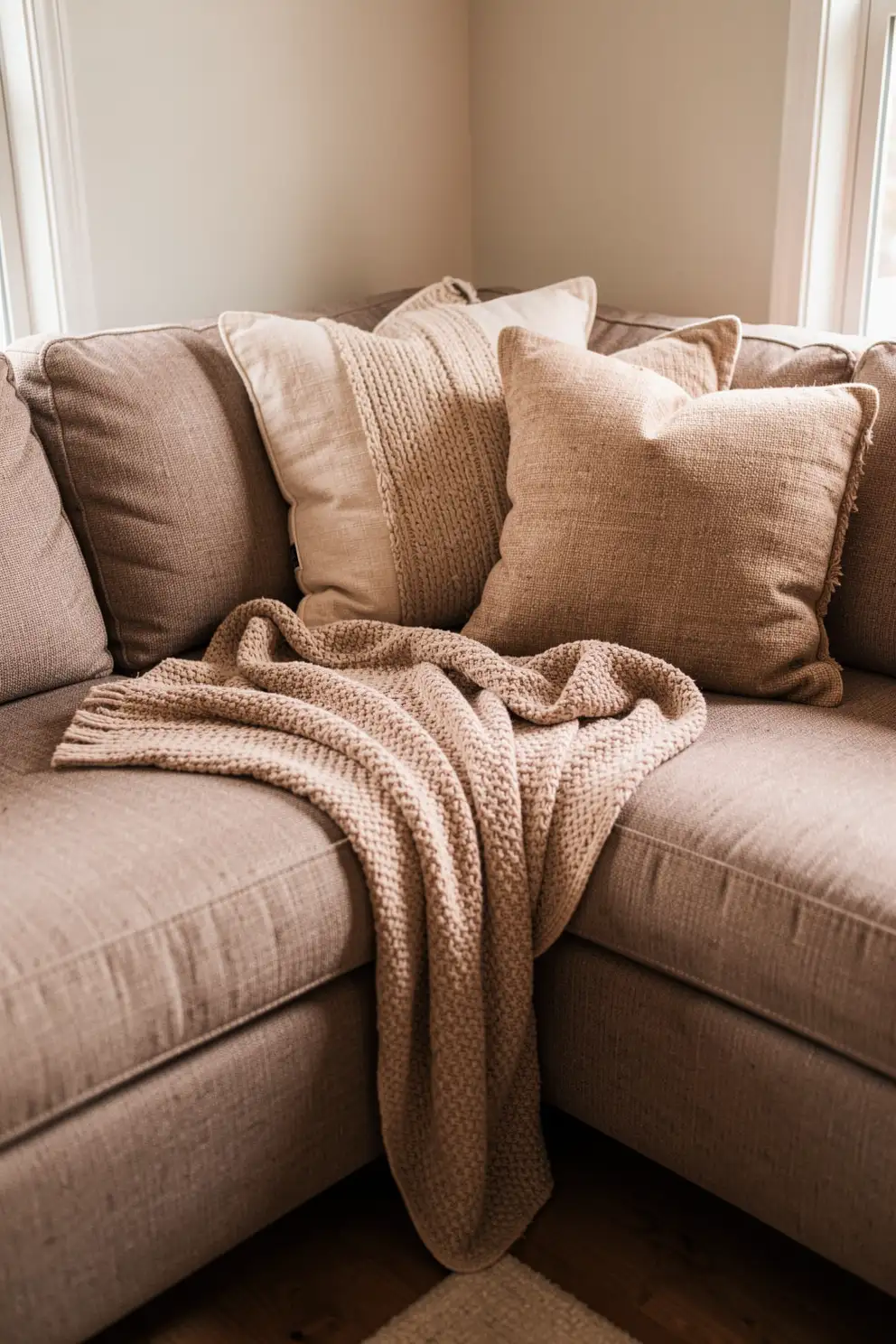
A corner seat is a natural place for a textured blanket because it already feels like an invitation to settle in. Tuck part of the blanket into the corner where the back cushion meets the seat, then let the rest fall outward in soft folds. This creates a relaxed look that feels cozy but not messy. It works especially well on sectionals, deep sofas, reading chairs, and window seats.
The key is to avoid making the blanket look like it has been pushed aside. Shape the visible fabric so the folds feel generous and intentional. Let the texture show along the top and allow an edge or fringe detail to remain visible. Add a cushion nearby to anchor the arrangement and make the corner feel complete. This technique makes the seating area look warm, styled, and ready for quiet everyday moments.
Style With Cushions That Support the Look
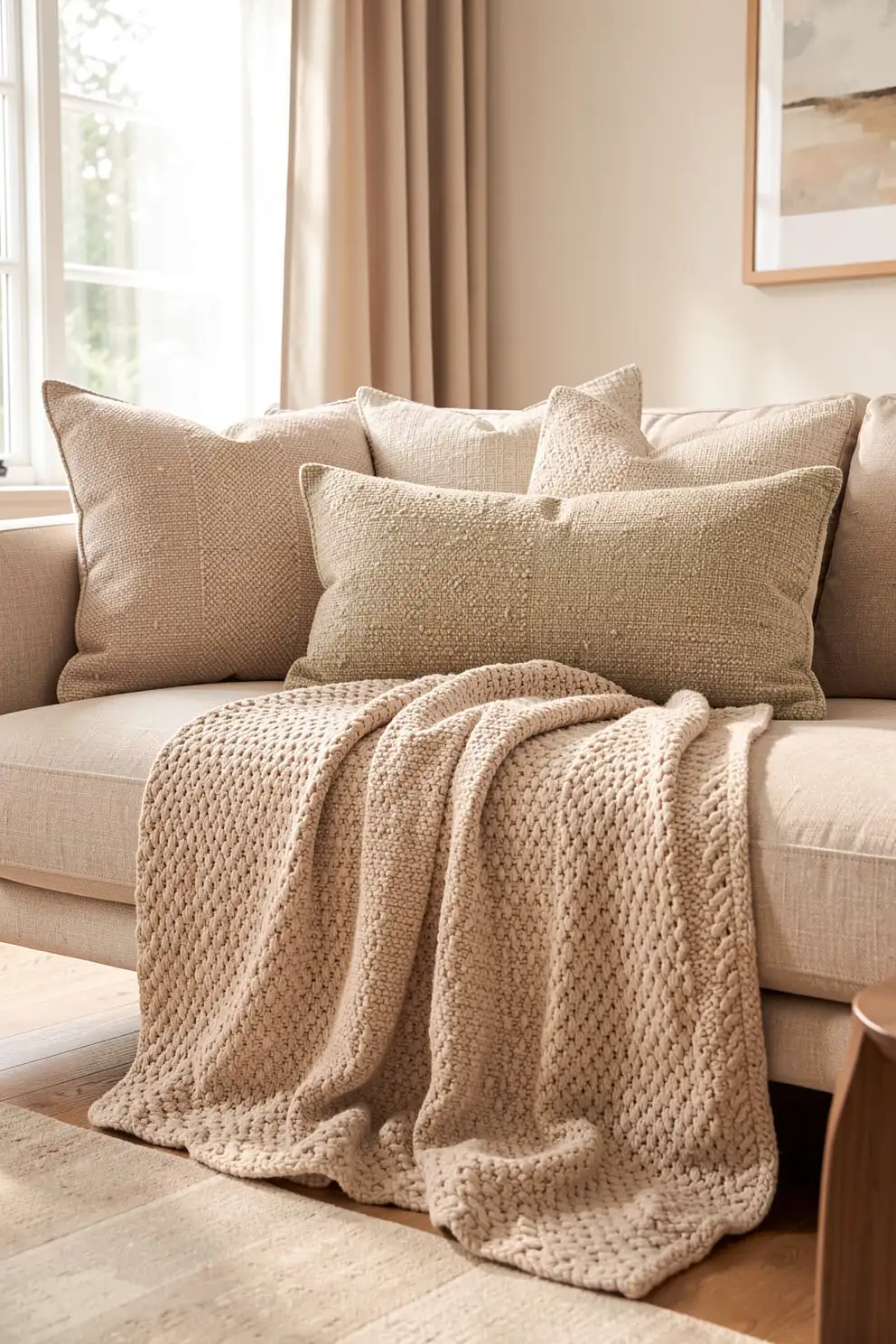
Cushions and blankets work best when they feel connected rather than crowded. If your textured blanket is bold, choose cushions with simpler fabrics and calmer colors. If the blanket is subtle, cushions can bring pattern, contrast, or richer tones. The goal is to let each element support the other. A professional-looking sofa usually has a clear visual hierarchy, with texture, color, and shape working together instead of competing for attention.
Look for small relationships between the blanket and cushion details. A fringe edge can echo a tassel, a ribbed knit can connect with a striped cushion, or a warm neutral throw can repeat a tone from a patterned pillow. These quiet connections make the styling feel curated. Leave enough breathing room so the blanket remains visible. When cushions are placed thoughtfully, the entire sofa looks fuller, softer, and more inviting.
Bring Balance to Leather Seating
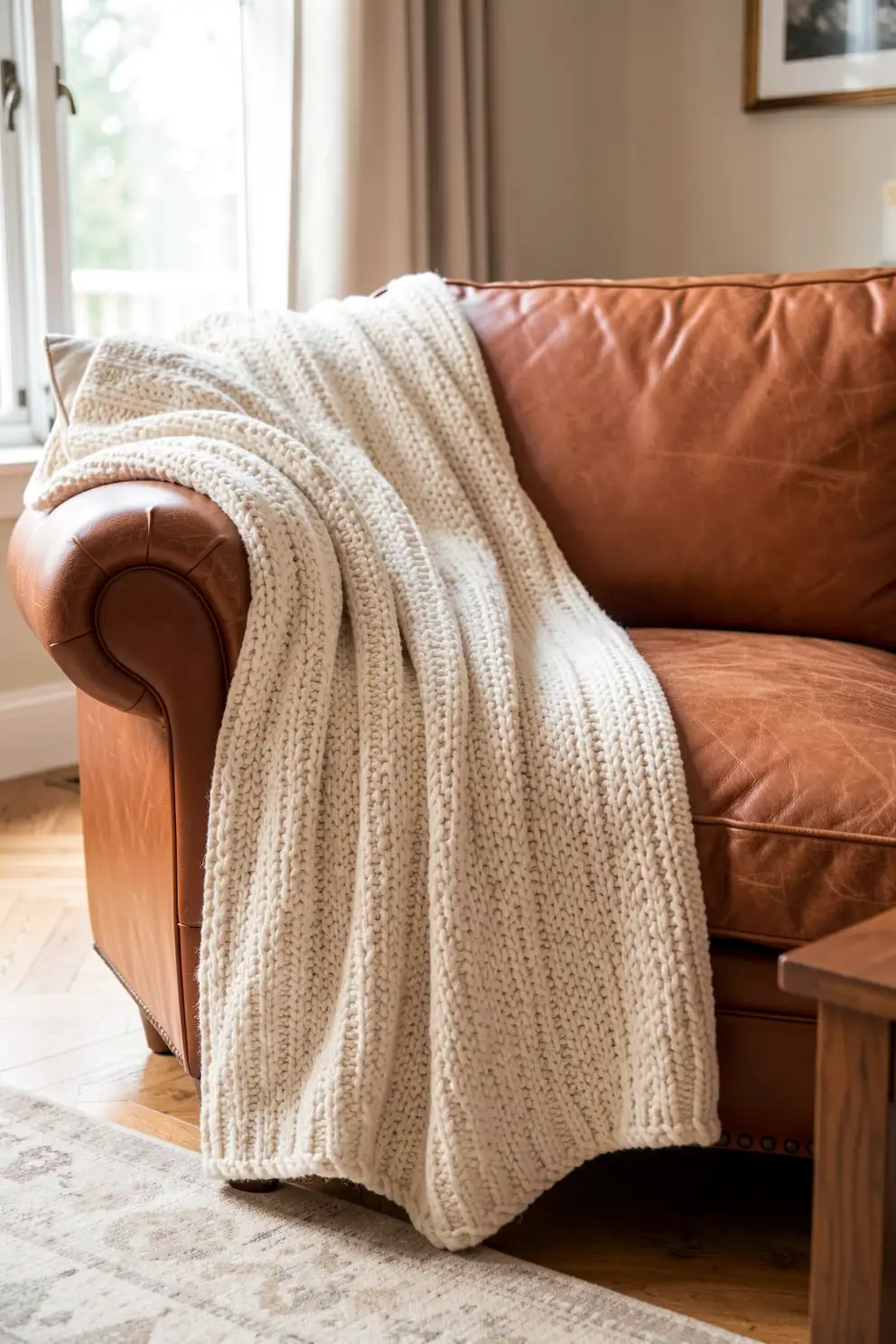
Leather seating can look beautiful, but it sometimes needs softness to feel comfortable and relaxed. A textured blanket creates instant balance by contrasting with the smooth surface of the leather. Chunky knits, boucle, brushed cotton, and soft wool blends are especially effective because they add warmth and tactile interest. The blanket helps the sofa feel less formal and more welcoming, especially in living rooms with wood, metal, or darker finishes.
For a refined look, choose colors that complement the leather tone. Cream, oatmeal, and soft gray brighten dark leather, while camel, rust, olive, and cocoa enhance warm brown seating. Let the blanket fall naturally over an arm or seat rather than covering too much of the leather. The beauty comes from the contrast between smooth and textured surfaces. This simple addition can make leather furniture feel layered, cozy, and effortlessly styled.
Soften Structured Furniture Lines
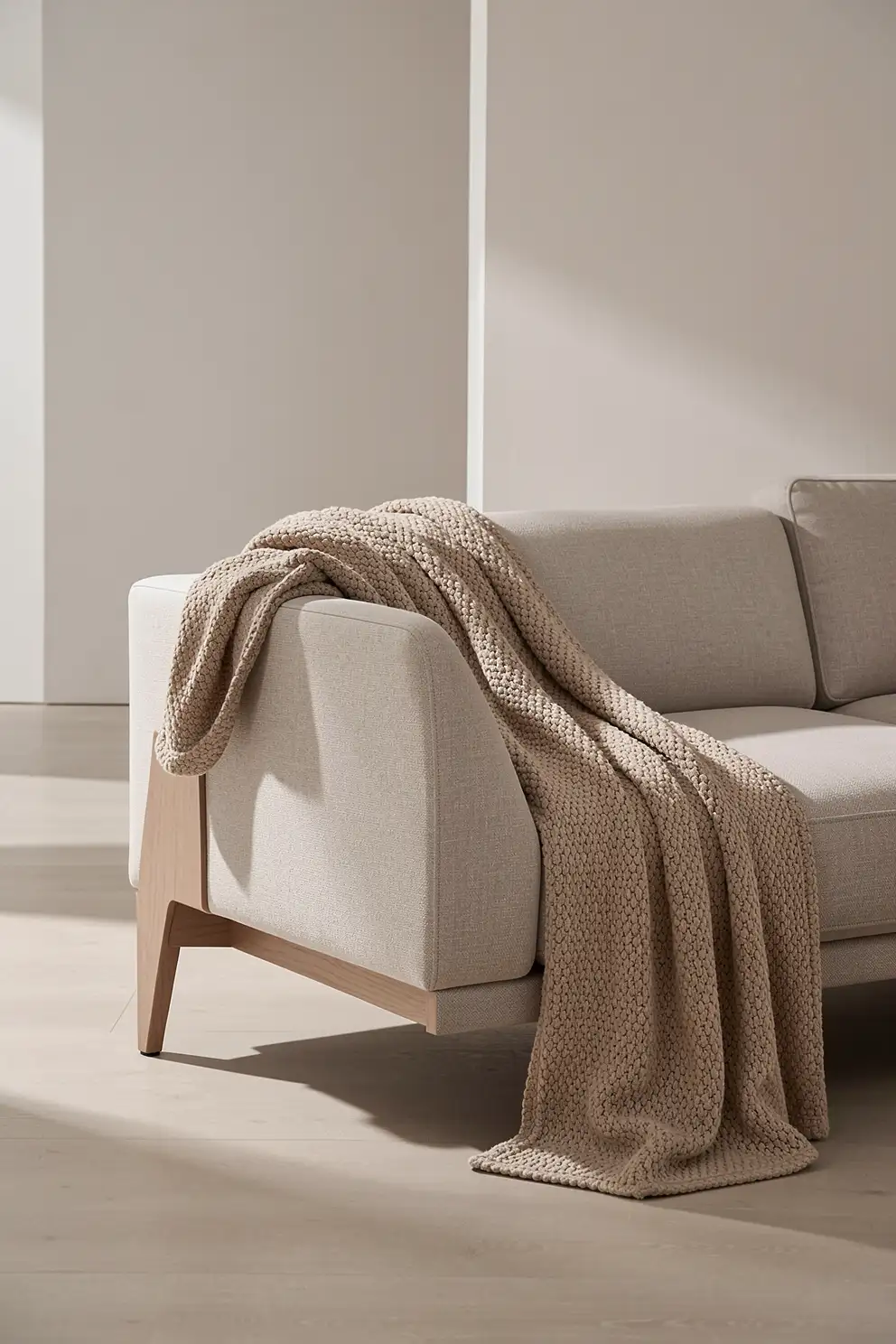
Modern living rooms often include clean lines, low profiles, and sharp furniture shapes. A textured blanket helps soften those edges without changing the overall style. Draping fabric over a square armrest, folding it across a bench, or placing it on an angular chair can make the room feel more relaxed. This is especially useful when the space looks stylish but slightly cold. Texture adds comfort while preserving the clean design.
The trick is to let the blanket interrupt the furniture lines in a gentle way. A loose fold can break up a rigid silhouette, while a plush surface can warm up sleek upholstery. Keep the rest of the styling restrained so the blanket does not feel decorative in a forced way. When used thoughtfully, it creates a pleasing tension between structure and softness, which is a hallmark of well-designed interiors.
Add Warmth to Minimal Decor
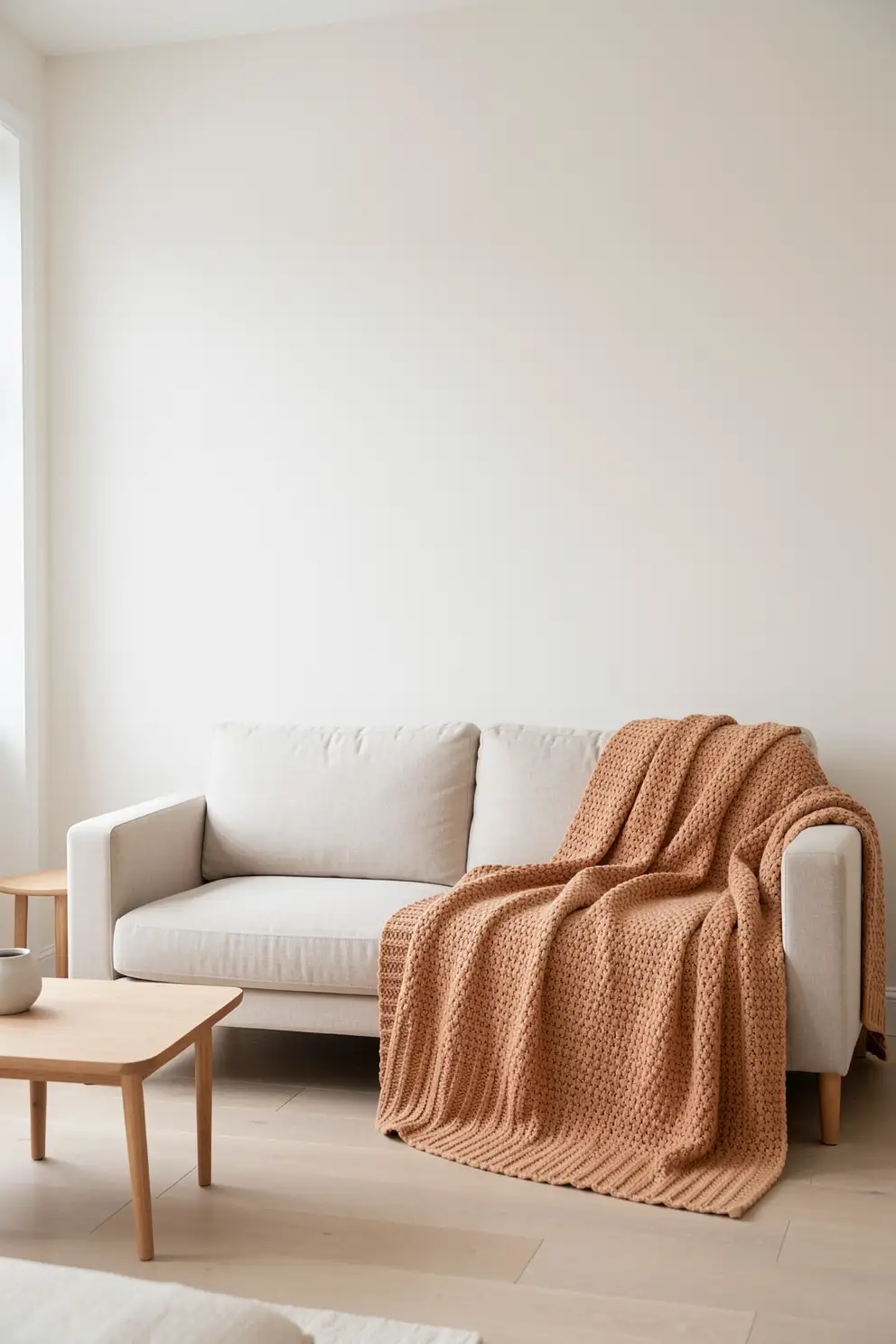
Minimal decor can feel peaceful, but it needs texture to avoid looking bare. A textured blanket is perfect because it adds warmth without adding clutter. Choose a refined material in a calm color, then style it in a way that feels simple and deliberate. A soft throw across a neutral sofa, lounge chair, or ottoman can make the entire room feel more comfortable while keeping the clean aesthetic intact.
In a minimal living room, every item needs a reason to be there. Let the blanket serve both comfort and visual depth. Avoid busy patterns or overly bright colors unless they are already part of the room’s palette. Instead, focus on weave, weight, and subtle contrast. A beautifully textured neutral blanket can make the space feel layered and personal without disturbing the serene mood that makes minimal decor so appealing.
Create Contrast With Smooth Surfaces
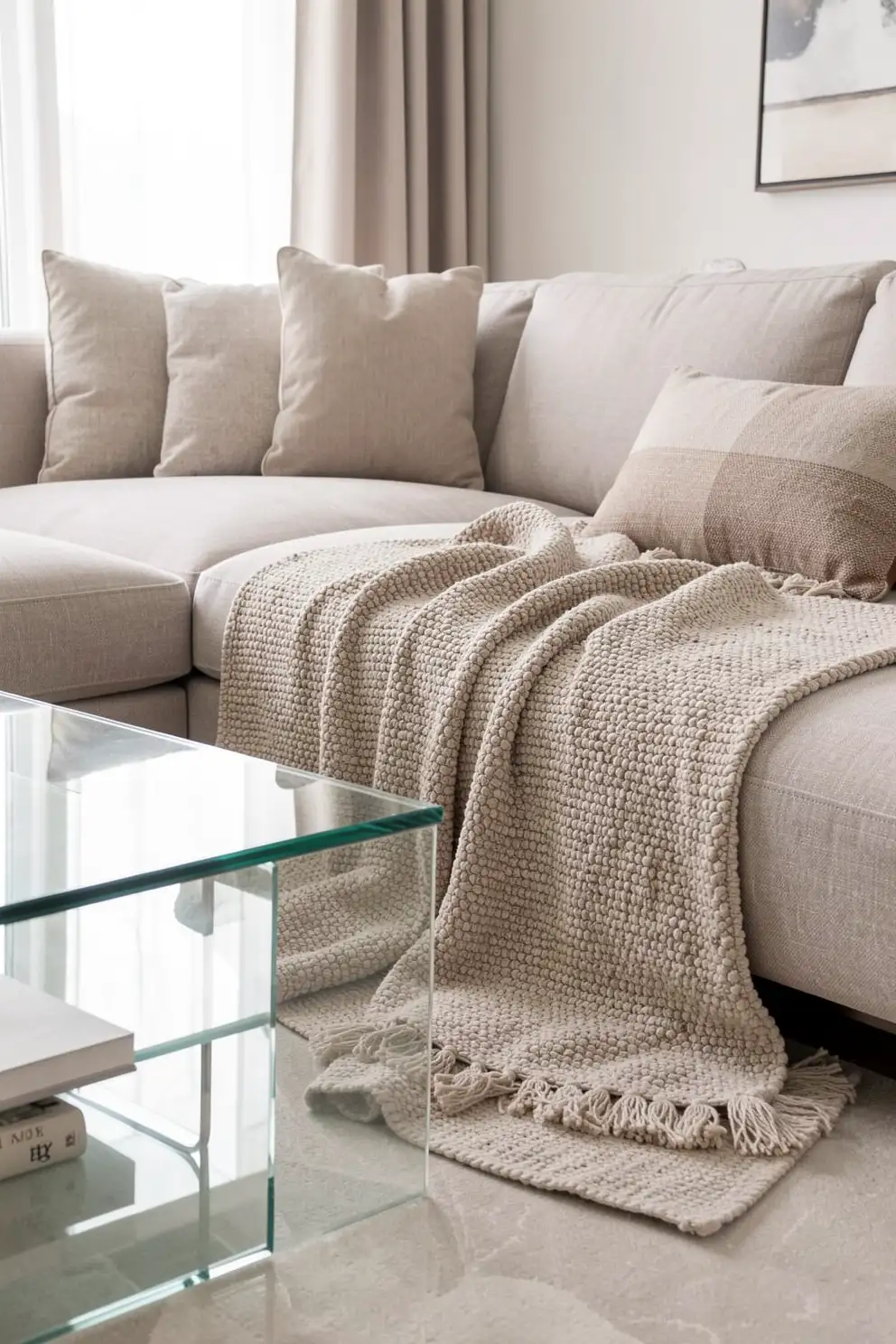
Smooth surfaces such as glass, polished wood, marble, metal, and sleek upholstery can make a living room feel elegant, but they also benefit from softer materials nearby. A textured blanket introduces contrast that makes those finishes look even better. Instead of adding more shiny or flat decor, bring in a tactile throw that catches light differently. This contrast gives the room depth and helps the design feel layered.
Try placing a textured blanket near a glossy coffee table, smooth leather chair, or clean-lined sofa. The difference between surfaces creates visual interest without requiring bold color or pattern. If the room feels too cool, choose a warm woven throw. If the room feels heavy, choose a lighter knit or airy cotton texture. Contrast does not need to be dramatic. It simply needs to make the space feel more considered and complete.
Use Scale to Shape the Room
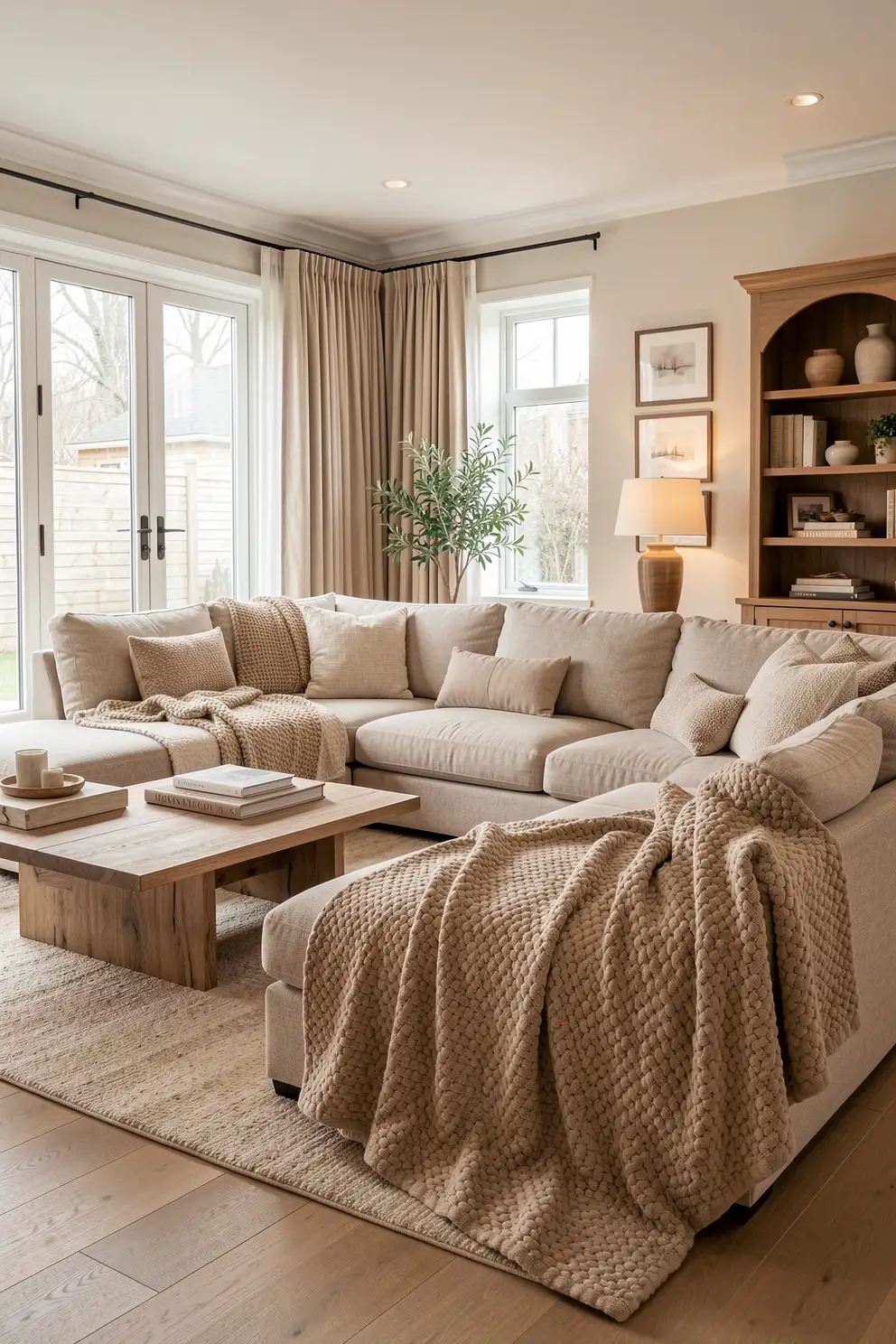
The size and weight of a blanket can change how the living room feels. A generous, thick throw can make a large sofa feel grounded and cozy, while a lighter blanket keeps a small seating area from looking overwhelmed. Professional styling pays attention to proportion. If the blanket is too tiny, it may look accidental. If it is too bulky, it may dominate the furniture and make the room feel crowded.
Match the blanket’s scale to the furniture and the effect you want. A deep sectional can handle plush texture and wider folds, while a slim accent chair may look better with a lighter weave. Let enough of the sofa or chair remain visible so the furniture keeps its shape. When scale feels right, the blanket enhances the room instead of distracting from it, creating comfort with a sense of balance.
Let Seasonal Fabrics Set the Tone
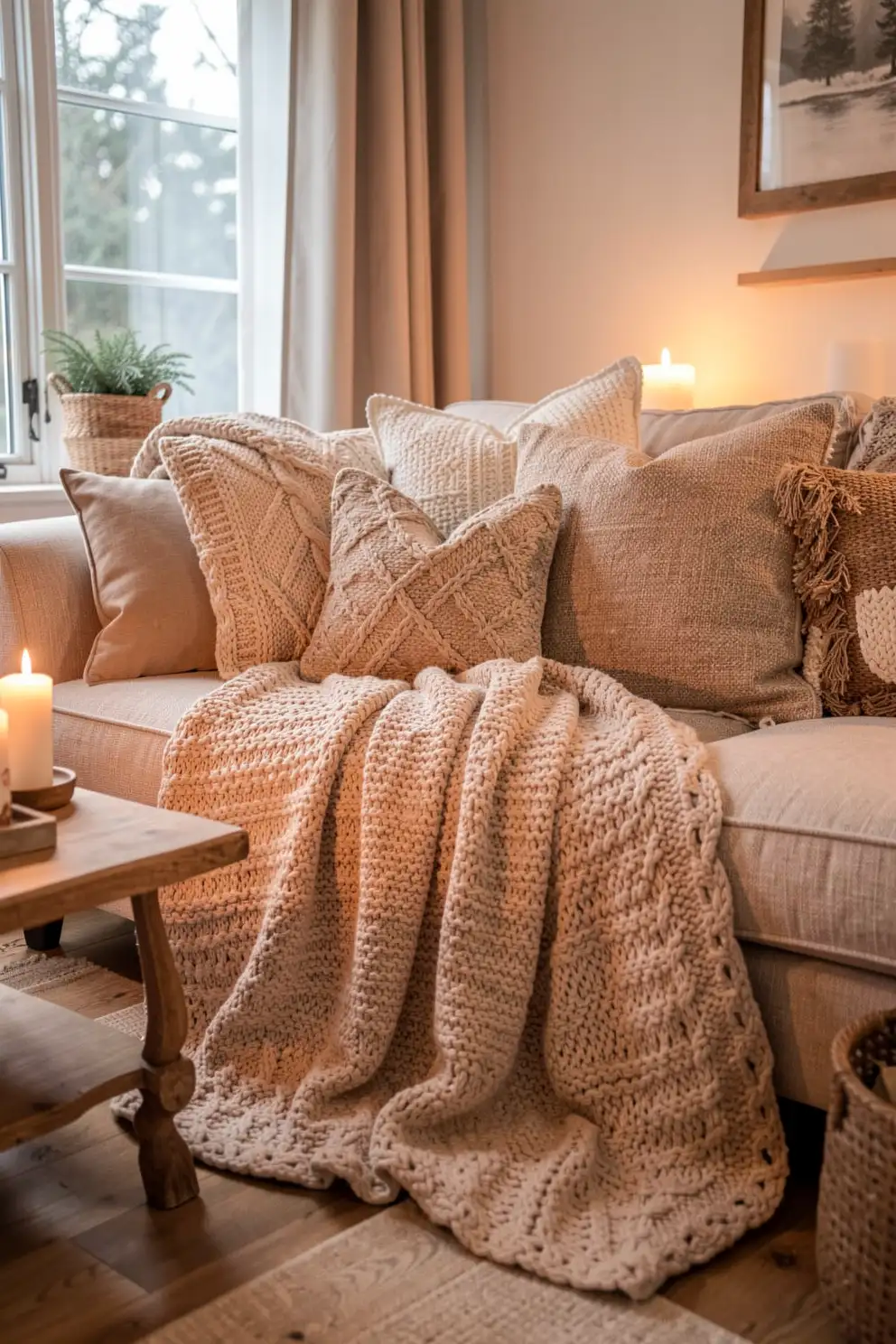
A textured blanket is an easy way to shift your living room through the seasons without changing major decor. During cooler months, heavier knits, sherpa, wool blends, and faux fur create a feeling of warmth and retreat. During warmer months, linen, cotton, gauze, and lighter woven textures keep the space feeling fresh. The blanket becomes a quiet seasonal cue that changes the mood of the room in a natural way.
Seasonal styling works best when the fabric feels appropriate to the light, temperature, and colors around it. Richer tones can make the room feel cozy when evenings are darker, while softer shades feel breezy and open when daylight lasts longer. Store off-season blankets neatly so the living room does not feel crowded. Rotating texture keeps the space interesting and lets your home feel connected to the rhythm outside.
Coordinate With a Coffee Table Moment
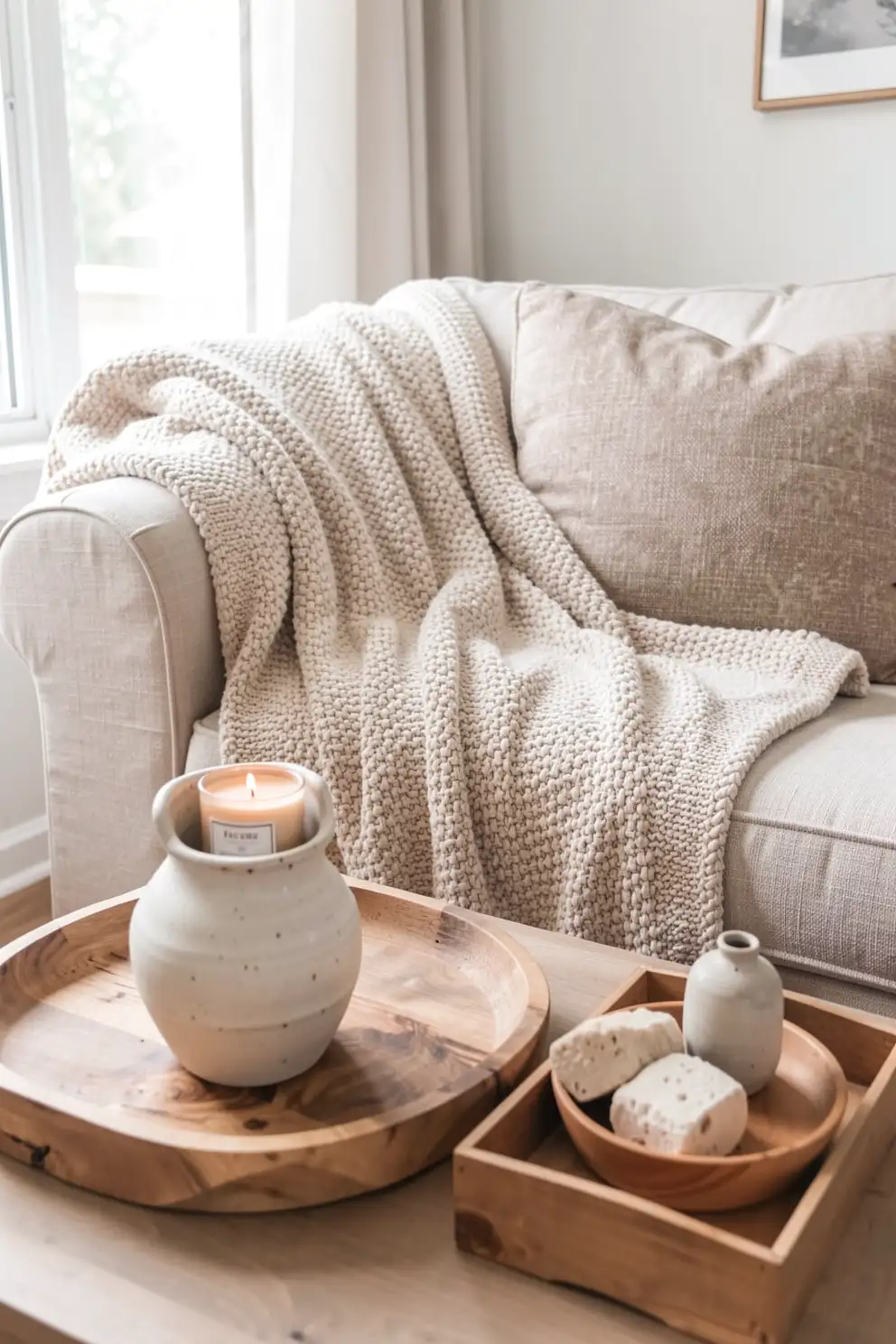
A blanket does not have to work alone. It can connect beautifully with a coffee table arrangement nearby. Choose decor that shares its mood, such as a ceramic vase, a wood tray, a candle, a small bowl, or a stack of books with calming covers. The goal is not to match every detail, but to create a visual conversation between the seating area and the table. This makes the whole living room feel styled.
If the blanket is thick and cozy, keep the table simple so the space does not feel heavy. If the blanket is light and subtle, the table can carry a bit more visual weight. Repeat a color or material from the throw in a small decor accent nearby. This creates flow across the room and helps the blanket feel like part of a thoughtful design plan rather than an isolated accessory.
Keep It Practical for Everyday Living
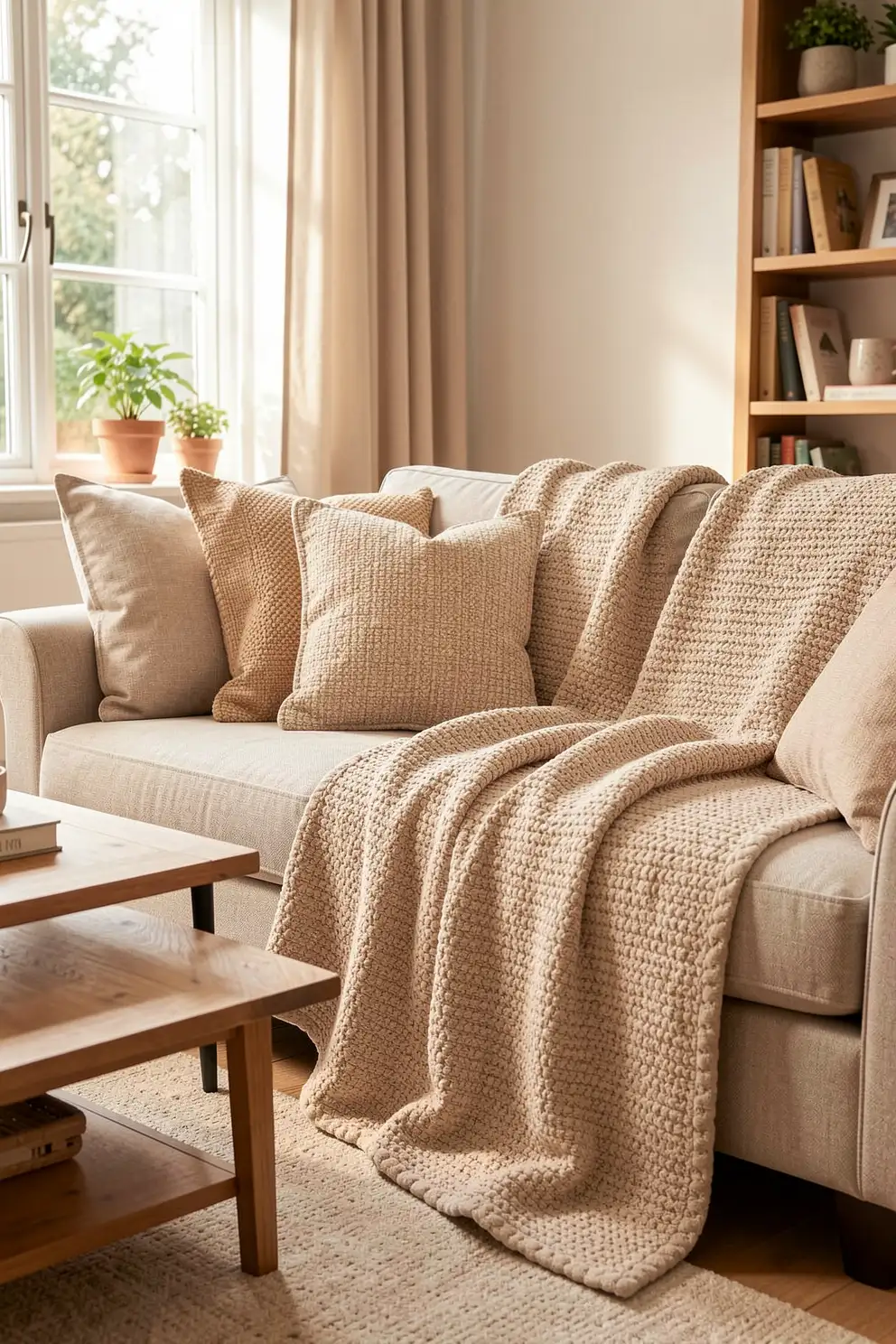
A living room should look beautiful, but it also needs to function comfortably. Style the blanket in a way that can be used and restored without stress. If your household reaches for throws often, choose an easy drape or corner tuck rather than a fussy arrangement. A professional look does not mean untouchable. The best styling supports real life while still giving the room a polished, cozy appearance.
Think about where people sit, how the blanket will be used, and whether pets or children share the space. Washable fabrics, durable weaves, and forgiving colors can make styling easier to maintain. Keep the placement accessible rather than decorative only. When comfort and beauty work together, the blanket becomes part of the room’s daily rhythm. That balance is what makes the space feel naturally stylish instead of staged.
Make a Cozy Reading Spot
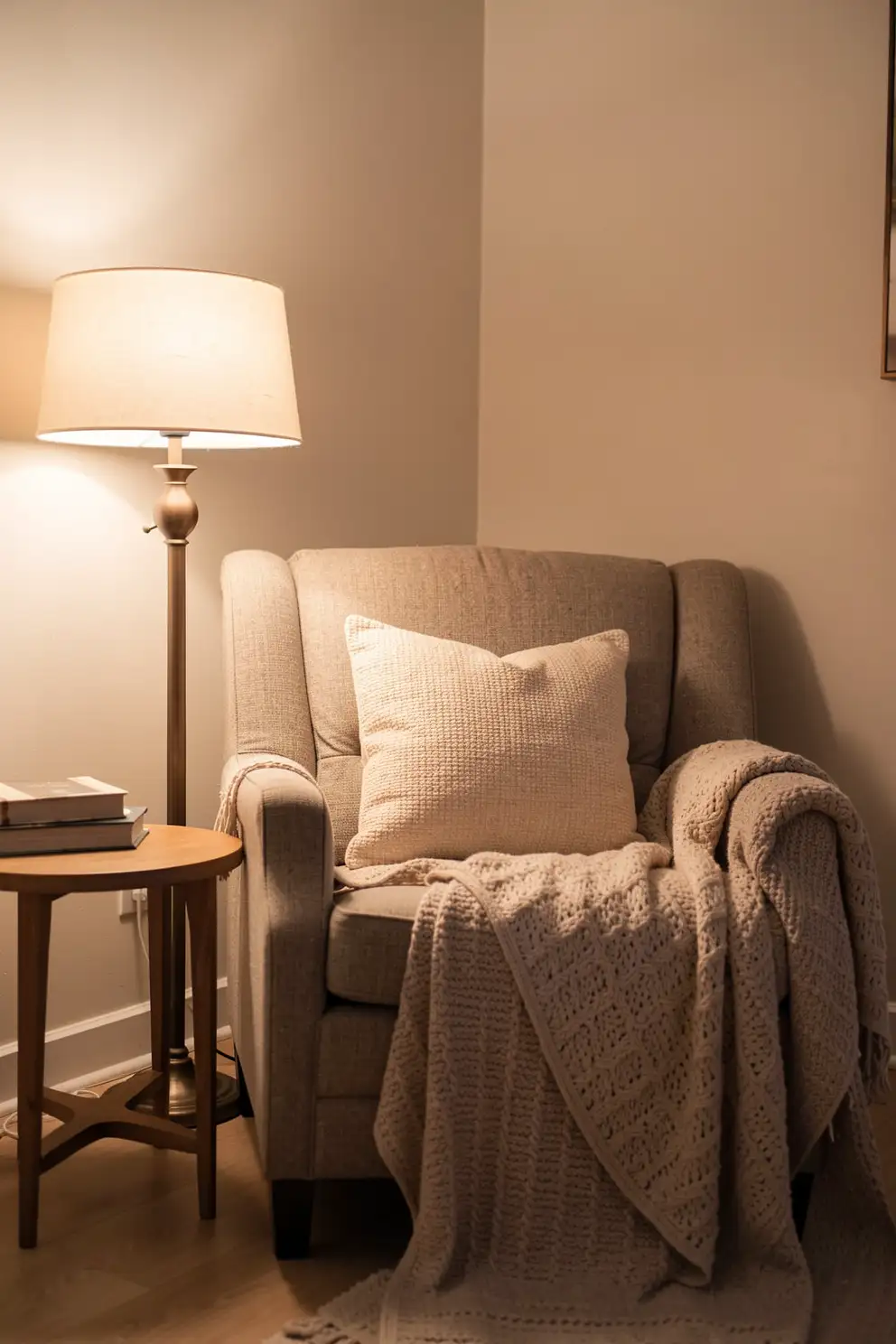
A textured blanket can define a reading spot and make it feel like a small retreat within the living room. Place it over a lounge chair, tucked beside a floor lamp, or folded across a cushioned bench. Add a supportive pillow and a nearby surface for a drink or book. The blanket signals comfort immediately, making the area feel inviting even when it is not in use.
For a reading corner, choose a texture that feels good against the skin and looks soft from across the room. Knits, brushed cotton, and lightweight wool blends work especially well. Let the blanket fall in a relaxed way so the chair does not feel overly arranged. This creates a sense of ease and warmth. The result is a cozy corner that adds both function and charm to the larger living space.
Refresh the Look Without Buying More
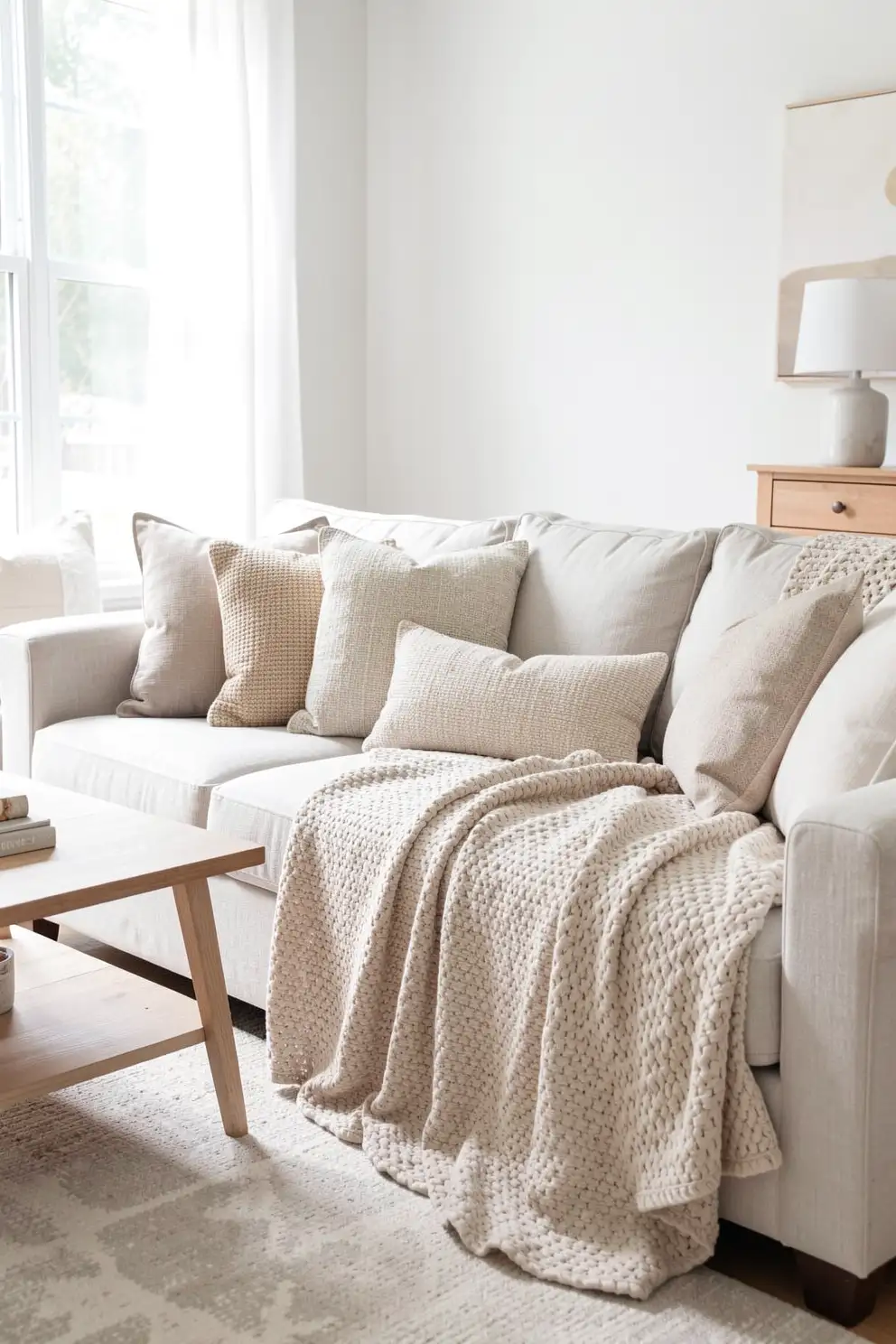
You can make a textured blanket feel new simply by changing its placement. Move it from the sofa arm to the back, from a chair to an ottoman, or from a folded look to a loose drape. Small styling changes can shift the entire mood of the room. This is a useful habit when you want a fresh look without adding more decor or spending money.
Try viewing the room from the entrance before settling on a placement. Notice where the eye lands and whether the blanket helps create balance. You may find that a throw looks better when it visually connects with a lamp, artwork, rug, or cushion across the room. Restyling what you already own is a simple way to keep the living room feeling cared for, current, and personal.
Protect the Blanket While Displaying It
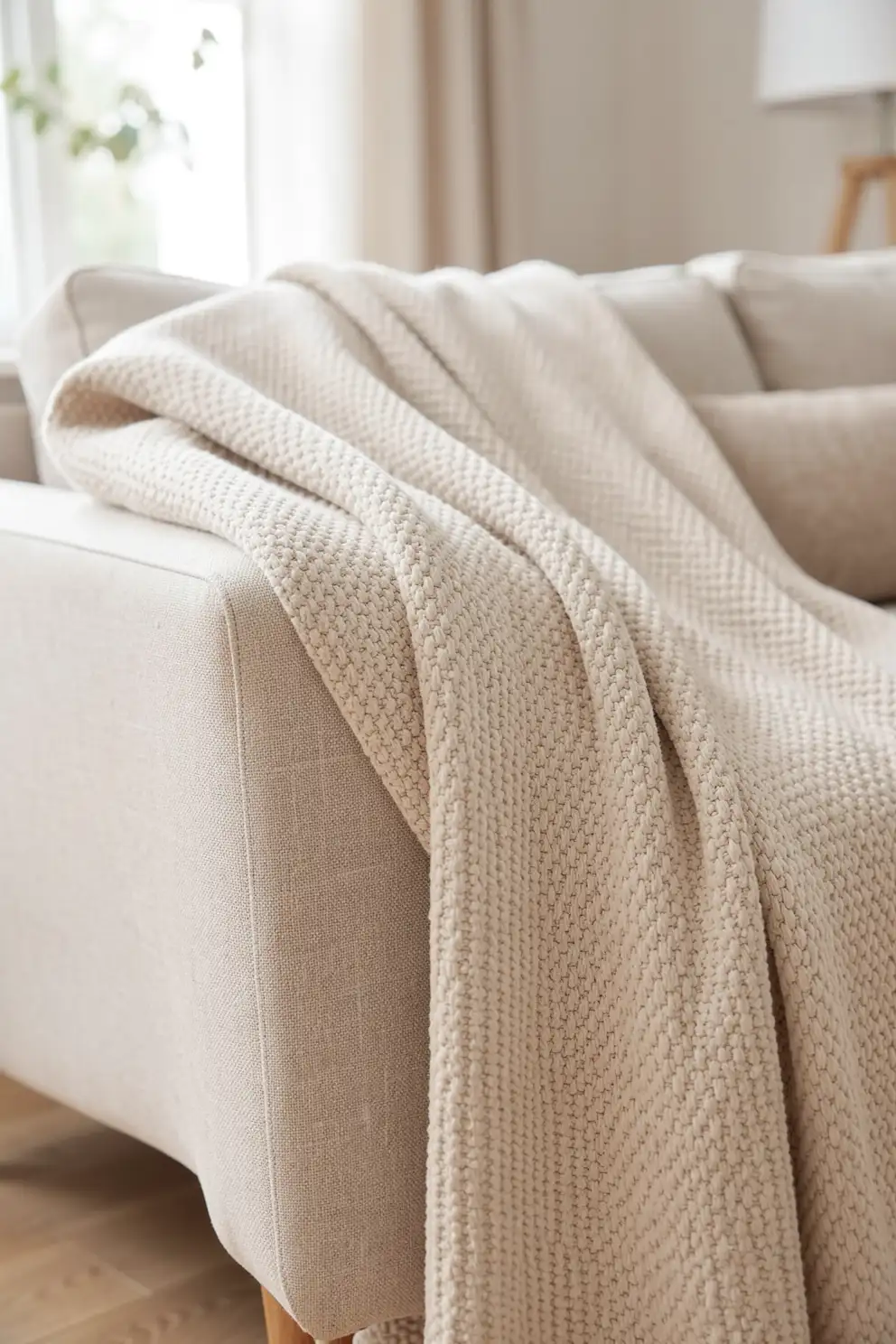
A beautifully styled blanket should also be cared for properly. Avoid placing delicate fabrics where they will catch on rough surfaces, hardware, or sharp furniture edges. If the blanket has fringe, keep it away from high-traffic paths where it may be stepped on or tangled. Good styling considers longevity as well as appearance. When the blanket is protected, it keeps its shape, softness, and decorative impact for longer.
Give the blanket a gentle shake before styling to restore loft and movement. Fold or drape it loosely when not in use so creases do not become too harsh. Follow care instructions for washing, drying, and storing, especially with wool, boucle, faux fur, or handwoven pieces. A clean, well-maintained blanket always looks more expensive. Care is part of the styling process, and it helps your living room feel fresh and thoughtfully kept.
A textured blanket is a small living room detail with a big design effect. When you choose the right fabric, color, placement, and surrounding accents, it can soften furniture, add warmth, and make the entire space feel more polished, cozy, and personal.