
Mini pumpkins are an easy way to bring seasonal color and texture into your home without a major decorating project. Try these practical styling ideas for mantels, shelves, entryways, tables, and more, using natural materials and pieces you may already own. From a simple bowl arrangement to a softly layered centerpiece, each display makes small pumpkins feel thoughtfully at home.
Mini Pumpkins in a Vintage Dough Bowl
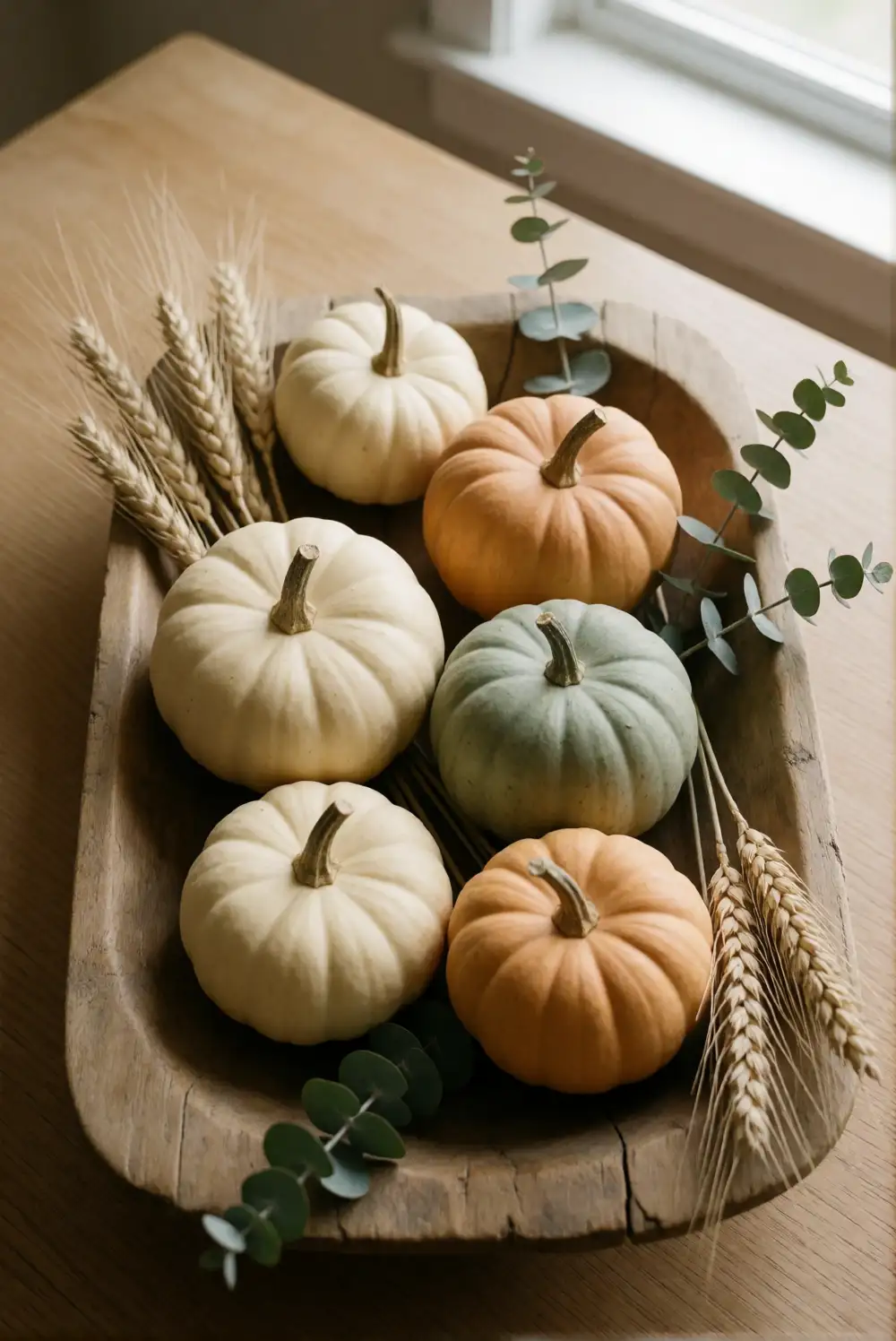
Choose a shallow vintage dough bowl and gather mini pumpkins in a mix of cream, muted orange, and soft green. Set the largest pumpkins toward the center, then tuck smaller ones around them until the bowl looks comfortably full. Add a few sprigs of dried wheat or eucalyptus between the pumpkins for gentle texture. Keep the arrangement low enough to sit easily on a dining table or console without blocking the view across the room.
For a collected look, mix smooth pumpkins with ribbed or naturally bumpy varieties, while keeping the color range restrained. A folded linen napkin beneath the bowl can soften a hard tabletop, and a small cluster of acorns nearby adds another natural detail. Refresh the display by turning the pumpkins so their best sides face outward. When the season changes, the same bowl works well for pears, pinecones, or other decorative finds.
A Neutral Pumpkin Mantel with Layered Candlesticks
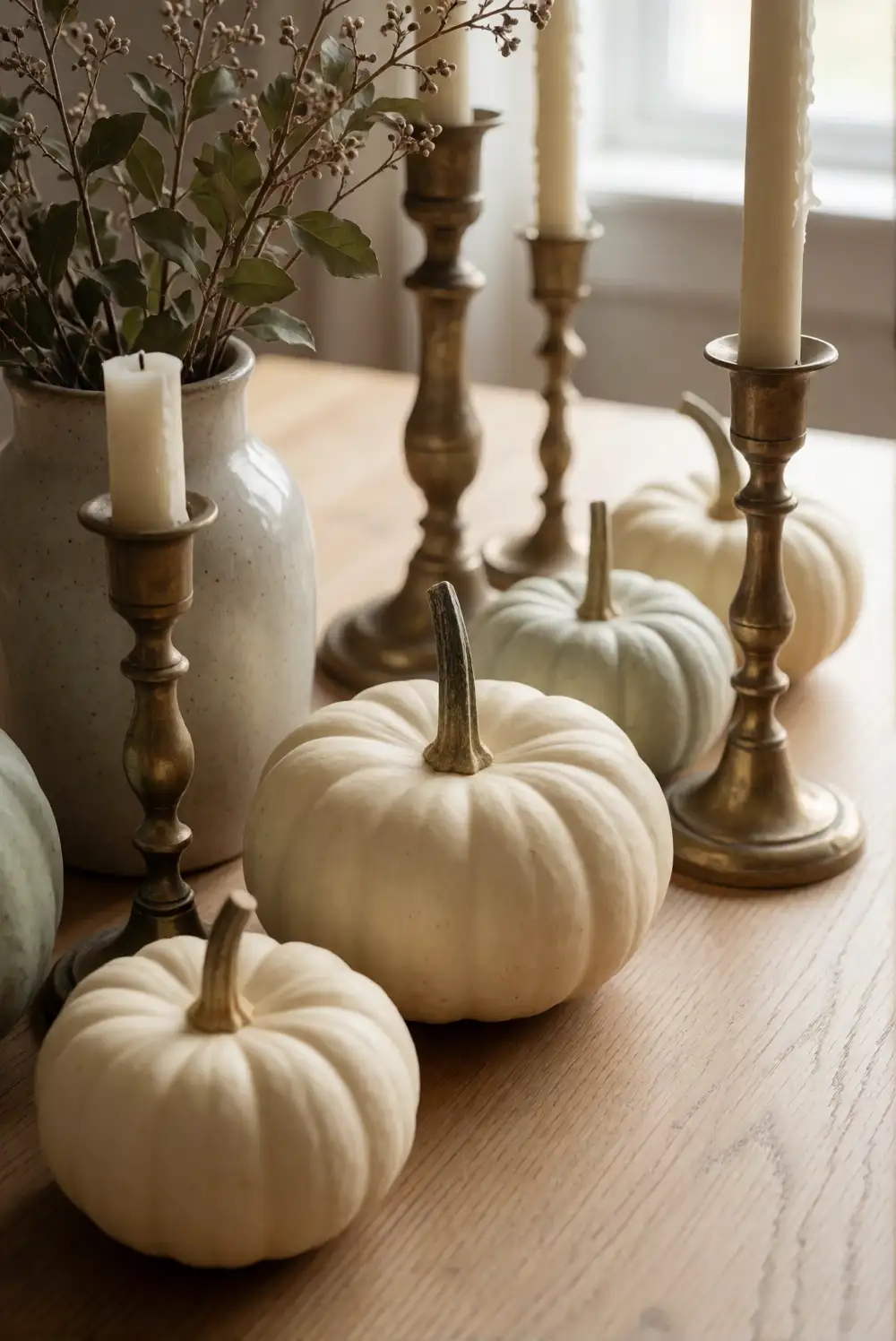
Start with a few cream and pale green mini pumpkins, then arrange them across the mantel with space between each cluster. Place candlesticks at varied heights to add a graceful vertical line, choosing finishes such as aged brass, wood, or matte ceramic. Lean a simple landscape print or mirror behind the arrangement, keeping its frame understated. Tuck in a little dried foliage to link the pumpkins and candlesticks without making the mantel feel crowded.
Balance the display by placing a taller object toward one end and repeating a smaller pumpkin cluster on the other. If the mantel is narrow, use fewer pieces and keep each pumpkin close to the wall. Choose flameless LED candles when you want a gentle glow, and keep them away from dried stems. Swap in rust-colored pumpkins for a warmer palette, or use mostly ivory pieces for a softer, quieter seasonal look.
Mini Pumpkins Styled on Open Shelves
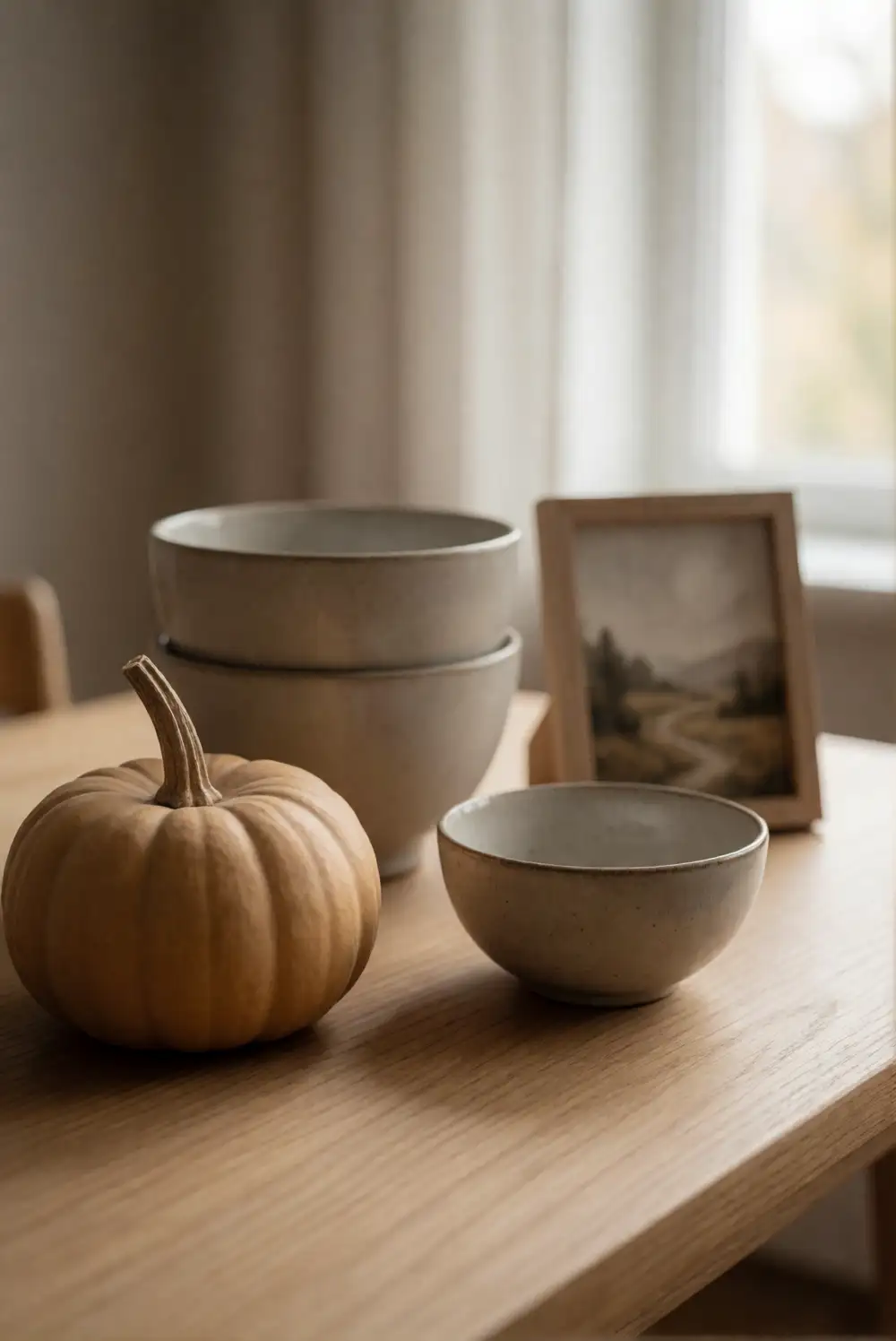
Give open shelves a seasonal refresh by placing a mini pumpkin beside objects already on display, such as ceramic bowls, cookbooks turned spine-in, or a small framed landscape. Choose one or two pumpkins per shelf rather than lining every ledge. A cream pumpkin works beautifully beside pottery, while a muted orange one can warm up a shelf of neutral dishes. Leave breathing room around each grouping so the display looks intentional and remains practical to use.
Repeat one color across different shelves to make the arrangement feel connected, then vary the shapes and heights of nearby pieces. Set pumpkins toward the front where their color is visible, but keep them clear of shelf edges. For kitchen shelves, avoid placing them beside heat or moisture. When you want a fresh look, move a pumpkin to another shelf and trade its place with a small vase or bowl.
A Pumpkin Centerpiece with Eucalyptus
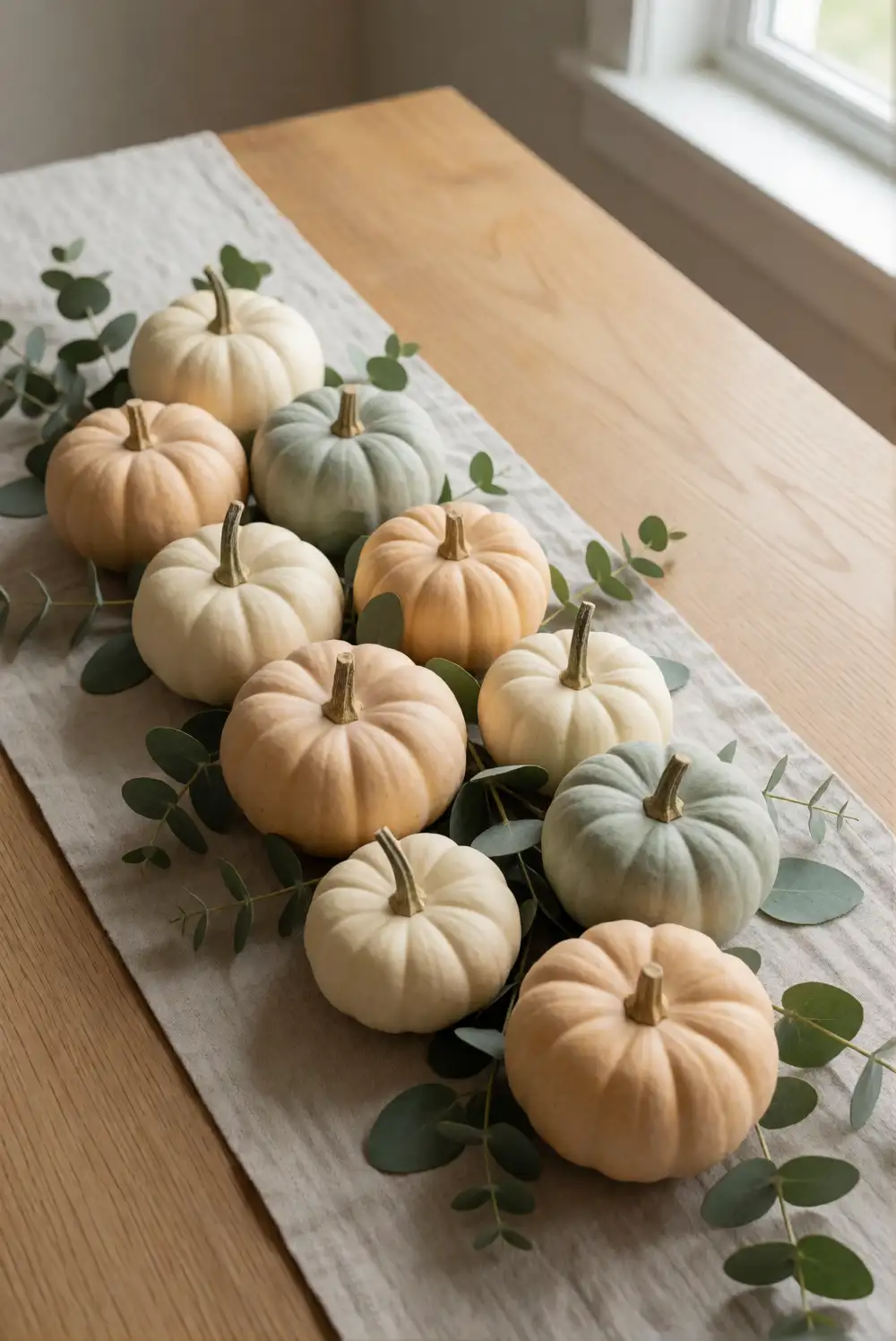
Arrange a handful of mini pumpkins along the center of a table, then weave fresh or dried eucalyptus between them. Use pumpkins in related shades, such as cream, sage, and pale orange, to keep the centerpiece cohesive. Place the largest pieces near the middle and let the smaller ones trail toward the ends. A simple runner in natural linen helps define the arrangement while leaving enough clear space for serving dishes and place settings.
Keep the greenery low and loose so guests can see across the table, and trim stems to prevent them from draping over plates. For a longer table, repeat small groupings rather than creating one dense mound. You can substitute olive branches or dried grasses for eucalyptus, adjusting the greenery to suit the rest of your room. After the meal, move the centerpiece to a console or coffee table for continued seasonal use.
Mini Pumpkins in a Woven Basket
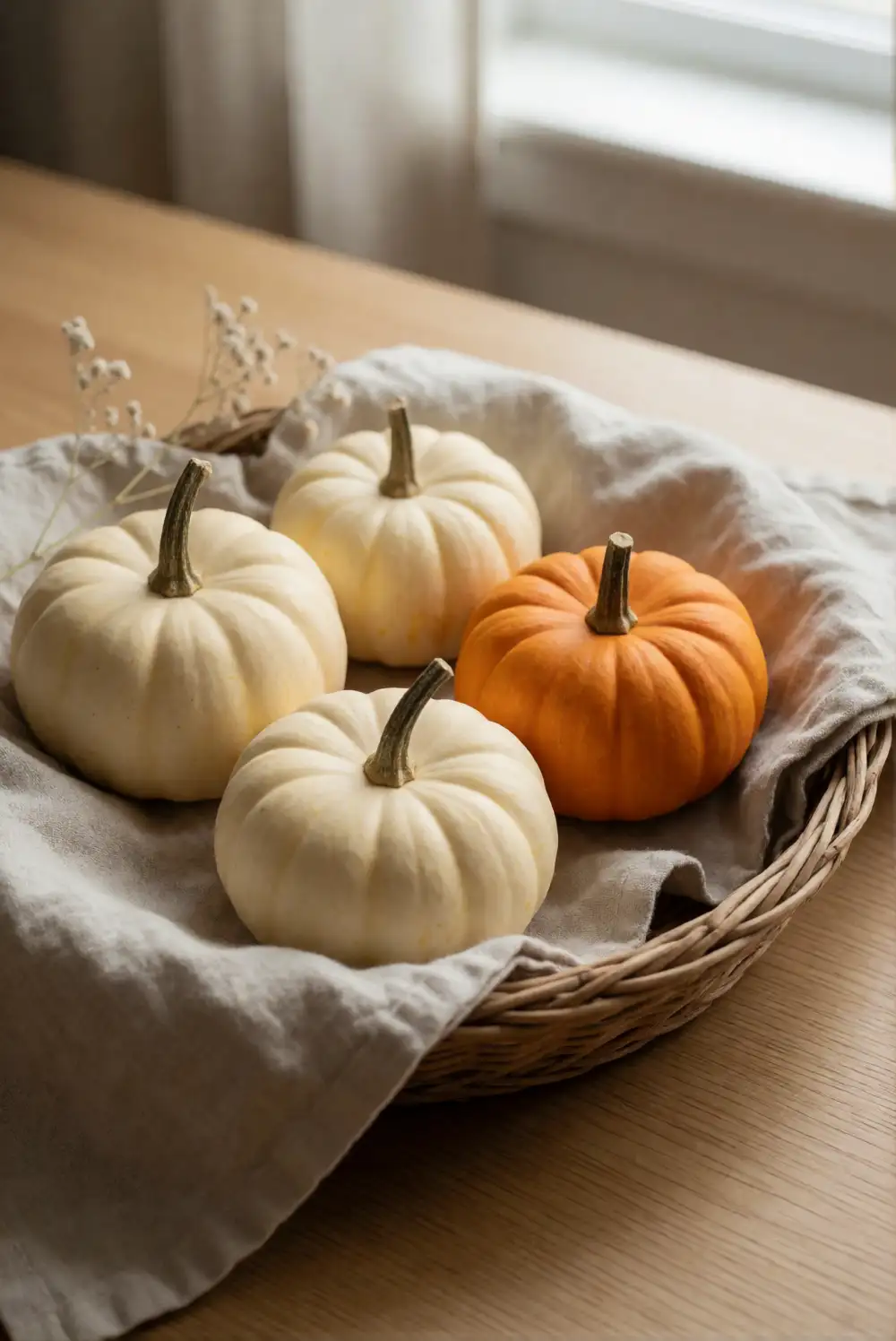
Line a shallow woven basket with a piece of soft linen, allowing the fabric to fold naturally over the rim. Nestle in mini pumpkins of different sizes, with a few leaves or dried stems filling the small gaps. A basket with a low, open shape keeps the arrangement visible and makes it easy to move from room to room. Try a mix of ivory and orange pumpkins against warm natural wicker for a relaxed fall display.
Keep the basket light enough to lift comfortably, and avoid piling the pumpkins so high that they roll when moved. A handled basket can sit beside a fireplace or at the foot of a console, while a flatter one works on a dining table. For a softer palette, use mostly pale pumpkins and a cream fabric lining. When the season ends, remove the pumpkins and reuse the basket for blankets or everyday storage.
A Cozy Entryway Pumpkin Tray
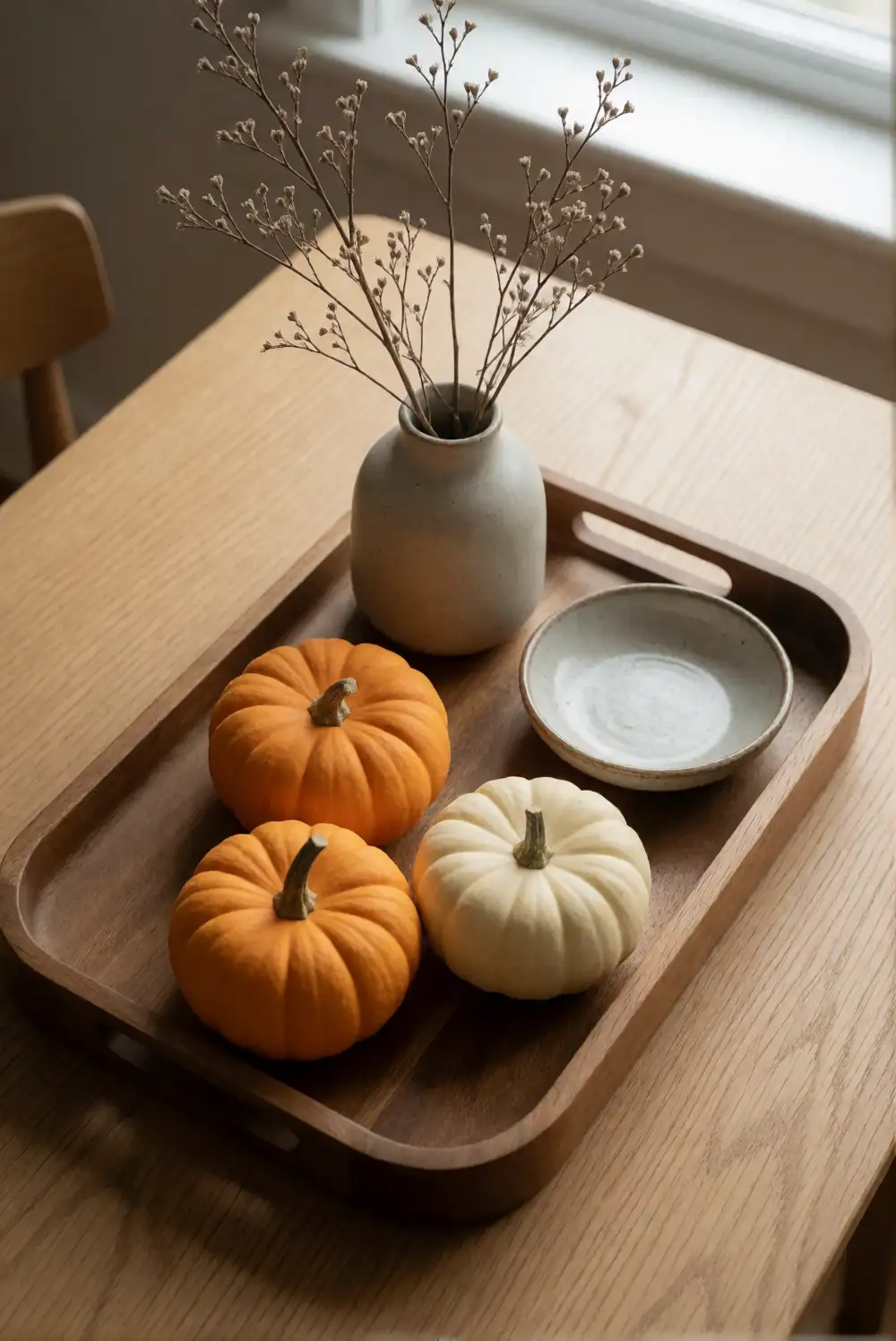
Set a shallow tray on an entryway console to create a contained seasonal display that leaves the rest of the surface useful. Place a small group of mini pumpkins beside a ceramic dish and a short vase of dried branches. Choose a tray in wood, aged metal, or woven material, then repeat its finish in another nearby accessory. Keep the arrangement to one side so there is still room for keys, gloves, or a bag when you come home.
Use pumpkins in colors that complement your entryway, such as soft green for a calm palette or muted orange for a warmer welcome. A low tray keeps the display easy to dust and simple to move when you need the surface. Add a folded linen cloth underneath the pumpkins to soften the composition. If your console is narrow, choose a compact dish and just a couple of pumpkins rather than crowding the walkway.
Pumpkin Place Settings with Natural Linens
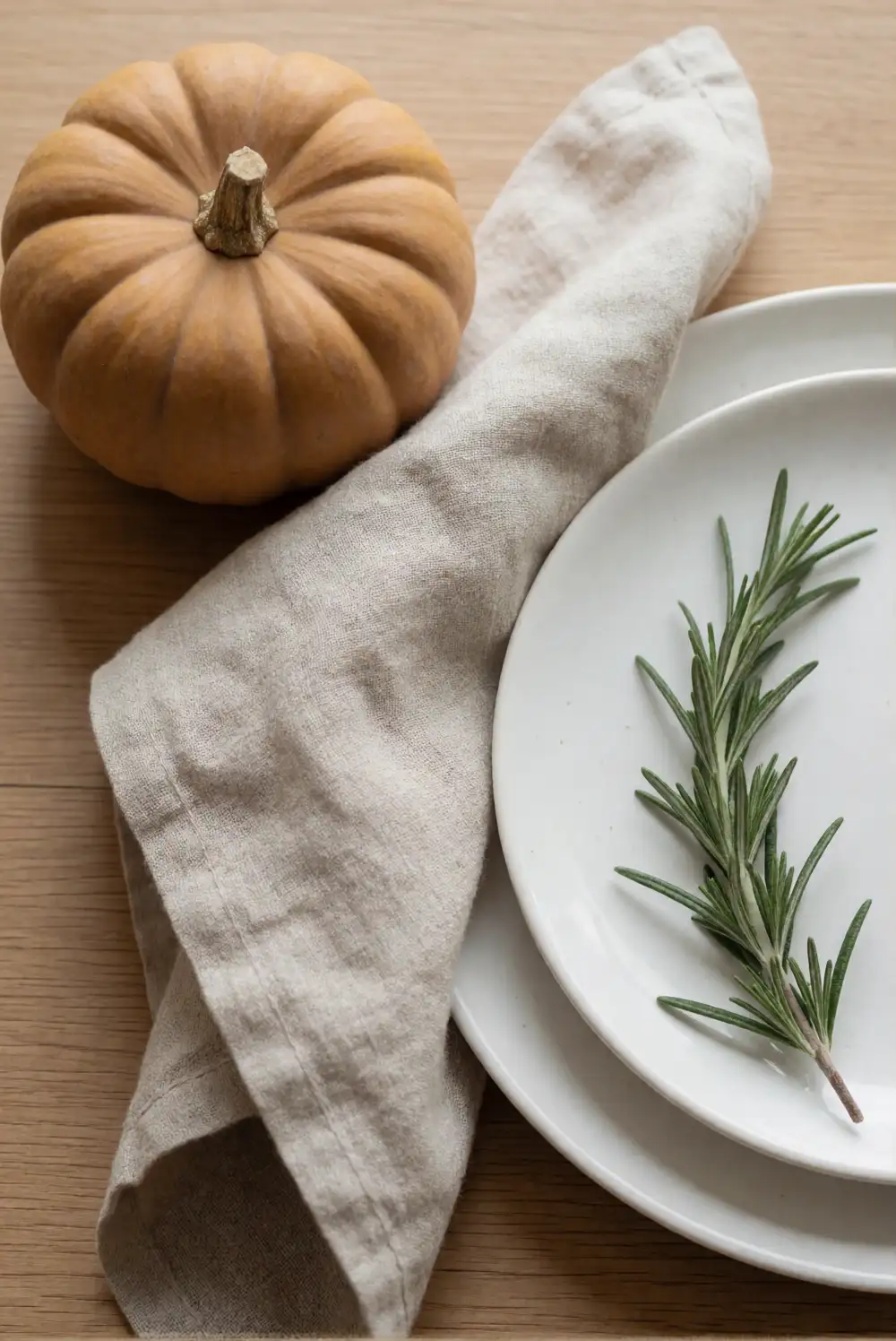
For a seasonal table, fold natural linen napkins loosely and place one mini pumpkin beside each setting. Use small pumpkins that sit securely and do not crowd the plate or flatware. A few sprigs of rosemary or dried leaves can tuck beside the napkin for a subtle botanical touch. Keep the tableware simple, using white or earthy-toned plates so the pumpkin shapes and linen texture remain the focus of the place setting.
Choose pumpkins in a consistent color family for a polished table, or alternate pale and orange varieties for gentle contrast. Leave enough room for glasses and serving dishes, especially when the table is small. These arrangements work well for a casual autumn meal, and guests can take a pumpkin home afterward if desired. For an understated version, skip the greenery and let the linen, ceramic dishes, and natural pumpkin stems provide all the detail.
Mini Pumpkins on a Coffee Table Tray
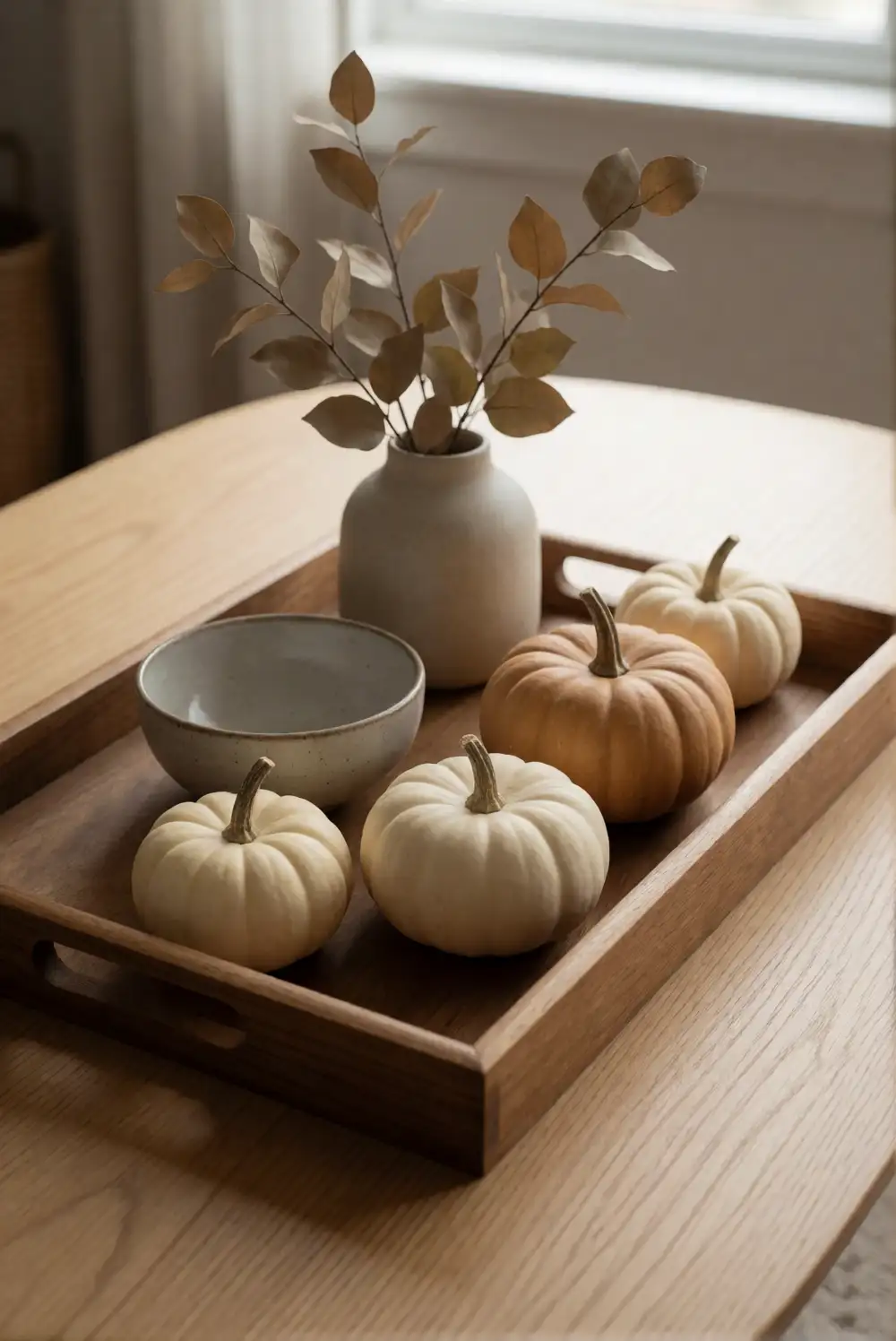
Use a coffee table tray to bring a little fall color to the living room without spreading small decorations across the whole surface. Group a few mini pumpkins with a short ceramic vase and a low bowl, varying the shapes while keeping the objects close in height. A wooden or woven tray adds warmth, and a couple of pumpkins in cream or muted orange keep the arrangement seasonal without overpowering the room.
Leave part of the tray open for a mug or remote, making the display easy to live with day to day. Place the tallest item near the back and keep the pumpkins toward the front so their shapes remain visible. For a softer look, tuck in a small branch of dried leaves. If your coffee table is already busy, use a single pumpkin beside the tray rather than adding another crowded grouping.
A Window Sill Display with Mini Pumpkins
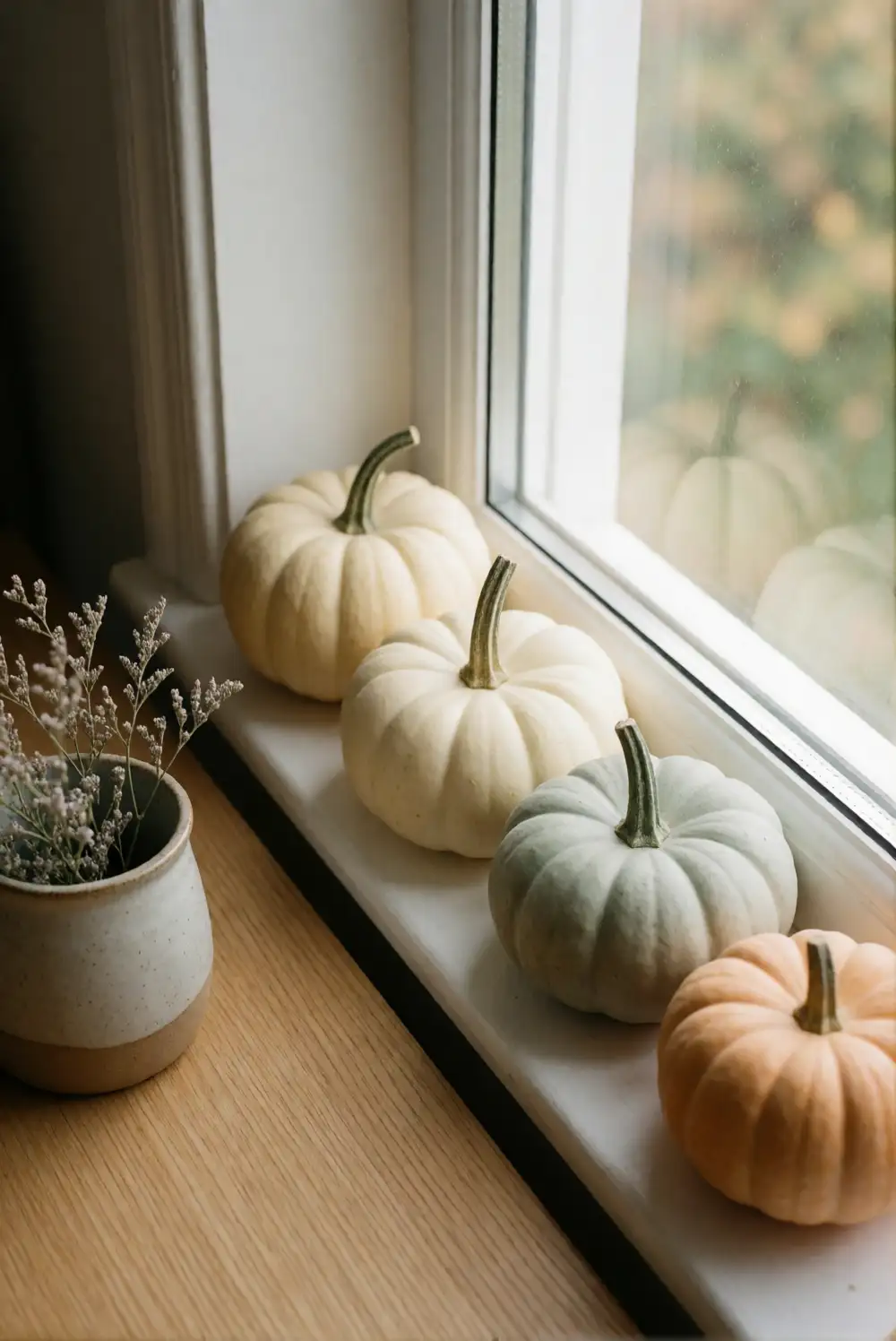
Arrange mini pumpkins along a wide window sill, leaving small gaps so each one stands out against the light. Combine cream, sage, and soft orange pumpkins, and add a little dried foliage at one end for height. Before styling, make sure the sill is clean and wide enough to hold the display securely. A simple line of pumpkins can look especially inviting beside a kitchen window or in a bright living room corner.
Keep pumpkins away from direct heat and avoid placing them where they might be knocked down when opening a window. On a narrow sill, choose only a few small pieces and skip extra accessories. A short ceramic pot can add a contrasting shape without blocking the view outside. Rotate the display occasionally to show different sides, and remove any pumpkin that begins to soften so the rest of the arrangement stays fresh.
A Painted Mini Pumpkin Cluster
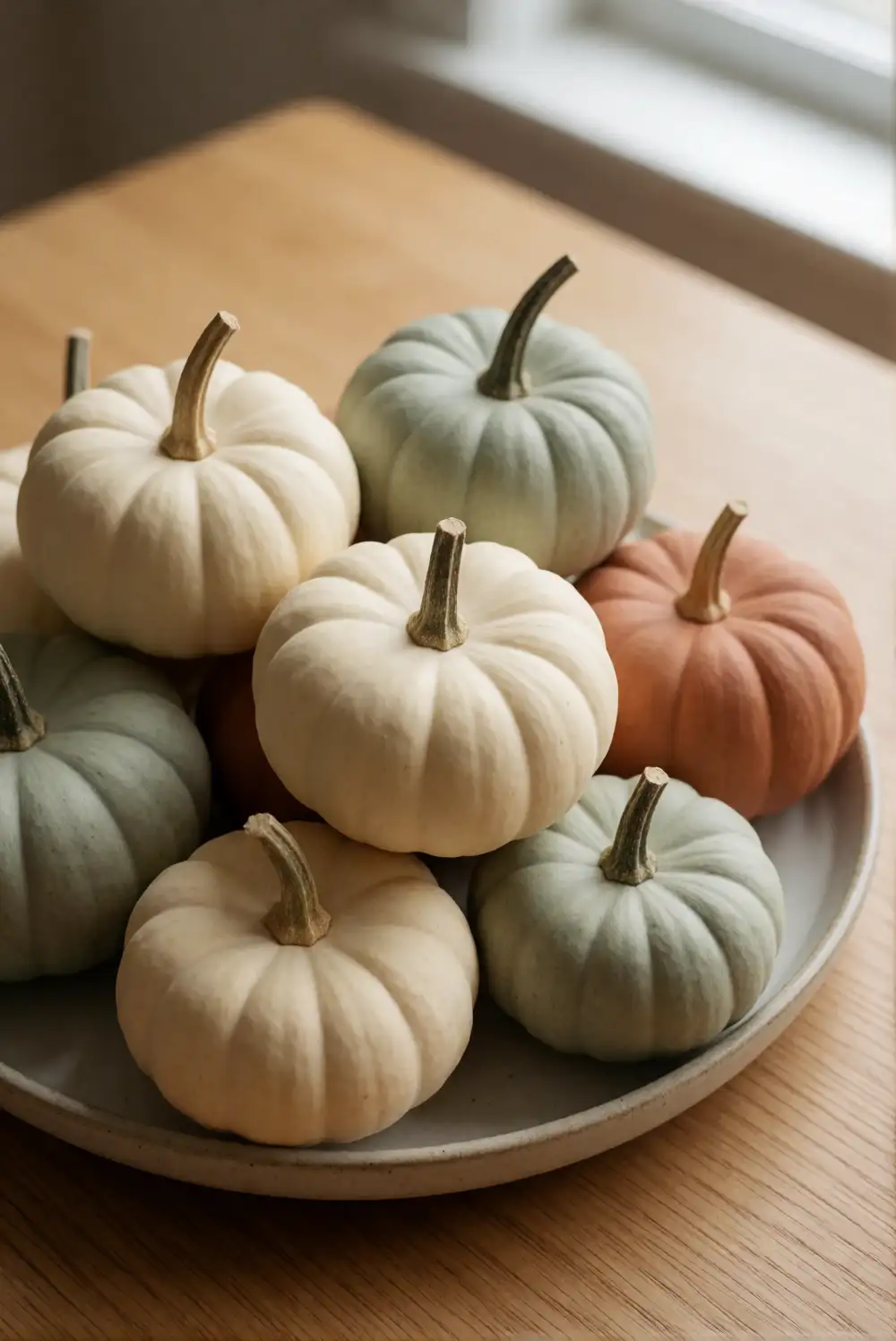
Choose several mini pumpkins with smooth surfaces and paint them in a coordinated palette, such as warm cream, dusty sage, and muted terracotta. Wipe the pumpkins clean and let them dry before applying thin coats of craft paint with a small brush. Allow each coat to dry fully before adding another, then arrange the finished pumpkins together on a tray or shallow dish. Keeping the stems unpainted adds a natural detail to the finished cluster.
For a restrained result, paint most pumpkins one color and use a different shade on just one or two. Matte paint gives the display a soft, modern finish, while a little variation in coverage can preserve some natural character. Set the cluster on a bookshelf, side table, or mantel, and pair it with plain ceramics rather than more patterned decor. Keep painted pumpkins indoors and handle them gently to help the finish last through the season.
Mini pumpkins can bring a fresh fall feeling to nearly any corner of the home, from a simple shelf accent to a thoughtfully arranged table centerpiece. Start with a display that suits the space you have, then build it with a few colors, natural textures, and useful pieces already in your home. Small seasonal touches are easy to move, remix, and enjoy throughout autumn.