
Textured throw blankets are a simple way to bring warmth, softness, and visual depth into a minimalist home aesthetic without adding clutter. With the right placement, palette, and material choices, a throw can make a clean room feel more inviting while still preserving calm lines and open space. The key is to style texture with intention so every fold, drape, and layer feels natural, useful, and quietly beautiful.
Choose a Calm Foundation
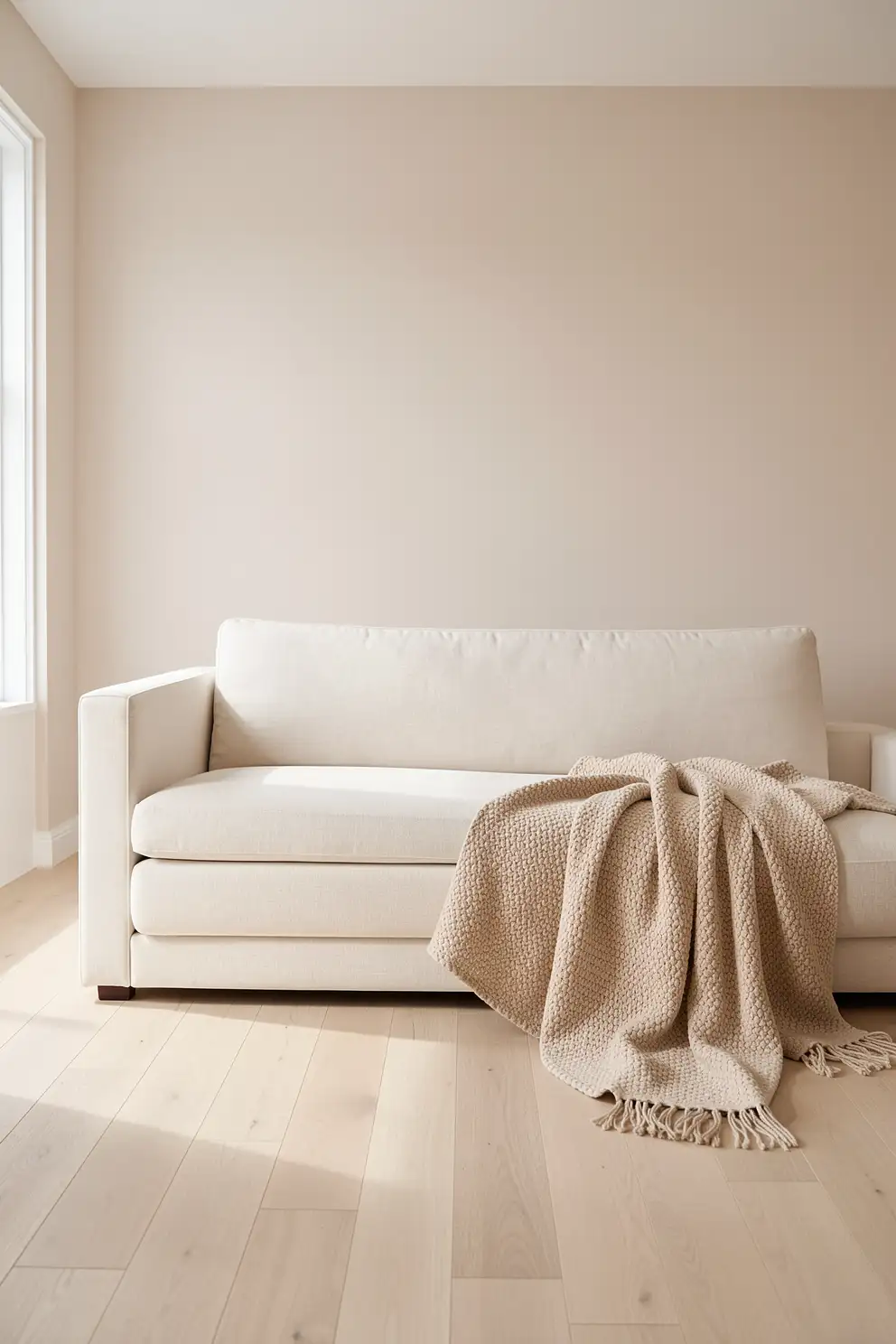
A minimalist home feels strongest when the base is calm, grounded, and easy on the eye. Before adding a textured throw blanket, look at the room’s existing palette, furniture shapes, and natural light. Soft whites, warm beige tones, gentle taupe, stone gray, and muted earth shades create a peaceful backdrop where texture can stand out without feeling busy. A calm foundation allows the blanket to become a cozy detail rather than a distracting decoration.
Think of the throw as part of the room’s quiet rhythm. If the sofa, chair, or bed already has a clean silhouette, the blanket can soften the space while honoring that simplicity. Avoid introducing a color or pattern that competes with the rest of the room. Instead, choose a tone that feels related to what is already present. This creates continuity, making the blanket look thoughtfully placed and naturally integrated.
Let Texture Become the Accent
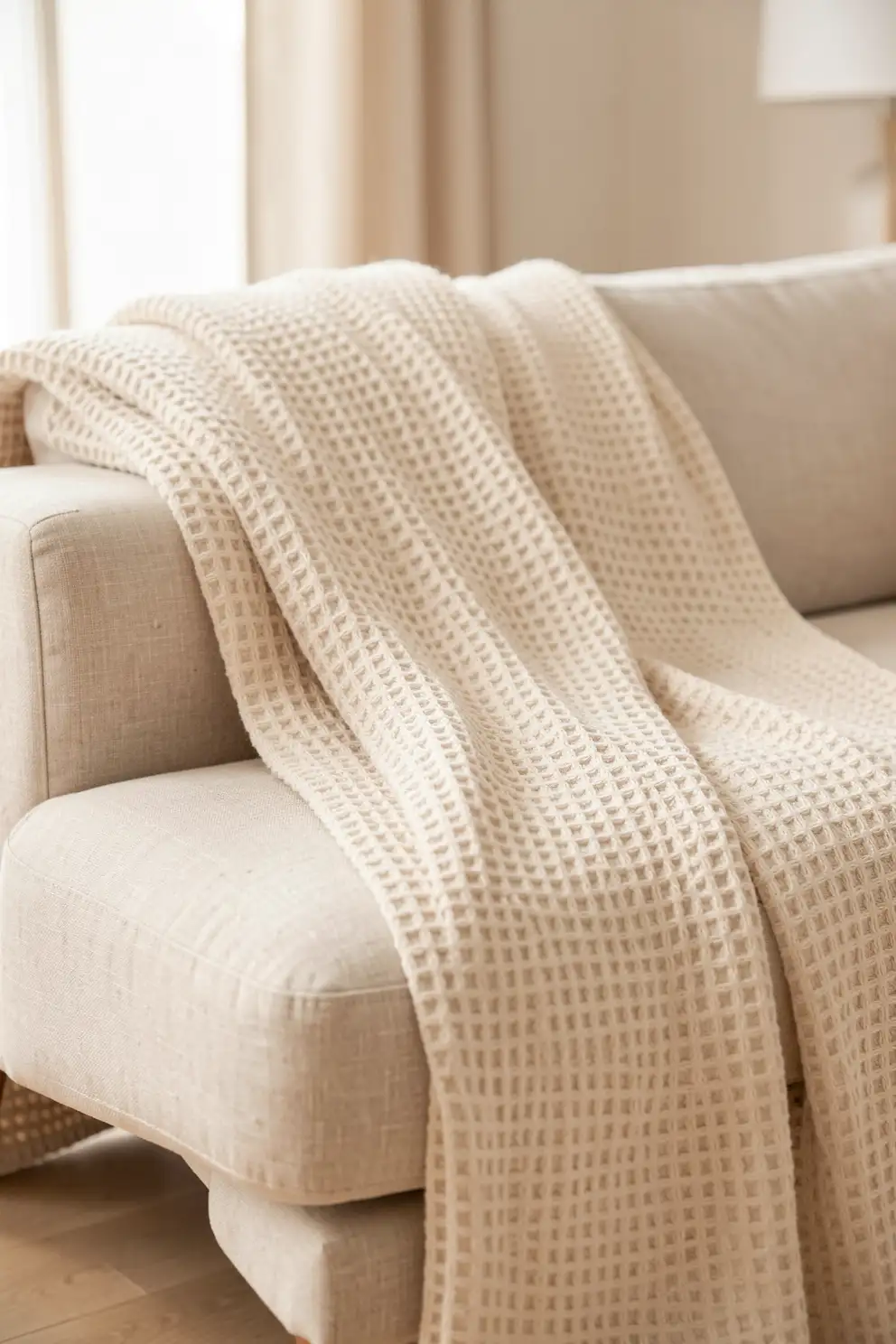
In a minimalist space, texture often works better than bold color or busy print. A throw blanket with a waffle weave, ribbed knit, boucle surface, or lightly slubbed fabric can create interest while keeping the room serene. The beauty comes from touchable detail rather than visual noise. This approach is especially helpful in rooms that feel too flat, because texture adds dimension without changing the clean aesthetic.
Let the material do the styling work. A softly woven throw placed over a smooth linen sofa instantly creates contrast, while a chunky knit on a sleek bench adds warmth and softness. The room still feels minimal because the palette remains restrained, but the layered surfaces make it more inviting. Texture gives the eye somewhere to rest, creating a subtle focal point that feels warm, natural, and effortless.
Drape Softly Over a Clean Lined Sofa
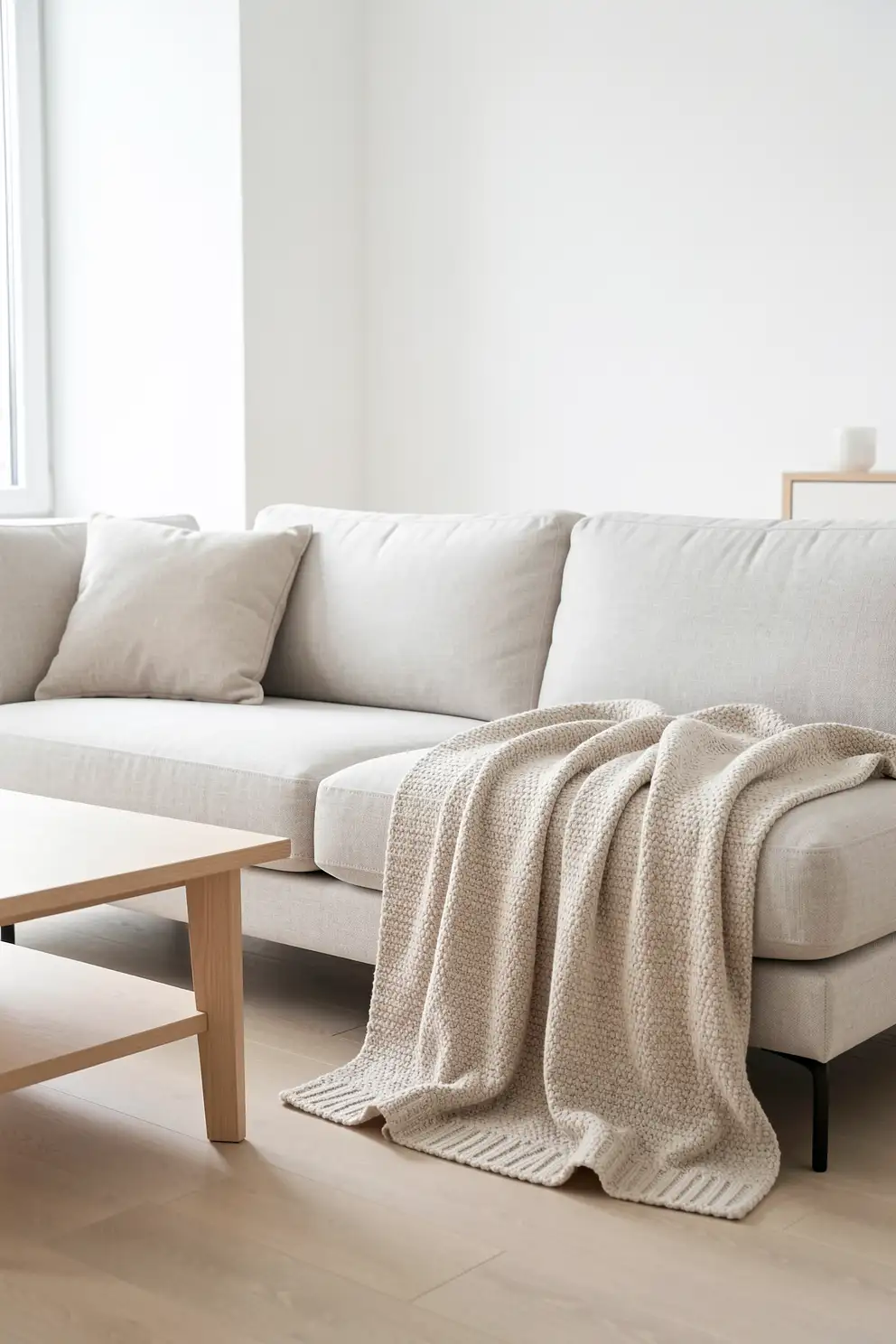
A clean lined sofa is the perfect canvas for a textured throw blanket. Instead of arranging the throw too precisely, allow it to fall in a relaxed way over the arm, back, or seat edge. The softness of the fabric balances the structure of the sofa and prevents the room from feeling overly rigid. A loose drape also creates a lived in feeling while still looking refined and intentional.
For a minimalist home, keep the drape simple and avoid overworking it. Let the blanket create gentle folds and natural shadows. If the sofa is light, choose a slightly warmer or deeper neutral for subtle definition. If the sofa is dark, a pale textured throw can brighten the area and add softness. This styling choice feels casual, useful, and elegant, which is exactly where minimalist comfort shines.
Fold Neatly at the Foot of the Bed
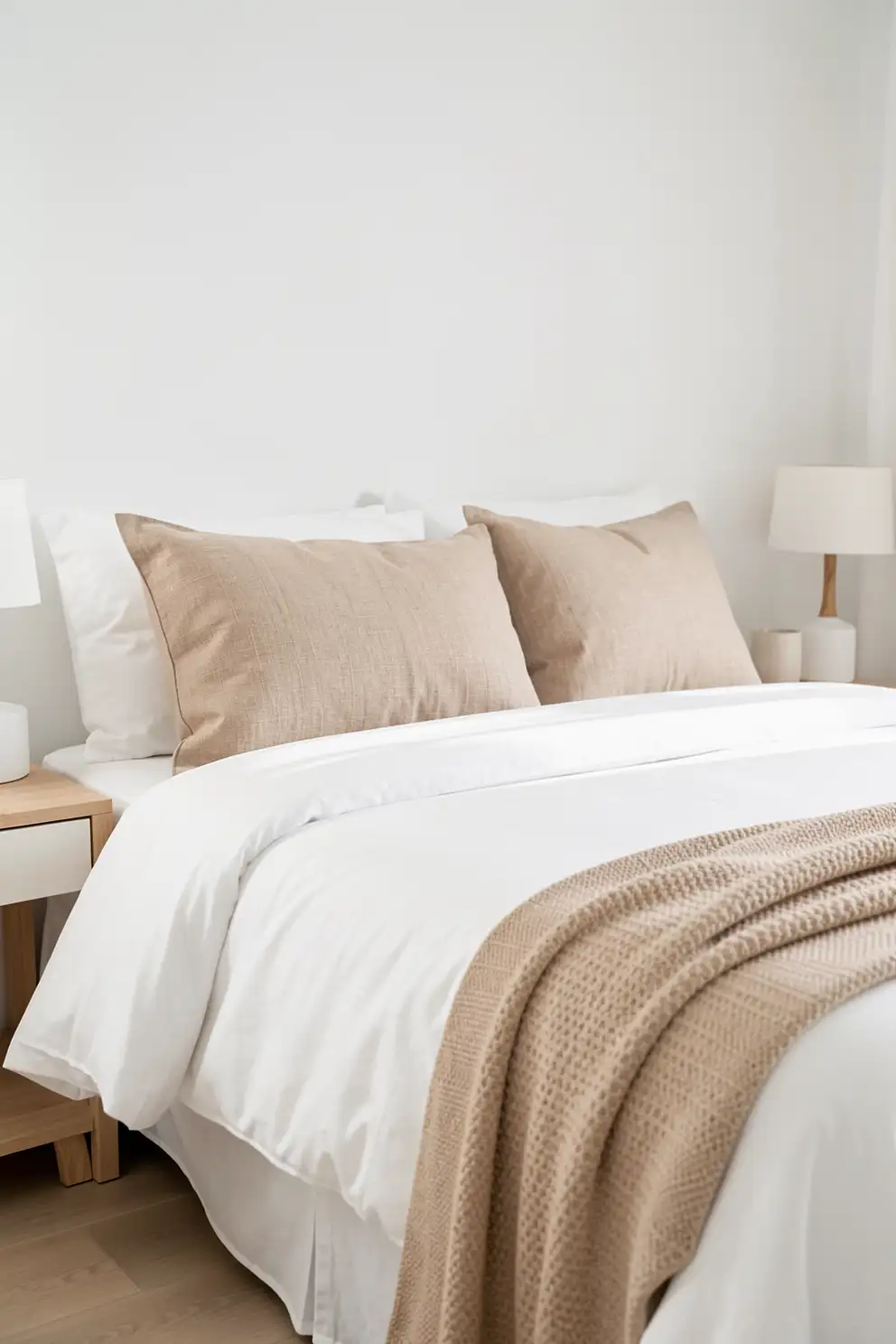
The foot of the bed is a natural place for a textured throw because it adds comfort without overwhelming the room. A neatly folded blanket can create a hotel inspired finish while still feeling soft and personal. Choose a throw that complements the bedding rather than competing with it. Linen sheets, cotton quilts, and smooth duvet covers pair beautifully with knitted, woven, or brushed textures.
Keep the fold relaxed enough to avoid a stiff showroom effect. A slightly imperfect edge can make the room feel warmer and more approachable. The blanket should look ready to use, not merely displayed. This is especially important in a minimalist bedroom, where every object should feel purposeful. The added layer introduces depth, frames the bed, and gives the space a quiet sense of completion.
Layer Tone on Tone for Quiet Depth
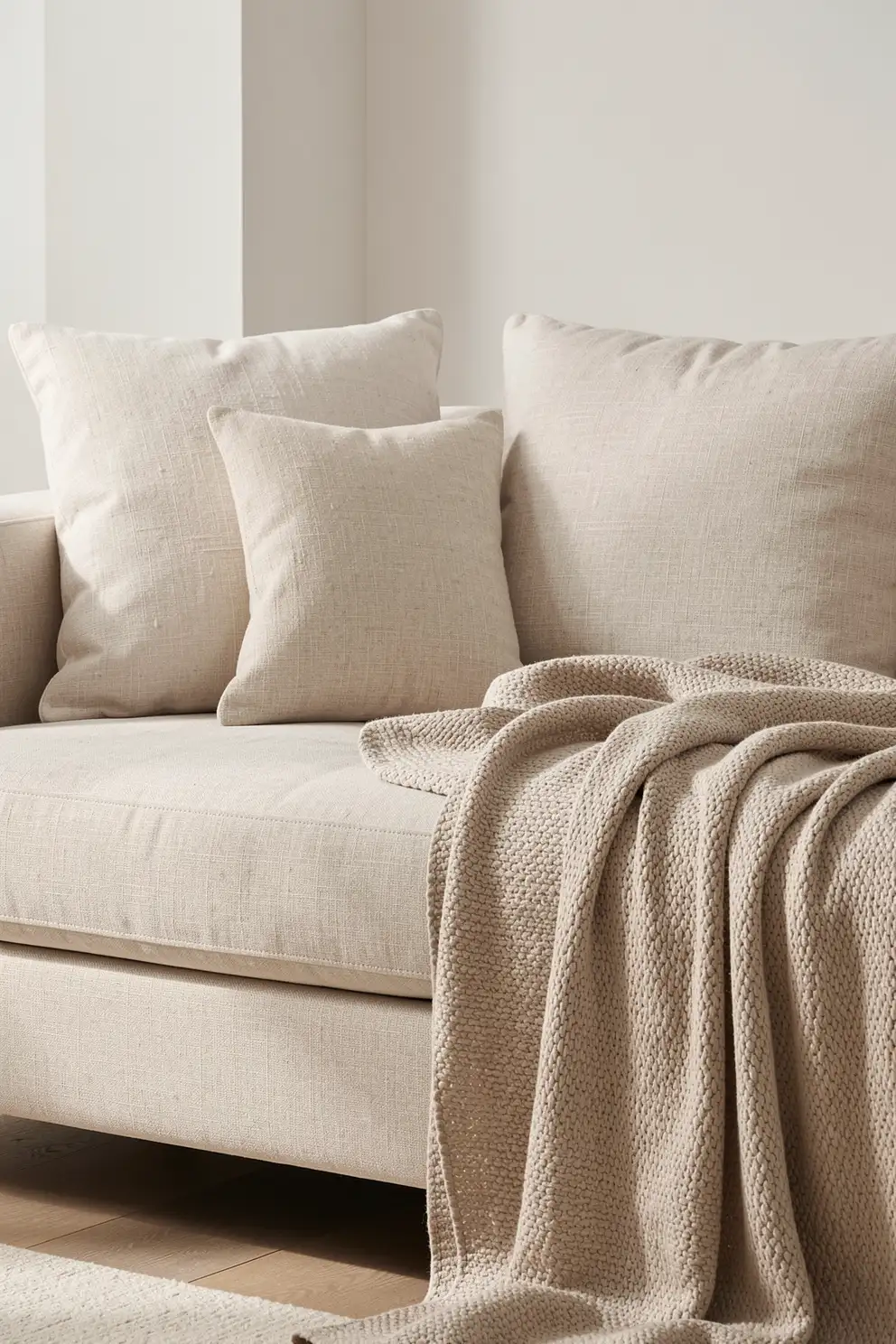
Tone on tone styling is one of the most effective ways to make a minimalist room feel rich without adding clutter. Instead of choosing contrasting colors, work within a narrow family of shades. Cream layered with oatmeal, warm white paired with sand, or gray mixed with stone can feel sophisticated and serene. The throw blanket becomes noticeable through texture, shadow, and softness rather than sharp contrast.
This approach works beautifully when you want a space to feel calm but not empty. A textured blanket layered over a similar colored sofa, bed, or chair creates depth that reveals itself slowly. Natural light highlights the weave, fringe, or knit pattern in a subtle way. The result is polished yet comforting, with enough variation to feel styled and enough restraint to feel peaceful.
Balance Chunky Knits with Smooth Surfaces
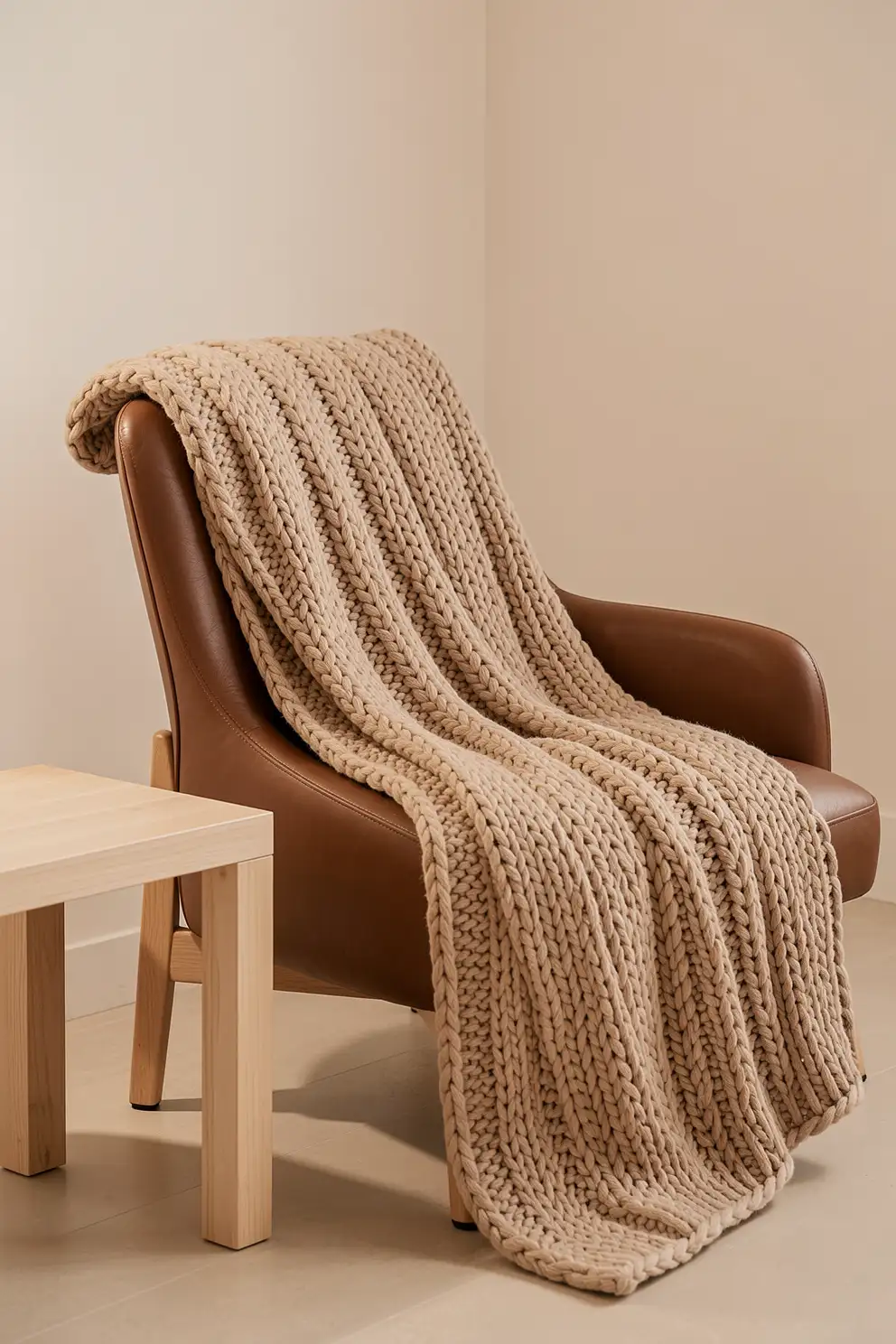
Chunky knit throw blankets can bring instant coziness to a minimalist home, but they work best when paired with smooth surfaces. Place a thick knit on a sleek sofa, smooth leather chair, simple wood bench, or crisp bedding to create contrast. The difference between the materials keeps the room visually interesting while maintaining a clean overall look. Balance prevents the texture from feeling heavy or overwhelming.
If the blanket has a bold tactile quality, let nearby decor stay simple. A plain ceramic vase, low wood table, or quiet linen pillow will support the look without crowding it. Minimalist styling is not about removing comfort; it is about allowing each element enough space to breathe. A chunky throw can feel elevated when it is surrounded by calm shapes, open surfaces, and restrained details.
Use Natural Fibers for an Organic Feel
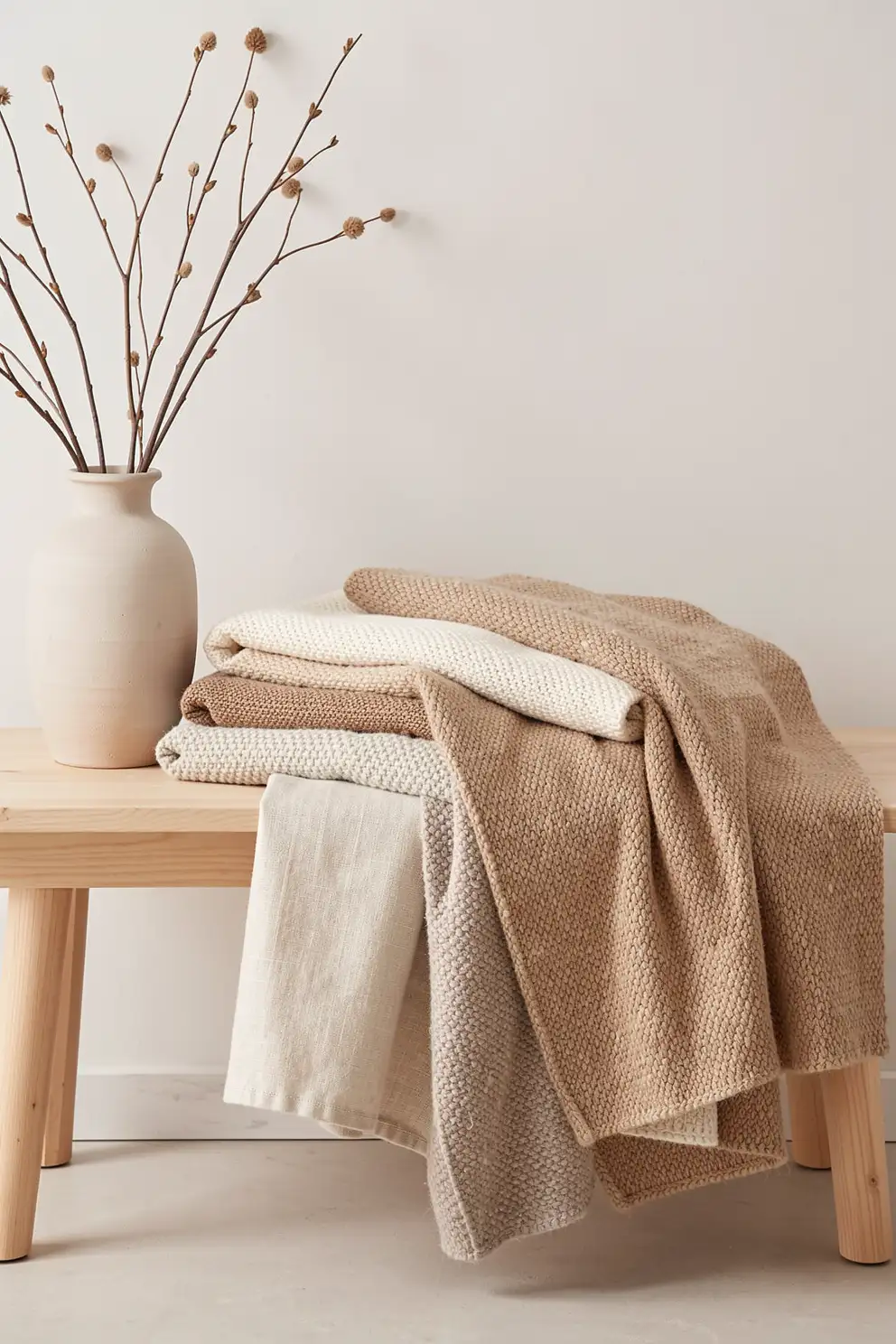
Natural fibers help a minimalist home feel grounded and lived in. Cotton, linen, wool, alpaca, and bamboo blends bring softness while connecting the room to organic materials. These fibers often have subtle irregularities that make them visually appealing without looking decorative in an obvious way. A natural fiber throw can soften a modern space and make neutral rooms feel warmer, more breathable, and more tactile.
When selecting a throw, pay attention to how the material feels as much as how it looks. Minimalist homes benefit from pieces that invite use, not just admiration. A blanket that feels soft against the skin will naturally become part of daily life. Choosing quality fibers also supports longevity, which fits beautifully with a more intentional approach to home styling and thoughtful consumption.
Style a Basket with Relaxed Intention
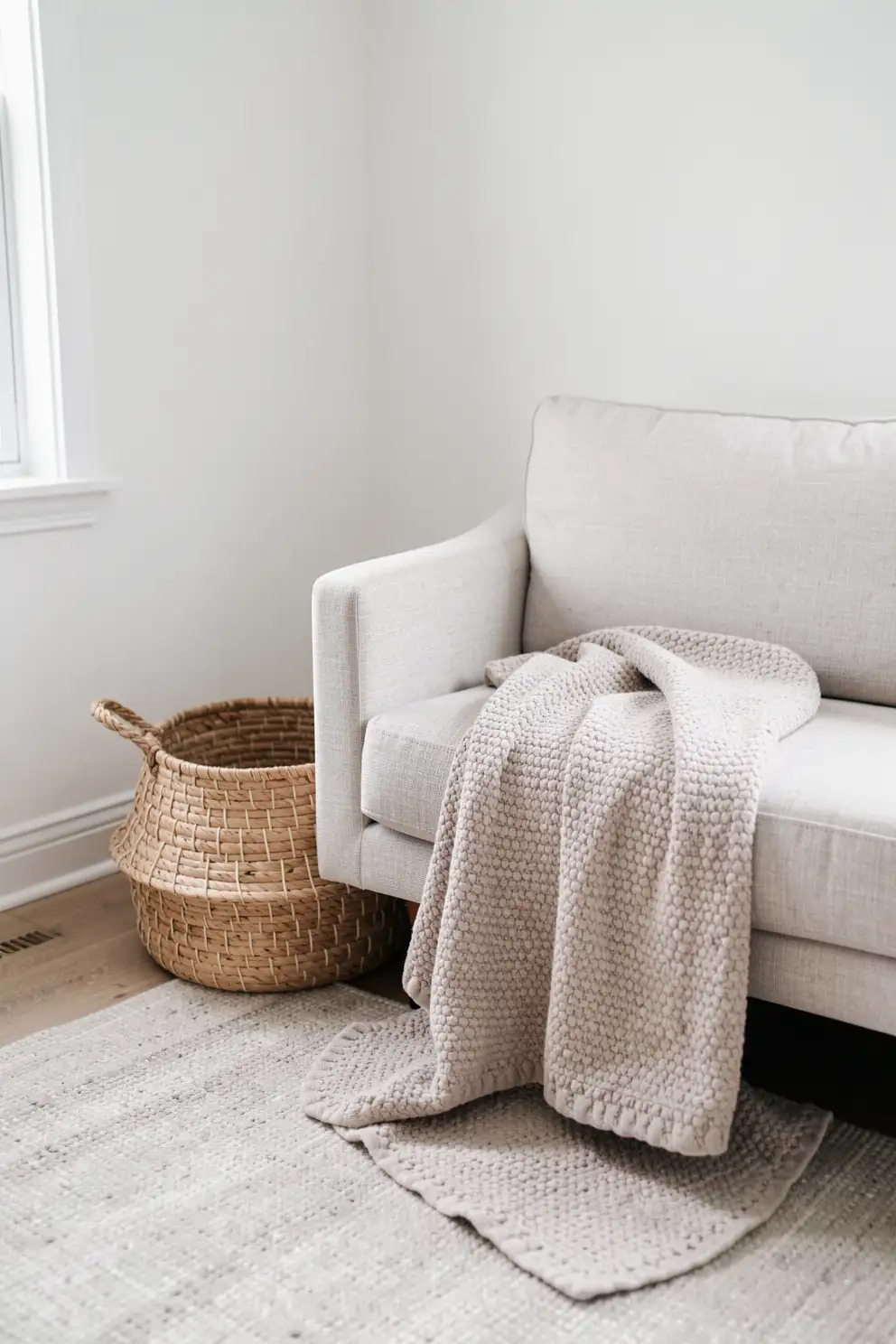
A woven basket can make throw blanket storage feel decorative and practical at the same time. In a minimalist home, the basket should have a simple shape, natural material, and enough breathing room around it. Let the blanket peek out softly rather than stuffing it tightly inside. This creates a relaxed look that signals comfort while keeping the room tidy and visually calm.
Place the basket near a sofa, reading chair, fireplace, or bedroom corner where the blanket is easy to reach. The goal is to make comfort feel effortless. A basket also adds another layer of texture through woven fibers, which pairs beautifully with knitted or brushed fabric. When styled with restraint, this small moment can make the home feel warmer, softer, and more thoughtfully organized.
Soften a Reading Chair Without Clutter
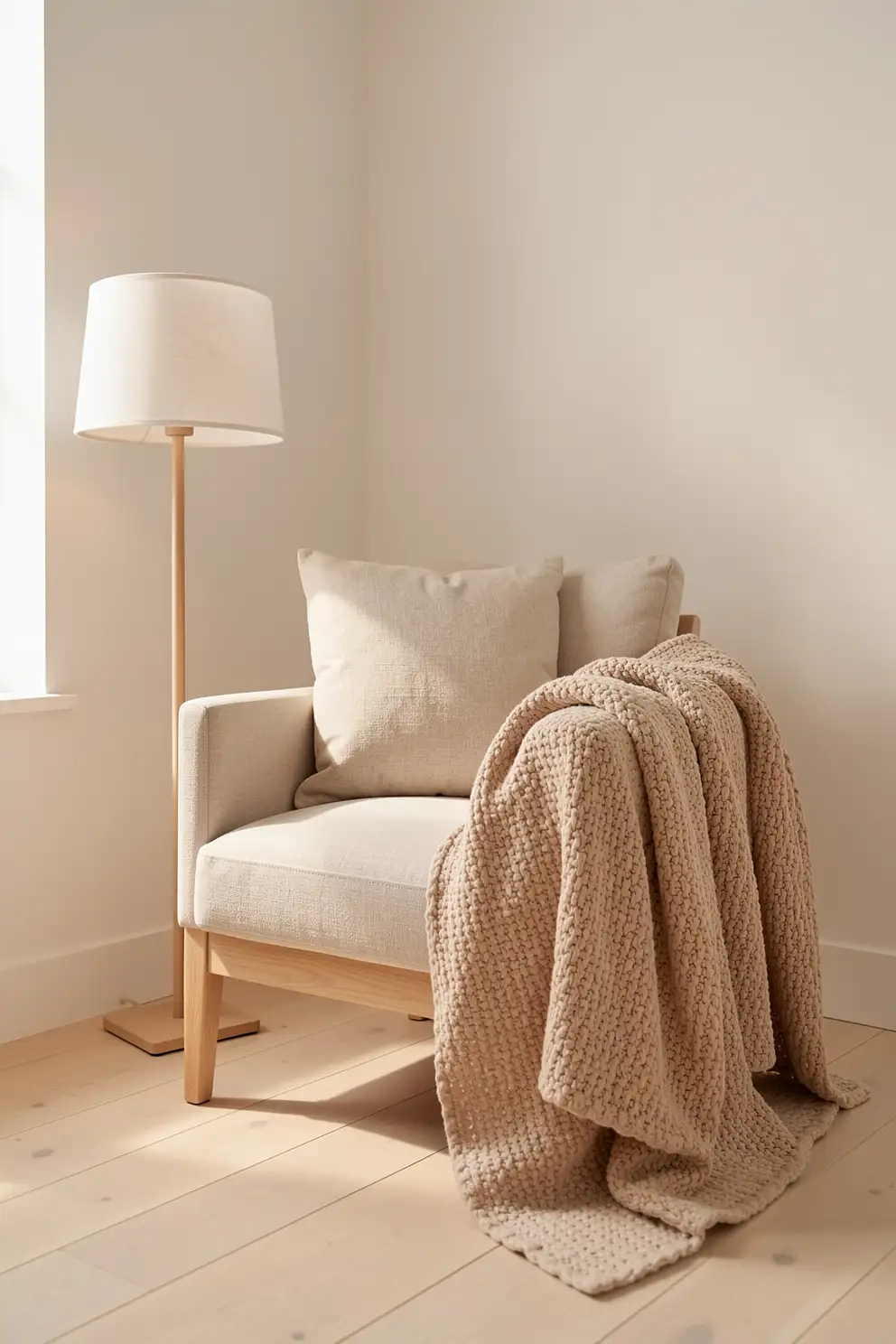
A reading chair can feel instantly more inviting with a textured throw draped across the back or arm. The blanket adds comfort and signals a quiet pause without needing extra decorative pieces. In a minimalist room, this is especially useful because it creates a cozy focal point while keeping surfaces clear. The chair still feels open and uncluttered, but the added softness makes it more welcoming.
Choose a throw that complements the chair’s material. A wool blend can warm up leather, a soft cotton weave can relax structured upholstery, and a ribbed knit can add depth to simple linen. Avoid pairing the chair with too many pillows or accessories. Let the blanket be the main comfort layer. This keeps the moment simple, functional, and beautifully aligned with minimalist living.
Create Contrast with Subtle Weave
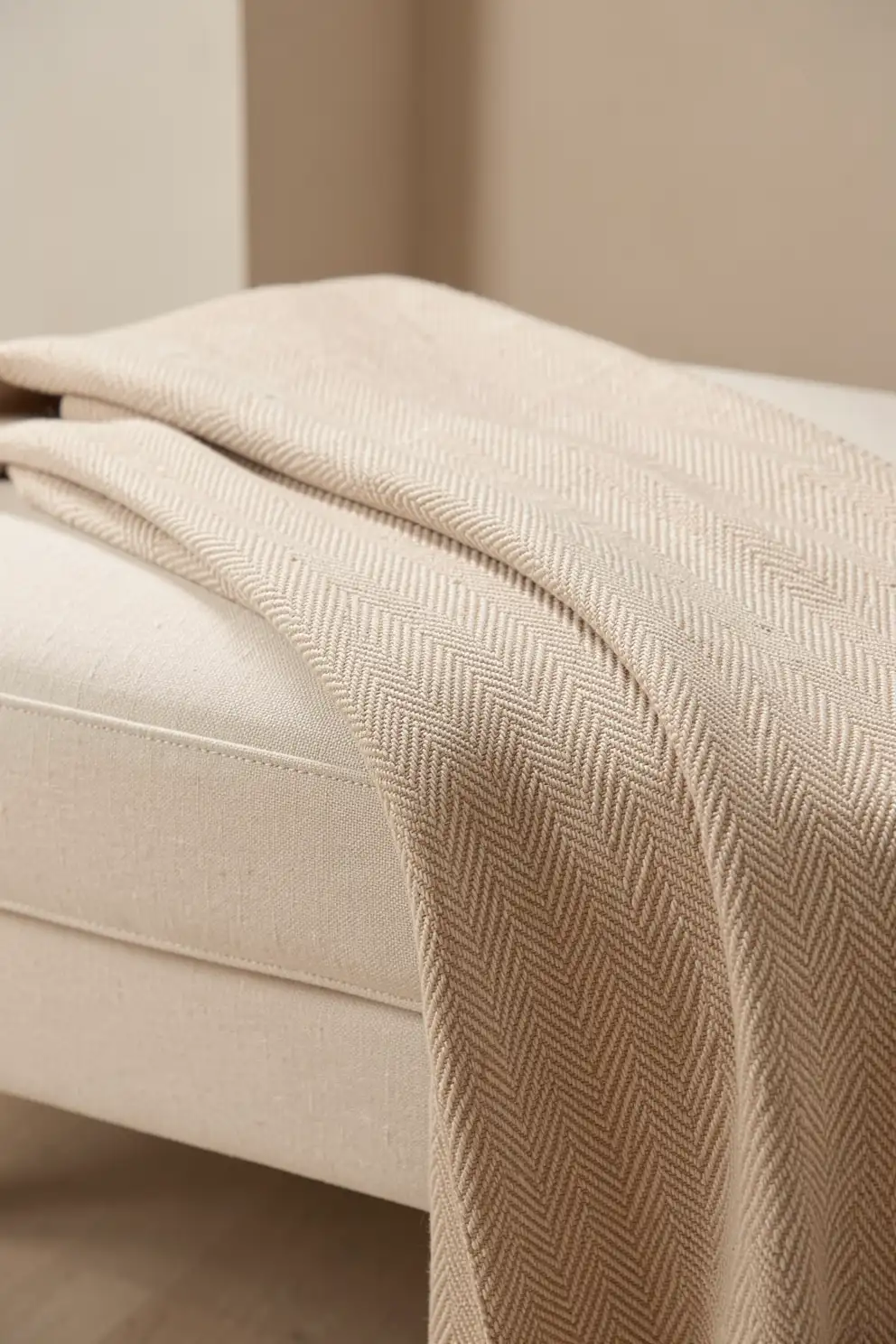
Subtle weave patterns are ideal for minimalist homes because they provide contrast without introducing visual clutter. Herringbone, basket weave, ribbed cotton, or lightly raised threads can make a neutral throw feel special while staying understated. These details catch light in quiet ways and make the blanket feel more dimensional. The result is a room that looks calm from a distance but feels layered up close.
Use woven texture when the space already has simple colors and clean furniture. A subtly patterned throw can connect with other natural elements such as wood grain, stone surfaces, or linen curtains. This creates harmony through quiet repetition rather than obvious matching. The weave becomes a refined detail that supports the overall aesthetic, helping the room feel curated, warm, and comfortably minimal.
Keep the Palette Warm and Muted
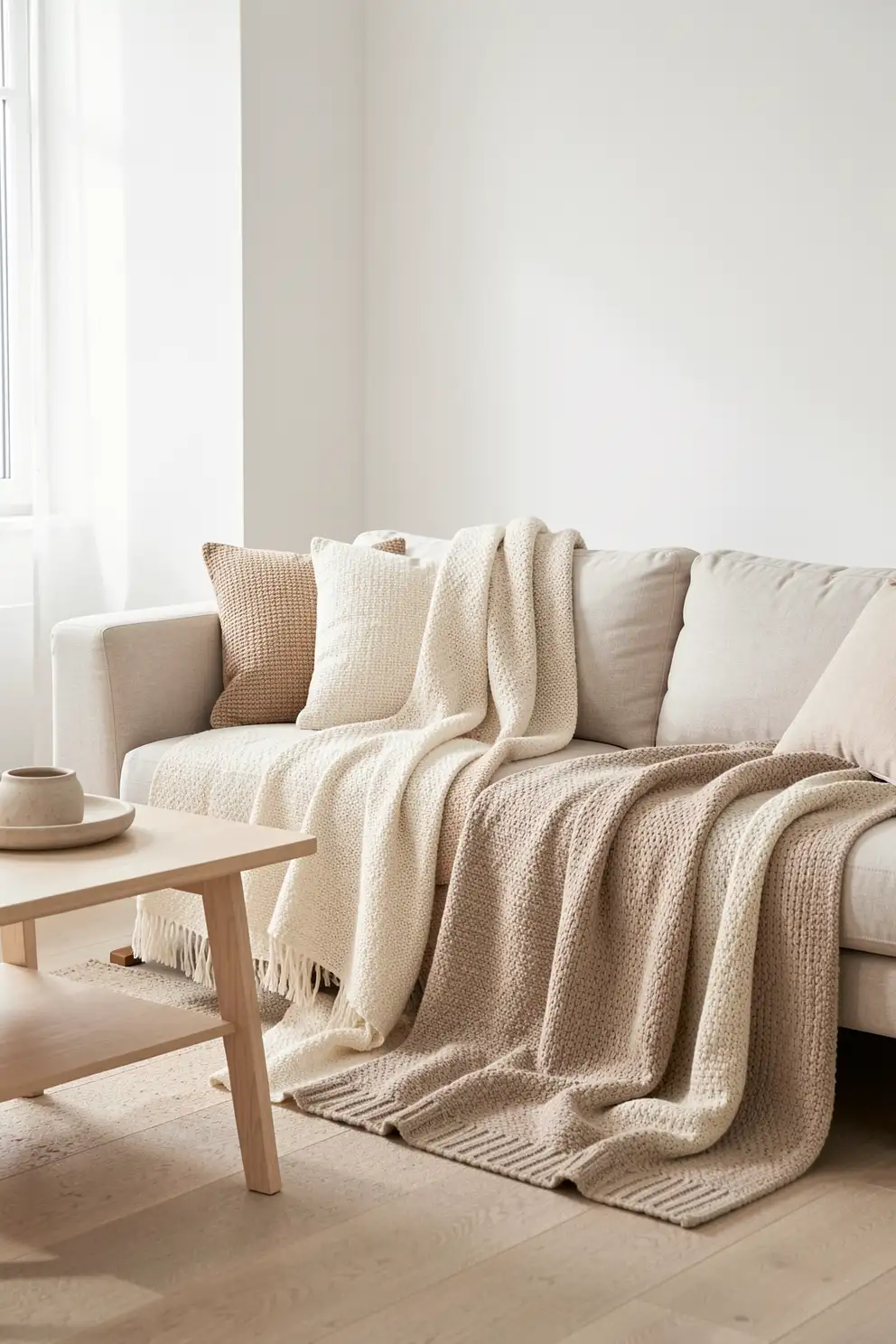
Warm muted colors make textured throw blankets feel especially inviting in a minimalist home. Shades such as oat, clay, mushroom, ivory, greige, soft cocoa, and dusty olive add comfort while remaining calm. These colors work well because they feel natural and gentle, not loud or overly styled. A warm palette can prevent minimal interiors from feeling cold, especially when paired with simple furniture and open space.
If your home leans cool, a warm throw can soften the mood without disrupting the aesthetic. If your home already uses warm neutrals, choose a nearby shade with a different texture for quiet depth. The color should feel settled into the room rather than added as an afterthought. Muted tones allow the throw blanket to bring comfort while preserving the clean, peaceful feeling of minimal design.
Let Edges and Fringe Add Movement
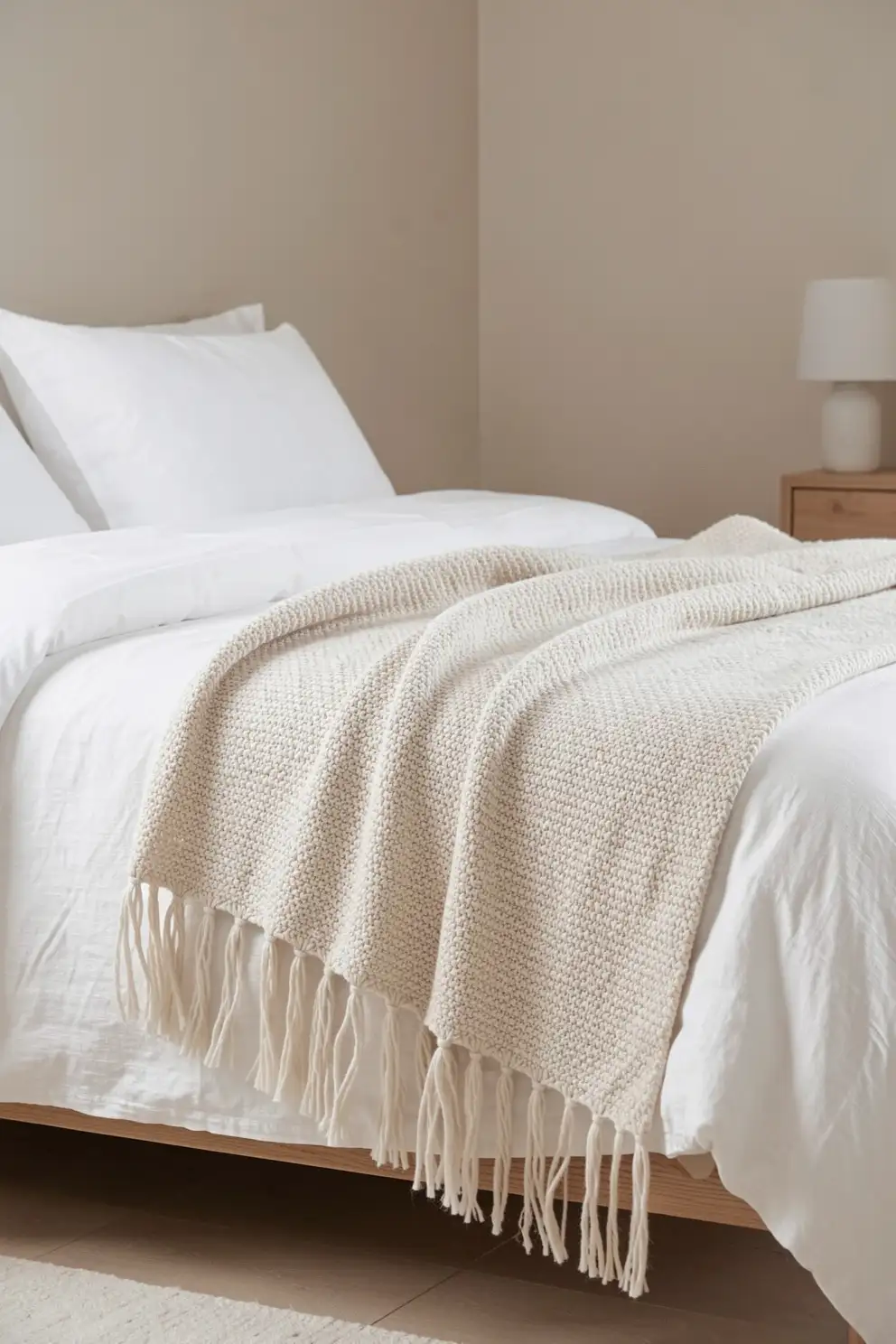
Edges, tassels, and fringe can add movement to a minimalist room when used with care. A throw blanket with soft fringe can break up straight furniture lines and introduce a relaxed, tactile quality. The key is choosing details that feel gentle rather than dramatic. Fine fringe, raw edges, or softly finished hems can make a room feel less rigid while keeping the overall style clean.
Let the fringe fall naturally over the side of a sofa, bench, or bed. Avoid arranging every strand too perfectly, because a little softness makes the room feel more human. These small details bring life to a neutral palette and create a sense of ease. In a minimalist home, movement matters because it keeps simplicity from becoming sterile, making the space feel calm yet comfortable.
Pair Throws with Simple Pillows
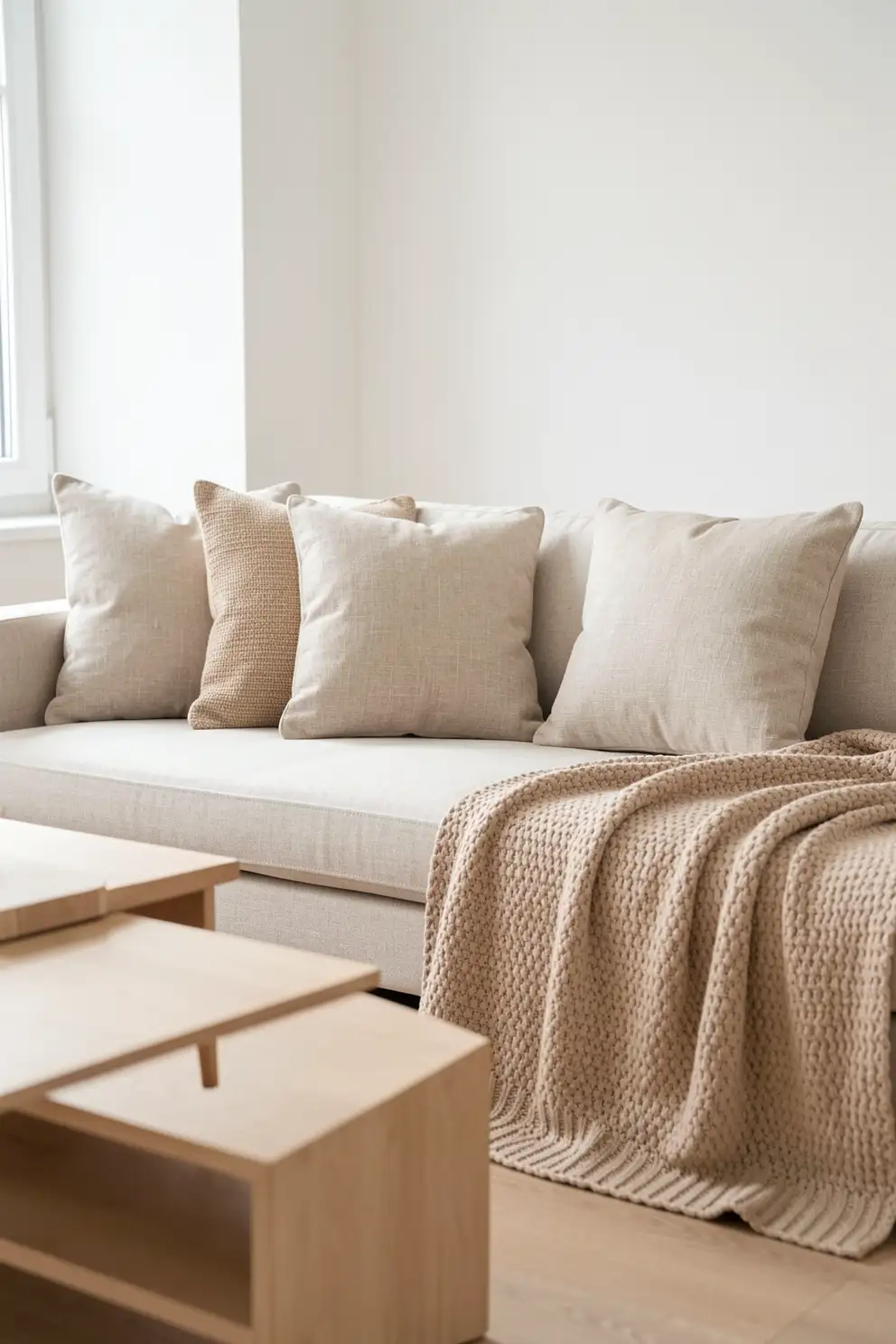
Throw blankets and pillows can work beautifully together when the combination remains restrained. Choose simple pillow shapes and quiet fabrics that support the blanket rather than competing with it. If the throw has a chunky or highly tactile texture, pair it with smooth linen or cotton pillows. If the throw is finer and more subtle, a softly woven pillow can add gentle balance.
Keep the palette cohesive so the layers feel intentional. Minimalist styling relies on harmony, not abundance. A pillow and throw can create a complete cozy moment when their tones, textures, and shapes relate to each other. Leave enough open space on the sofa or bed so the arrangement still feels breathable. The result is comfortable and polished without becoming overly decorated.
Rotate Textures with the Seasons
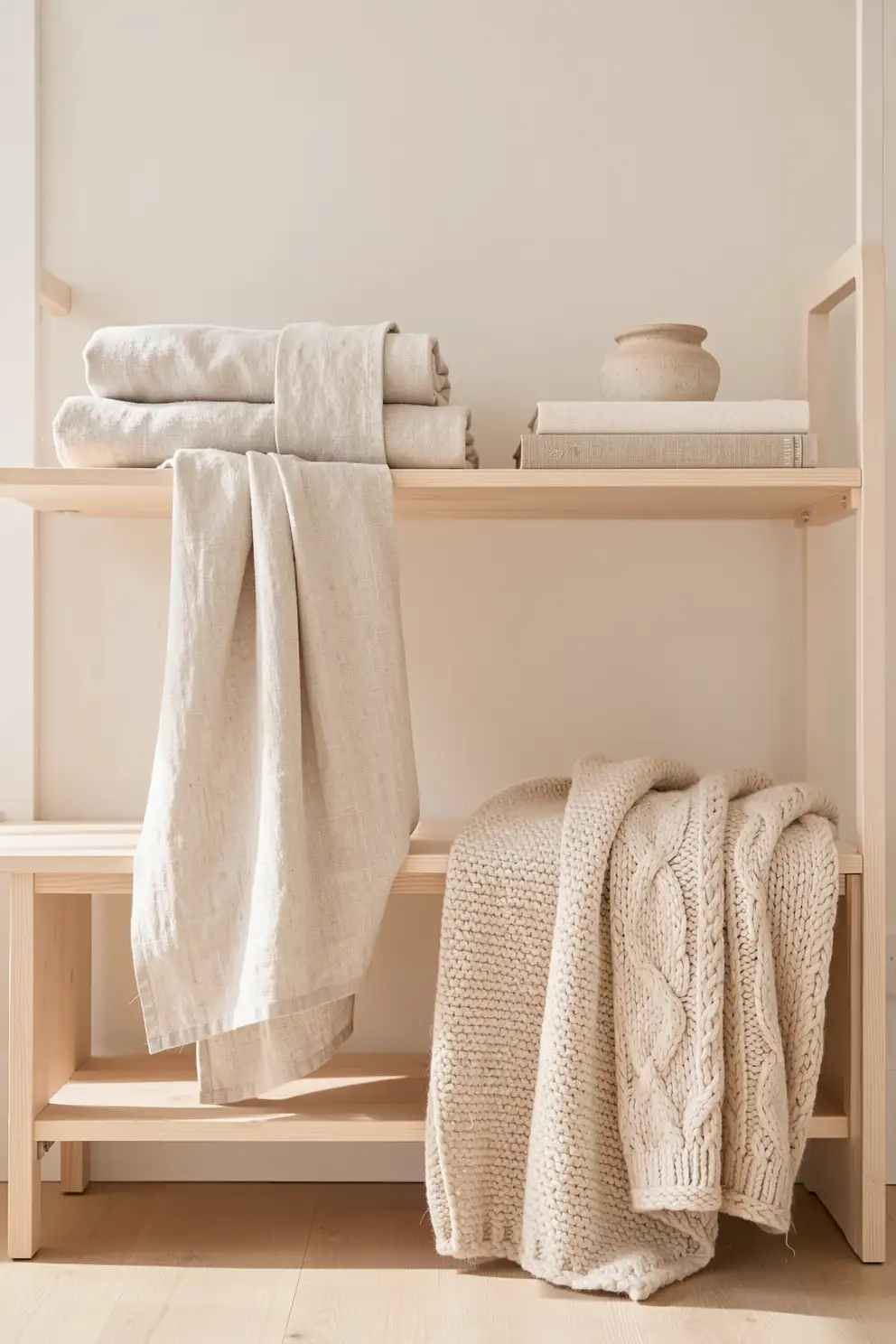
Seasonal styling does not need to mean dramatic changes or overflowing decor. In a minimalist home, rotating throw blanket textures can refresh the space in a quiet, practical way. Lighter cotton, linen, and gauze textures feel airy during warmer months, while wool, boucle, and chunky knits bring coziness during cooler weather. This keeps the home feeling responsive without disrupting its calm foundation.
Store off season throws neatly and keep only the most useful layers visible. This maintains the clean look while allowing the room to evolve naturally. The shift in texture can change the feeling of a sofa, bed, or reading corner without requiring new furniture or decor. It is a gentle way to honor seasonal rhythms while staying true to minimalist simplicity.
Style Blankets as Everyday Comfort
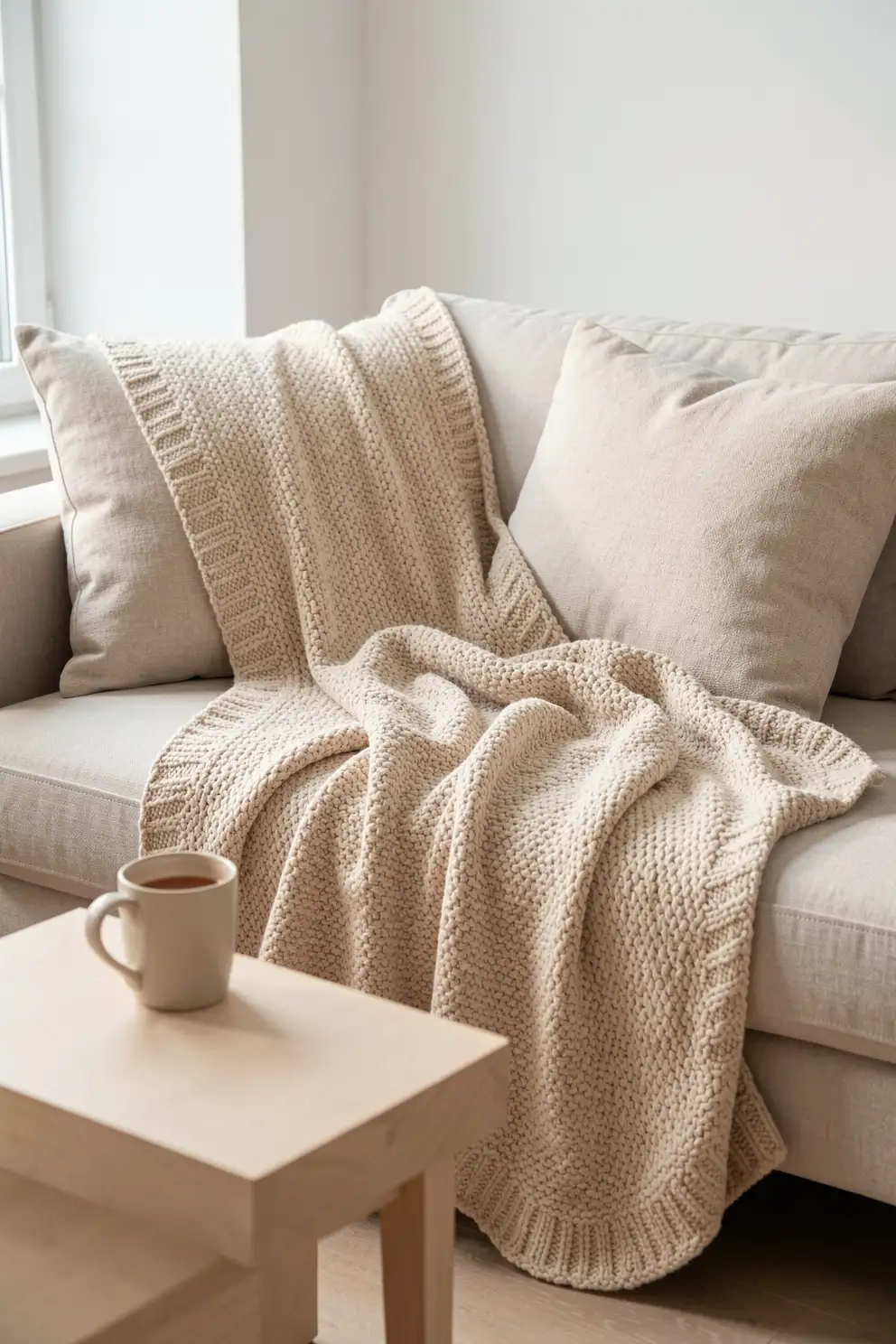
A textured throw blanket should feel like part of daily living, not just a decorative object. Minimalist homes work best when beauty and usefulness overlap. Place throws where they will actually be used, such as near the sofa, beside the bed, or over a favorite chair. This makes the styling feel honest and relaxed, while also supporting comfort in ordinary moments.
When a blanket is used often, it naturally develops soft folds and a more lived in shape. Rather than seeing this as messiness, treat it as part of the home’s warmth. A perfectly untouched throw can sometimes feel staged, while a gently used one feels inviting. The goal is not rigid perfection, but thoughtful comfort that blends seamlessly with a calm and uncluttered aesthetic.
Maintain a Calm Finished Look
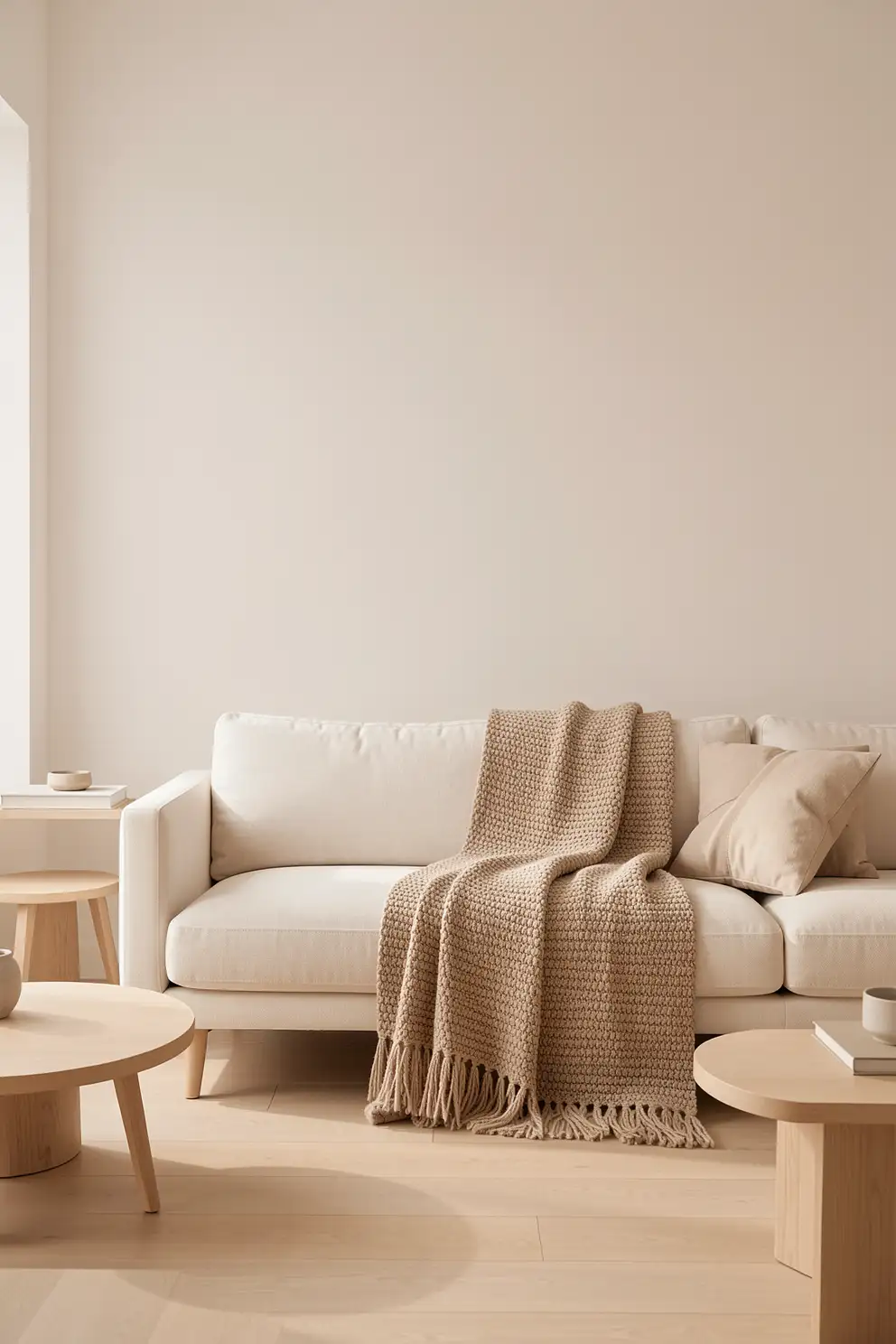
The final step in styling textured throw blankets is editing the surrounding space. Once the blanket is placed, look at the room as a whole. Remove anything that feels distracting, crowded, or visually unrelated. Minimalist styling depends on negative space as much as beautiful objects. A throw blanket can shine when nearby surfaces are clean and the room has room to breathe.
A calm finished look should feel natural, not forced. The blanket should seem like it belongs to the rhythm of the home, adding softness without demanding attention. If the room feels balanced, comfortable, and easy to use, the styling is working. Thoughtful texture can transform a minimal space from plain to peaceful, creating a home that feels both refined and deeply comforting.
Textured throw blanket styling is about adding warmth with restraint. By choosing calm colors, natural fibers, thoughtful placement, and soft tactile details, you can make a minimalist home feel cozy without clutter. The most beautiful result is a space that feels simple, intentional, and genuinely inviting.