
Give your entryway a warm seasonal welcome with fall wreath inspiration made for real homes and everyday crafting. From dried citrus and eucalyptus to soft felt leaves and natural wheat, these distinctive door decorations bring autumn color, texture, and charm to your front door. Find a style that suits your space, gather the materials, and make a wreath that feels just right for the season.
Dried Orange and Eucalyptus Wreath
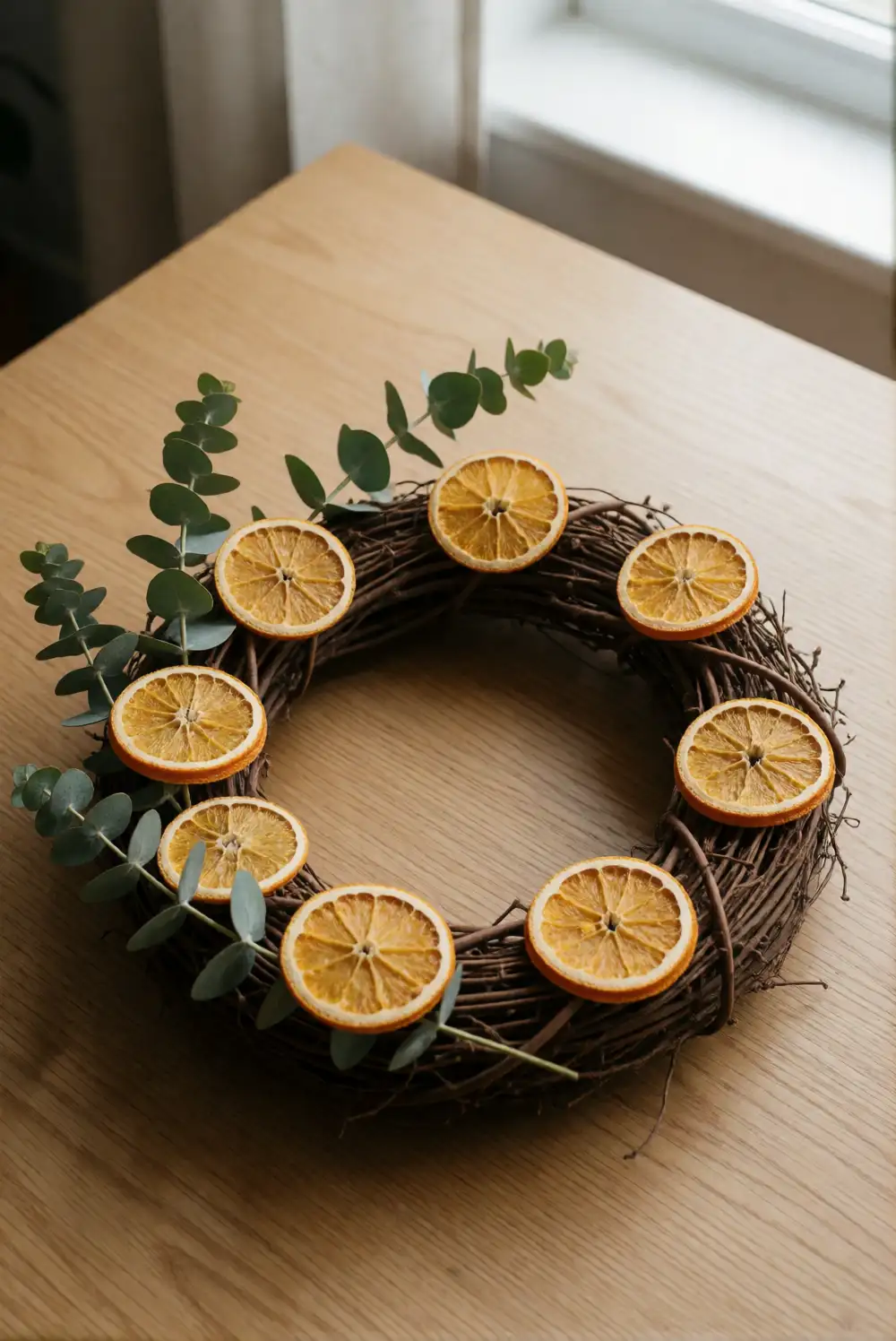
Bring together dried orange slices, eucalyptus stems, a grapevine wreath base, and thin floral wire for a fragrant, natural design. Secure the eucalyptus around the base first, tucking stems in the same direction. Add the orange slices in small clusters, wrapping wire discreetly around their centers and the vines. Finish by adjusting the greenery so the wreath looks full without hiding the citrus. Choose fully dried slices to help the finished decoration keep its shape.
Let the orange slices supply the brightest color, then add a few cinnamon sticks or small sprigs of rosemary for extra texture. Keep the arrangement slightly loose for an organic look, or cluster more greenery around the lower edge for a gently asymmetrical shape. Hang the wreath under a covered porch to protect the fruit from damp weather. Indoors, it also works above a mantel or on an interior door, where its warm color and subtle scent are easy to enjoy.
Layered Maple Leaf Wreath
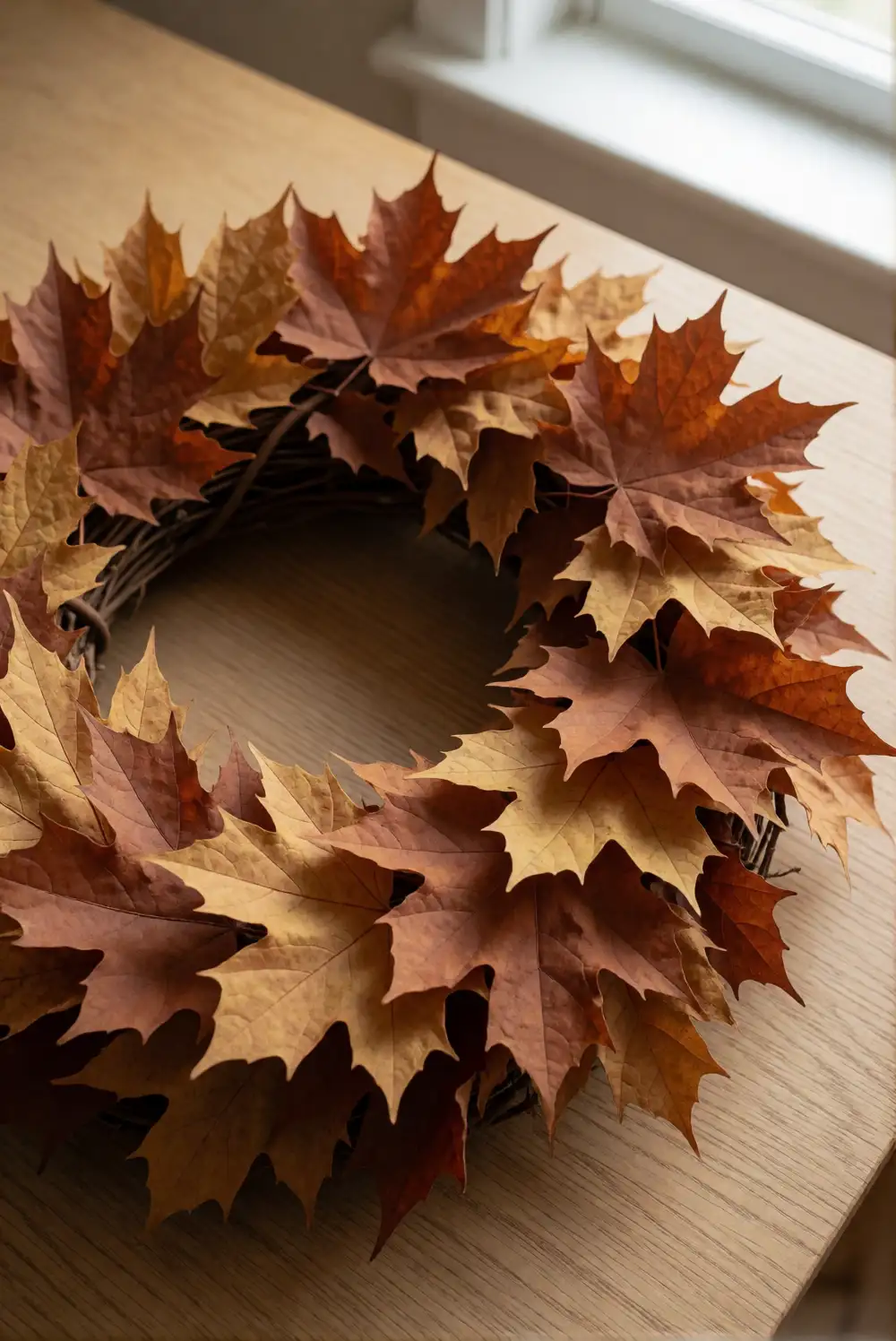
Make a colorful leaf wreath with a wire wreath form, preserved maple leaves, and floral wire. Begin by attaching small bundles of leaves to the form, overlapping each bundle so its stems are hidden beneath the next. Work around the ring in one direction, varying the leaves between russet, amber, and muted gold. Secure loose stems with short lengths of wire, then gently fan the leaf tips outward. Preserved foliage gives the finished wreath a fuller appearance than brittle, freshly fallen leaves.
Keep the palette tonal for a softly gathered look, or mix several autumn shades for a brighter welcome. A narrow velvet ribbon can cover the hanging point without competing with the foliage. Before hanging, turn the wreath and check that no wire ends protrude from the back. Display it on a sheltered door or above an entryway console, away from rain and strong wind. For a longer-lasting arrangement, replace any leaves that become curled or faded as the season continues.
Velvet Ribbon and Brass Bell Wreath
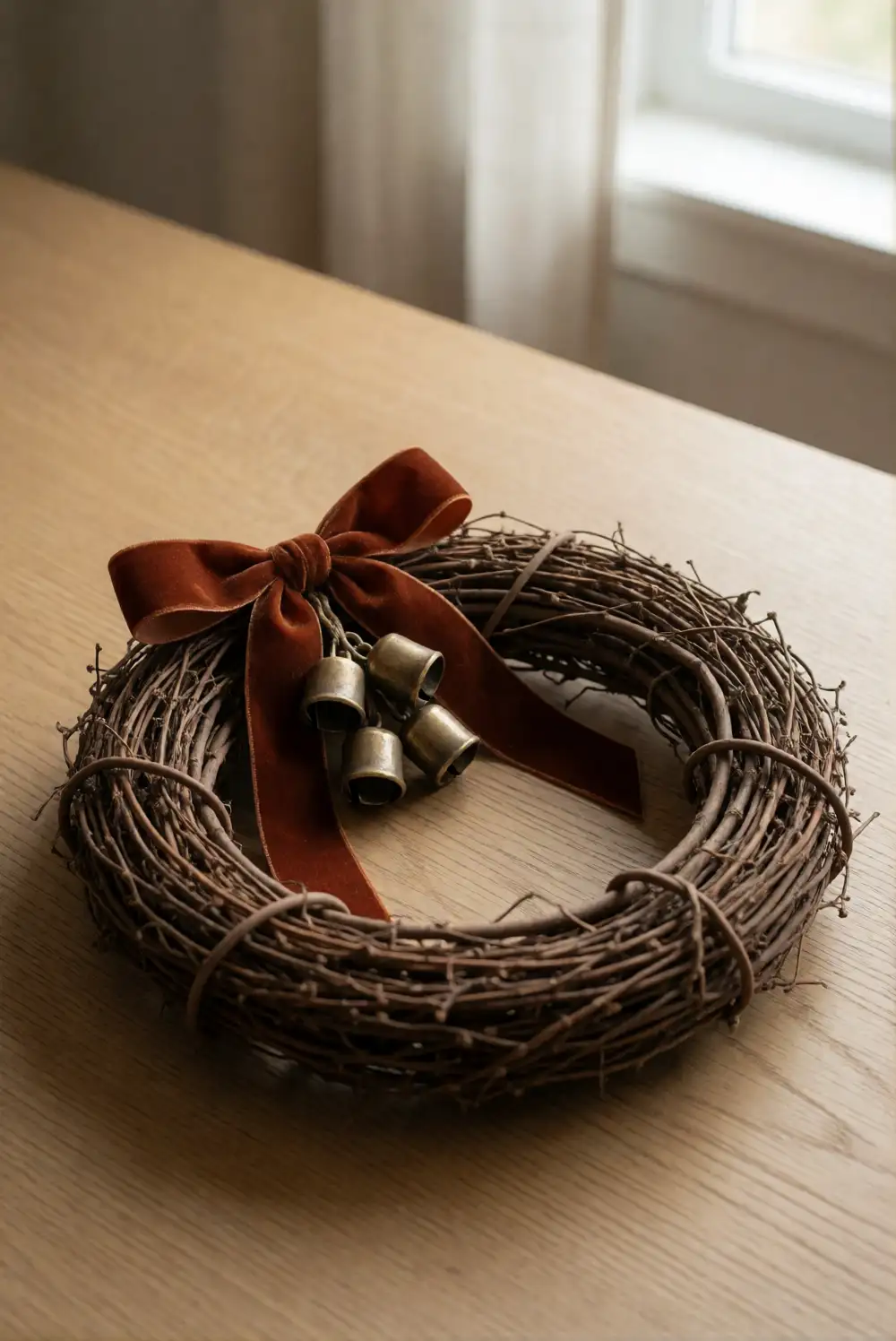
Dress a simple grapevine wreath with wide velvet ribbon and a small cluster of brass bells. Wrap the ribbon loosely around one side of the wreath, securing it at the back with floral wire so the weave remains visible. Tie a separate ribbon bow, pinch its center, and attach it near the upper curve. Fasten the bells beneath the bow with thin craft wire. Leave much of the grapevine exposed to balance the soft fabric and reflective metal with a natural base.
Choose rust, plum, or deep olive velvet to complement a fall entry, and use bells with a softly aged finish for a less polished appearance. If the wreath will hang outdoors, place it in a covered spot to protect the ribbon from moisture. For a quieter design, omit the bells and let the bow become the focal point. Hang the wreath on a dark door for contrast, or use it indoors above a console with a simple ceramic vase nearby.
Mini Pumpkin Grapevine Wreath
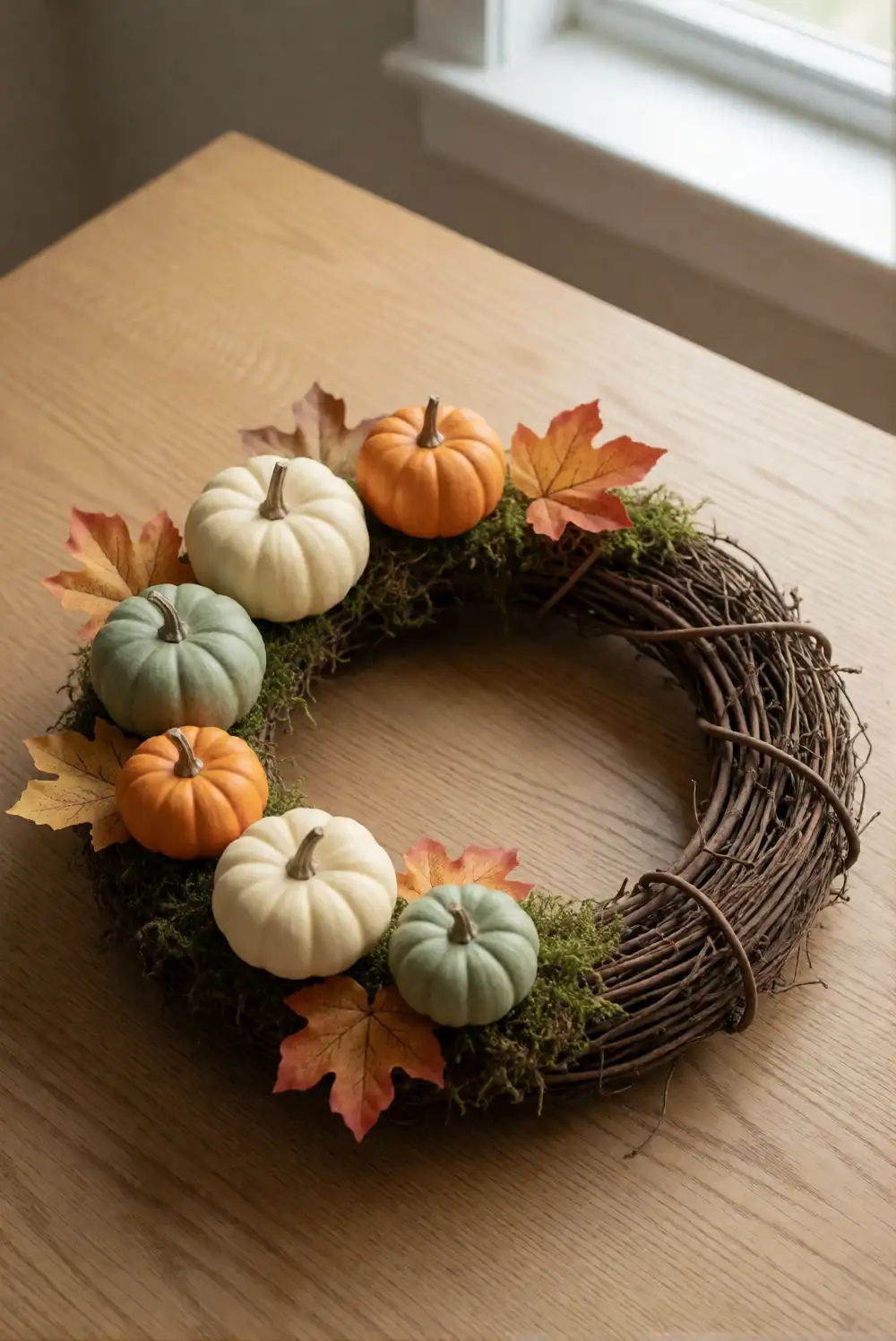
Arrange small artificial pumpkins on a grapevine wreath with faux leaves, moss, and floral wire. Start by deciding where the largest pumpkin will sit, then attach it firmly to the vines with wire. Add the remaining pumpkins in a loose cluster, filling gaps with leaf sprigs and small patches of moss. Turn the wreath as you work to check its shape from different angles. Artificial pumpkins keep the decoration lightweight and make it easier to reuse from season to season.
Choose pumpkins in cream, muted orange, and soft green for a gentle palette, or use rich orange against dark foliage for a bolder doorway. Avoid placing every pumpkin evenly around the ring; an off-center cluster feels more natural and leaves the grapevine visible. A simple linen bow can soften the base without crowding the arrangement. Display the wreath on a sheltered front door, or lean it on a mantel with a low vase of autumn branches for a coordinated seasonal scene.
Wheat and Bunny Tail Grass Wreath
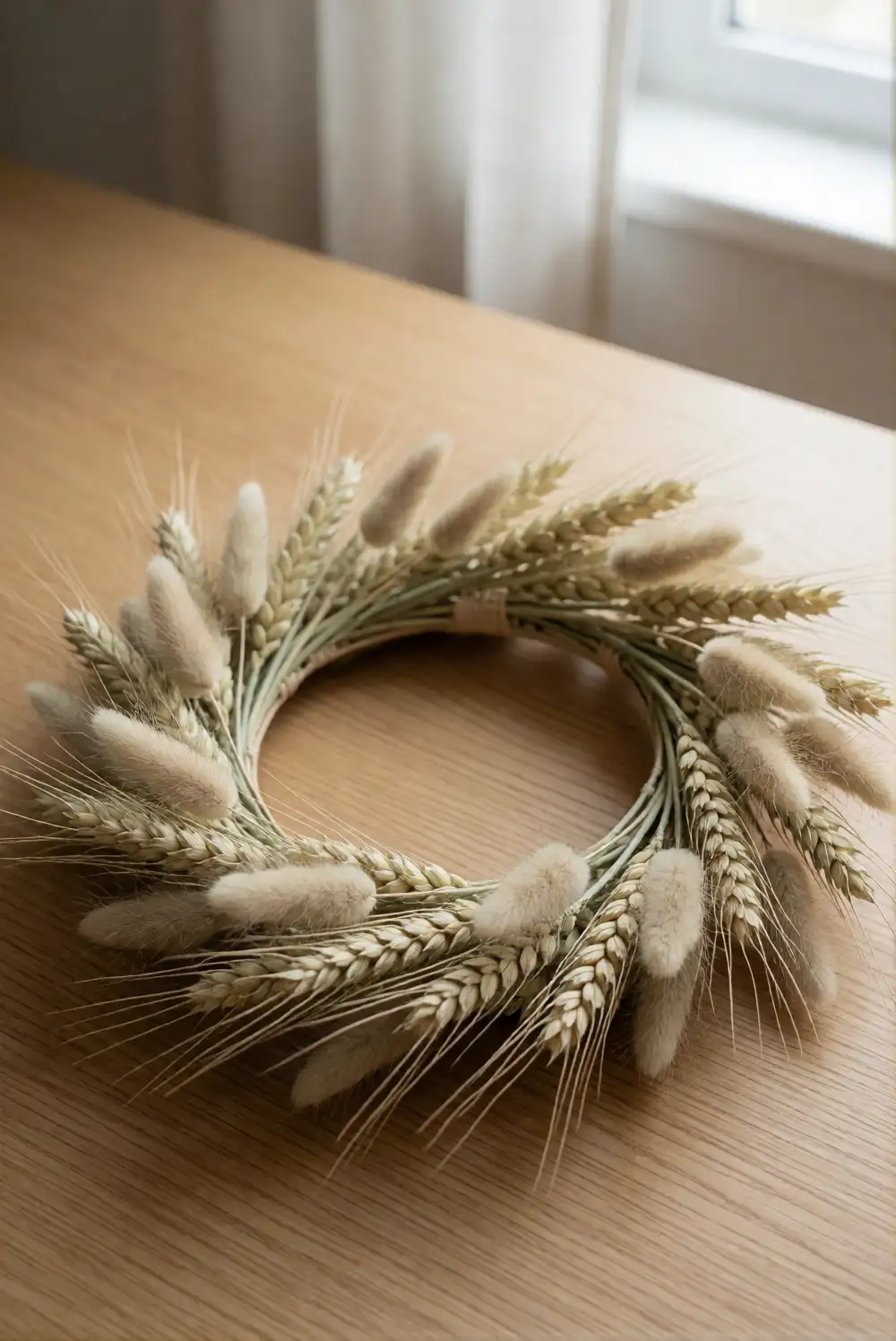
For a soft, harvest-inspired wreath, gather dried wheat stalks, bunny tail grass, a hoop base, and fine floral wire. Trim the stems to a similar length, then tie small bundles together near their cut ends. Attach each bundle to the hoop, overlapping the next one over the wire and stems. Keep the seed heads angled in one direction for a flowing outline. Add a small bundle of bunny tail grass near the bottom, securing it carefully so its fluffy texture remains prominent.
Natural straw shades work beautifully against a painted door, while a narrow ribbon in rust or sage adds a little color. Keep the silhouette airy rather than packing stems tightly; the visible hoop gives the arrangement a light, modern feel. Dried grasses can shed, so hang the wreath where it will not be brushed often. It looks especially lovely on an interior door, above a console, or as a quiet focal point in a dining room during autumn.
Pressed Leaf Hoop Wreath
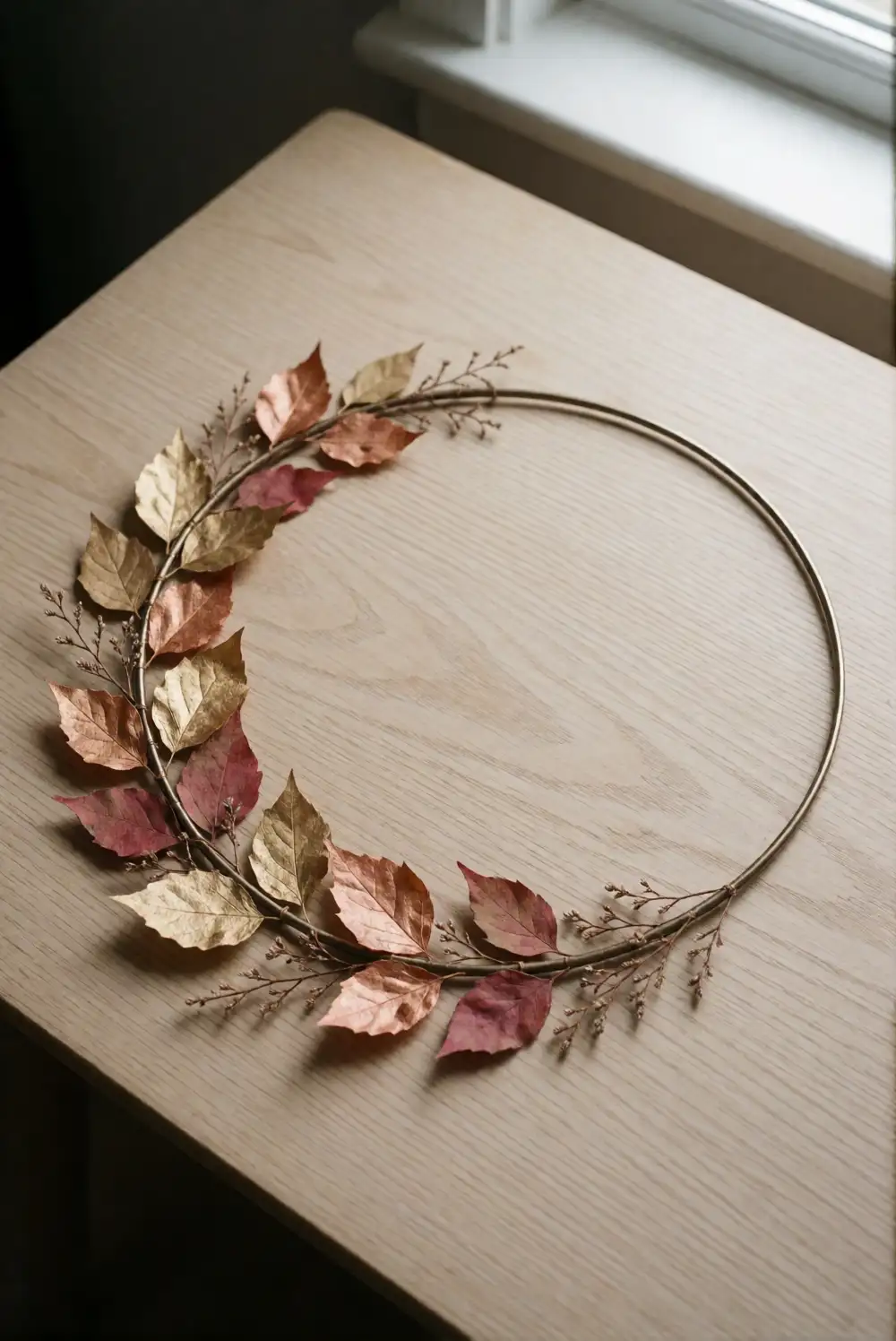
Create a delicate hoop wreath using a metal ring, pressed leaves, small branches, and clear craft adhesive. Arrange the leaves on one side of the ring before attaching them, combining shapes and colors until the composition feels balanced. Glue the larger leaves first, then layer smaller leaves and fine branches over their stems. Leave the opposite side of the hoop open to show its clean outline. Allow the adhesive to dry fully while the wreath rests flat, keeping the fragile leaves undisturbed.
Pressed leaves in gold, copper, and muted red give the wreath a natural autumn palette, while a few green leaves add freshness. A slender ribbon at the top makes hanging easy without obscuring the open shape. Because pressed foliage is delicate, this design is best displayed indoors or on a protected porch. Hang it against a pale wall or door so the leaf edges stand out, or place it above a narrow shelf with a simple vase beneath.
Corn Husk and Burlap Wreath
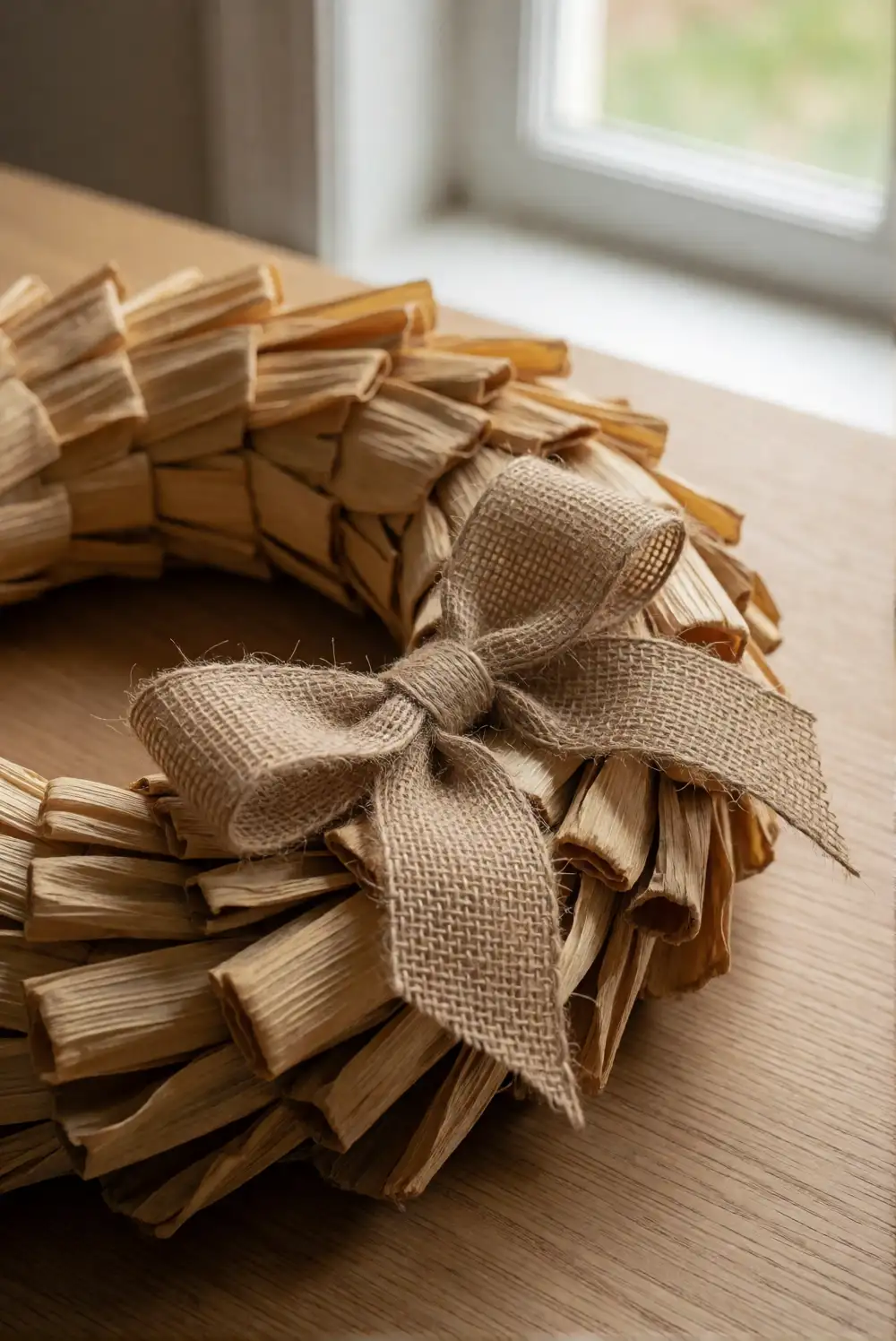
Combine dried corn husks, a straw wreath form, and burlap ribbon for a textured harvest decoration. Soak the husks briefly if they need softening, then pat them dry and fold each one into a loose loop. Pin or wire the loops to the form, working around the ring until the straw is covered. Tie burlap into a broad bow and attach it near the top or bottom. Let several husk tips remain visible to create a layered, slightly ruffled surface.
The husks naturally range from pale cream to warm tan, so a plain burlap bow complements them without adding visual clutter. If you want more color, weave in a few dried leaves or a narrow rust-colored ribbon. Keep the wreath away from rain, since damp natural fibers can lose their shape. Its generous texture suits a farmhouse-style entry, kitchen wall, or covered porch. For a cleaner finish, trim any loose fibers at the back before choosing a place to display it.
Moss and Pinecone Wreath
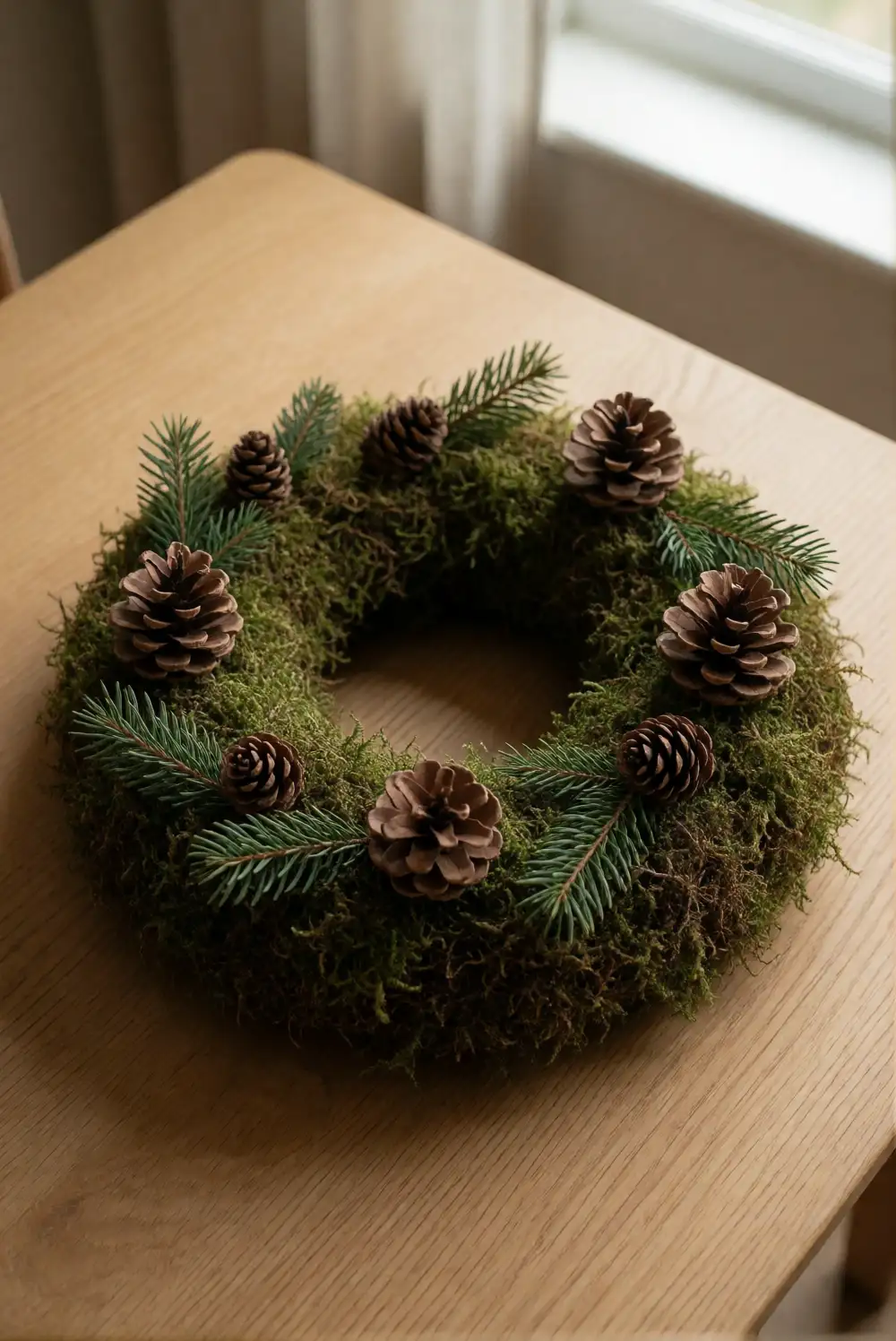
Cover a sturdy wreath base with preserved moss, then attach pinecones and small evergreen sprigs to create a woodland-inspired fall accent. Spread the moss in small sections, fixing it with floral wire or craft adhesive so the base is concealed. Arrange pinecones in a loose cluster and secure each one firmly with wire tucked between its scales. Add evergreen sprigs around the edges, keeping their tips pointed in a consistent direction. Brush away any loose moss before hanging the finished wreath.
Choose pinecones of varied shapes for natural texture, and let the green moss remain the main color rather than covering it with extra decorations. A few dried berries can add a restrained warm accent if they suit your palette. Keep the wreath in a sheltered location to protect the moss and cones from wet weather. It works well on a wooden door, above a fireplace, or as a table centerpiece with a wide hurricane vase set safely in the center.
Rust-Colored Felt Leaf Wreath
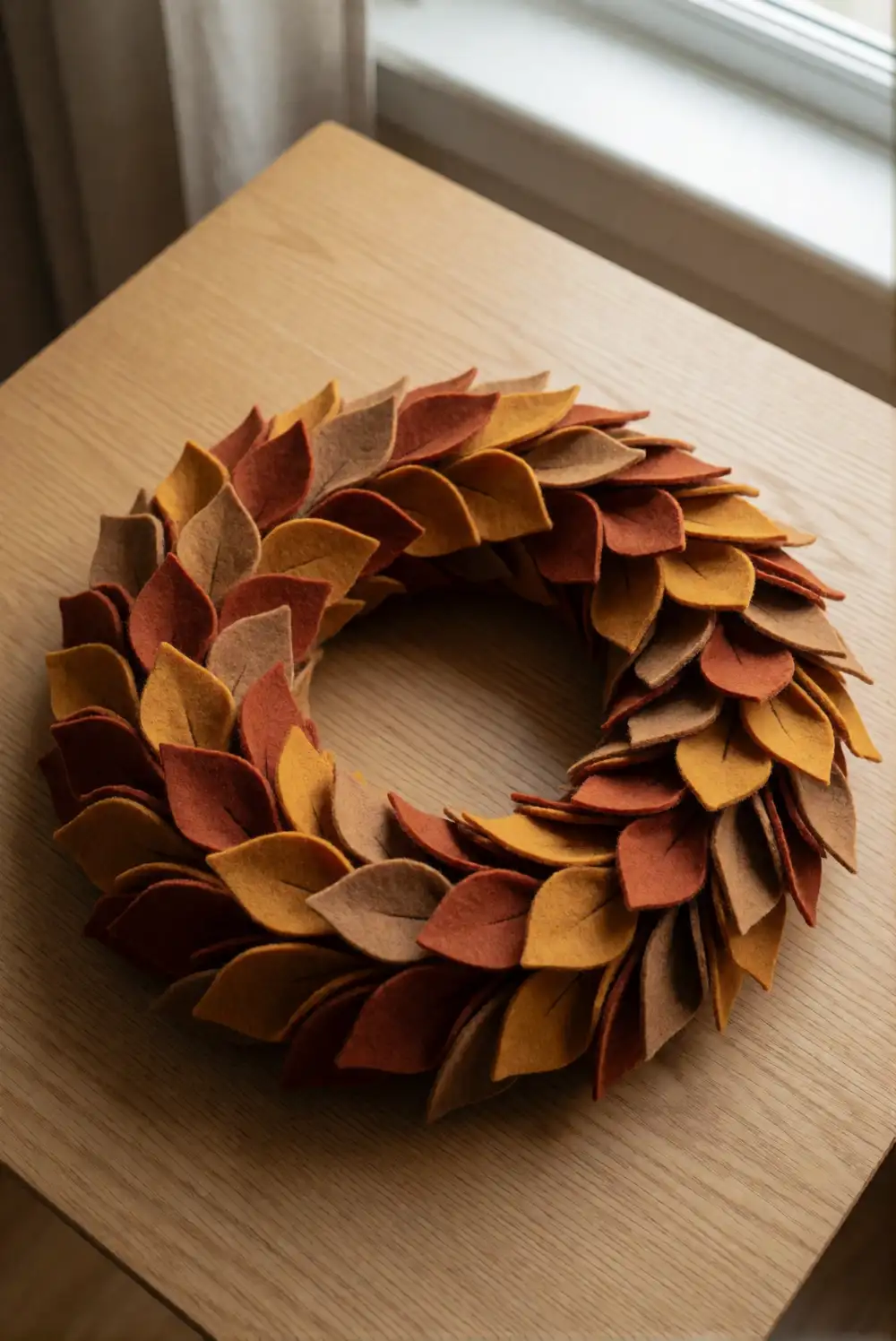
Cut leaf shapes from rust, caramel, and ochre felt, then attach them to a hoop or lightweight wreath form with fabric glue. Use a mix of broad maple-like leaves and smaller rounded shapes to give the surface variety. Begin at one point and layer each leaf over the previous one, hiding its base as you move around the ring. Slightly bend or stitch the felt leaves to add dimension. Finish by checking the back for loose edges and trimming any uneven fabric.
Felt makes a soft, reusable alternative to brittle natural leaves, and its rich colors work well in an entryway throughout the season. Keep the shapes varied but within a coordinated palette for a polished result. Add a small fabric bow if you want a distinct hanging point, or leave the leaves to form a continuous band. This wreath is best displayed indoors or under a covered entry, where it can stay clean and retain its shape between seasons.
Monochrome Cream Hydrangea Wreath
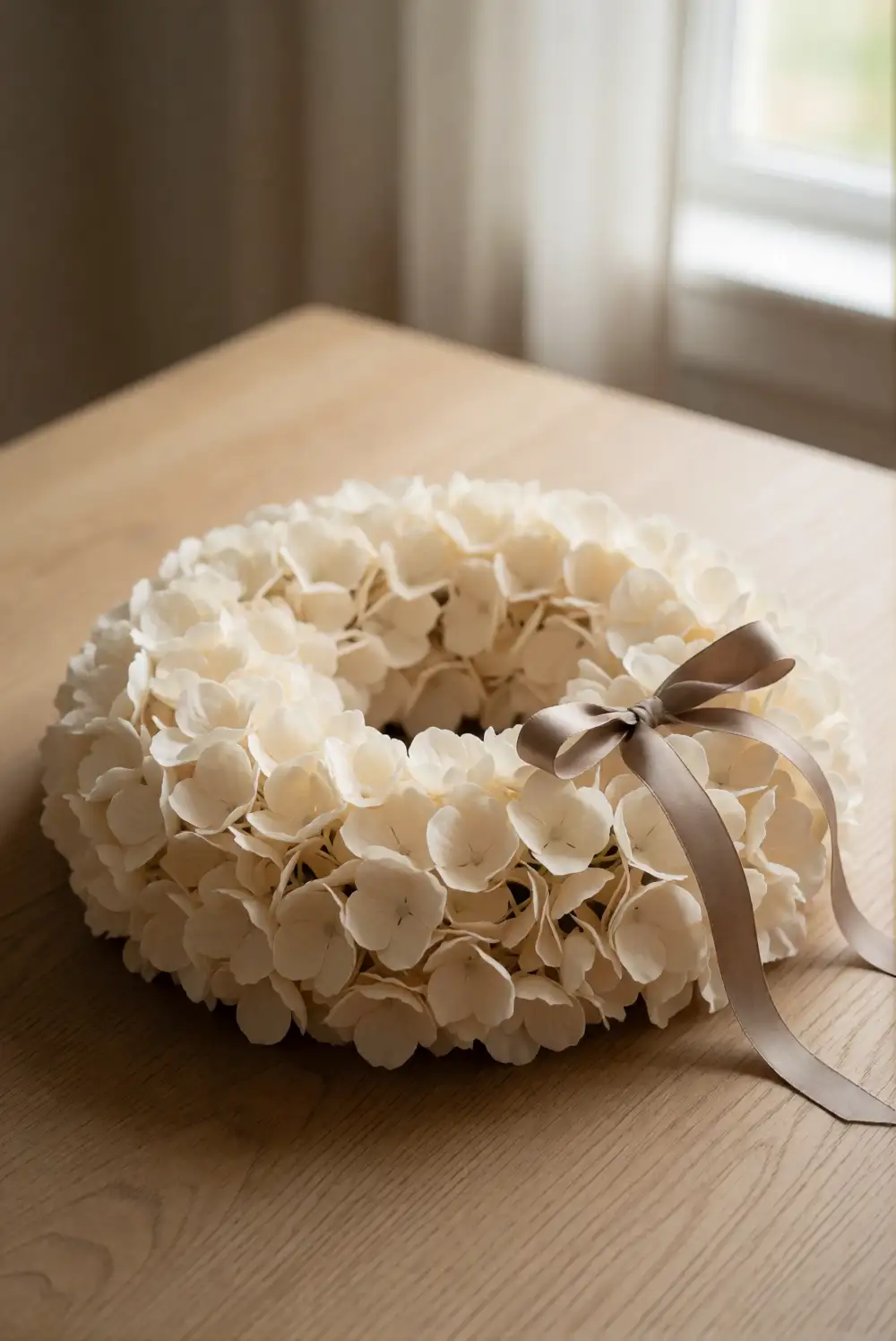
Make a soft, tonal wreath with cream faux hydrangea blooms, a foam wreath base, and floral pins. Separate the flower heads into smaller clusters, then attach them close together so the base does not show through. Turn each bloom in a slightly different direction to build a rounded, natural-looking surface. Keep the flowers within the same warm cream family for a monochrome effect. Once the wreath is covered, gently fluff the petals and check that every cluster is firmly held in place.
A cream-on-cream design brings a calm, elegant note to autumn decorating and pairs easily with wood, brass, or dark painted doors. For gentle contrast, add a few taupe leaves or a narrow velvet ribbon without breaking the tonal look. Faux flowers are a practical choice for a covered outdoor area, though indoor display helps preserve their color. Hang the wreath above a console or on an entry door, and pair it with a simple branch arrangement to echo its soft texture.
Whether you favor dried citrus, gathered leaves, soft felt, or quiet cream florals, a handmade fall wreath can make your entry feel welcoming and seasonally refreshed. Choose materials that suit your home, take time to arrange each layer, and display your finished design where its colors and textures can be appreciated.